




Adenomyosis
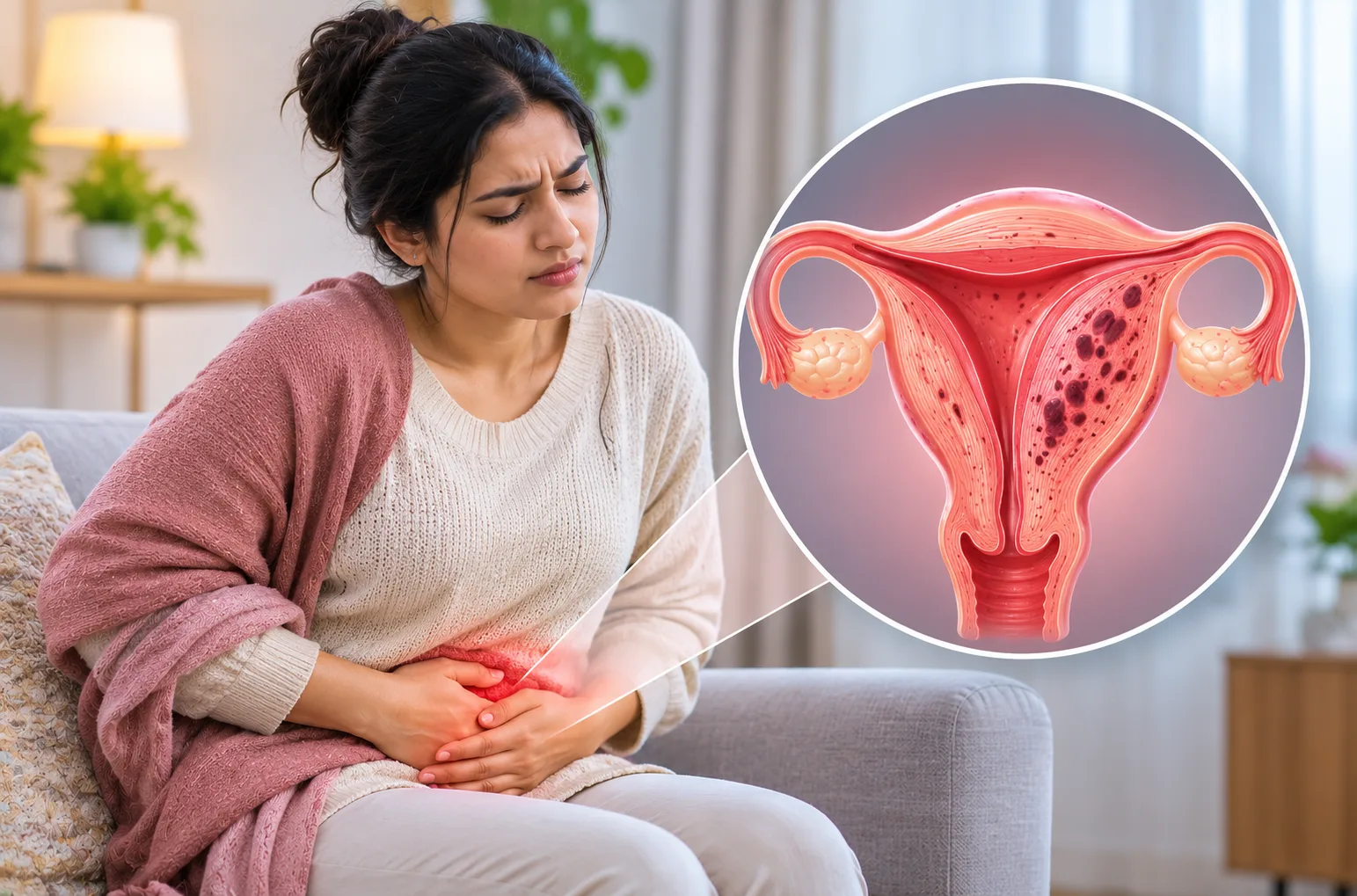
Adenomyosis is a non-cancerous condition in which tissue like the uterine lining grows into the muscular wall of the uterus. It can cause heavy, painful periods and an enlarged uterus, and about one in three women have no symptoms at all.

Seamless support from diagnosis to post treatment care
Overview
Periods can sometimes bring more than the usual discomfort, especially when bleeding becomes heavier, or cramps start interfering with everyday activities. If these symptoms keep recurring, an underlying gynaecological condition may be responsible. Adenomyosis is one possible cause, and although it can affect menstrual and reproductive health, appropriate diagnosis and treatment can help manage its symptoms and improve quality of life.
What Is Adenomyosis?
Adenomyosis (pronounced ad-uh-no-my-O-sis) is a benign (non-cancerous) condition in which tissue similar to the uterine lining (endometrium) grows within the muscular wall of the uterus (myometrium). This tissue thickens, breaks down and bleeds during each menstrual cycle, which can cause uterine enlargement, heavy menstrual bleeding and painful periods.
Adenomyosis is most commonly diagnosed in women aged 40–50 years, although it can also affect younger women. Approximately one in three women with adenomyosis experience no symptoms.
Unlike endometriosis, in which endometrial-like tissue grows outside the uterus, adenomyosis affects the muscular wall of the uterus.
Adenomyosis was traditionally diagnosed after a hysterectomy (surgery to remove the uterus). However, advances in ultrasound and MRI scans now allow doctors to identify it without surgery in many cases. Although it is more commonly diagnosed in women over 30, younger women can also develop it. Some women have no symptoms, while others experience heavy bleeding and painful periods.
How Adenomyosis Changes the Uterine Wall?
The tissue growing within the uterine muscle responds to hormonal changes during the menstrual cycle. This can cause inflammation and changes in the surrounding muscle, making the uterine wall thicker and the uterus larger.
These changes can contribute to heavy menstrual bleeding, painful cramps and pelvic discomfort. Adenomyosis is also associated with estrogen, which helps explain why symptoms often improve after menopause, when estrogen levels decrease.
Causes of Adenomyosis
The exact cause of adenomyosis remains unknown. However, researchers have proposed several theories to explain how endometrial tissue develops within the muscular wall of the uterus (myometrium). Hormonal changes, inflammation and genetic factors may also contribute to the development and progression of the condition.
The leading theories and contributing factors include:
- Invasion after uterine surgery (a theory): Previous uterine procedures, such as a caesarean section, may disrupt the boundary between the uterine lining and muscular wall, allowing endometrial tissue to grow into the muscle.
- Disruption of the junctional zone: Repeated uterine contractions may cause small injuries to the junctional zone, the area between the endometrium and myometrium. These injuries may allow endometrial tissue to penetrate the muscular wall.
- Metaplasia of stem cells: One theory suggests that stem cells within the uterine muscle may develop into endometrial-like tissue.
- Developmental origins (Müllerian remnants): Cells remaining from the early development of the reproductive system may later develop into endometrial-like tissue within the uterine muscle.
- Hormonal influences: Adenomyosis is an oestrogen-dependent condition. Increased local oestrogen production and altered responses to progesterone may contribute to its development and progression.
- Inflammation: Chronic inflammation and repeated tissue injury and repair may contribute to the development of adenomyosis and associated symptoms.
- Genetic factors: Researchers suggest that certain genetic and molecular changes may influence the development of adenomyosis, although their precise role remains under investigation.
Adenomyosis can also develop in women who have never undergone uterine surgery. Further research is needed to establish the exact mechanisms responsible for the condition.
Who Is at Risk for Adenomyosis?
Although adenomyosis can affect women of different ages, certain factors are associated with a higher likelihood of developing it. These include:
- Being typically between 40 and 50 years of age.
- Having given birth previously.
- Having undergone uterine surgery, such as a caesarean section or dilation and curettage (D&C).
- Having another gynaecological condition, such as endometriosis.
Having one or more of these factors does not mean you will necessarily develop adenomyosis. The condition can also occur without any known risk factors.
Symptoms of Adenomyosis
Approximately one in three women with adenomyosis experience no noticeable symptoms. When symptoms develop, their severity can vary from mild discomfort to heavy menstrual bleeding and persistent pelvic pain that interfere with daily activities.
Common signs and symptoms of adenomyosis include:
- Heavy menstrual bleeding (menorrhagia): You may need to change a soaked sanitary pad or tampon every one to two hours, pass blood clots larger than 2.5 cm or experience periods lasting more than seven days.
- Painful periods (dysmenorrhoea): Adenomyosis can cause intense menstrual cramps that may become more severe over time and interfere with everyday activities.
- Chronic pelvic pain: Some women experience persistent or recurring pain in the lower abdomen, even when they are not menstruating.
- Painful intercourse (dyspareunia): Pain or discomfort during or after sexual intercourse may occur.
- Abdominal bloating (adenomyosis belly): An enlarged uterus can cause bloating, fullness and pressure in the lower abdomen. In some women, the abdomen may appear rounded, resembling an early pregnancy bump.
- Irregular menstrual bleeding: Some women may experience irregular periods or bleeding between menstrual cycles.
- Fatigue and weakness: Prolonged or heavy menstrual bleeding can lead to iron deficiency anaemia, causing tiredness, weakness and breathlessness.
Adenomyosis, Endometriosis and Fibroids: Symptom Comparison
Adenomyosis shares several symptoms with endometriosis and uterine fibroids, but certain features may help doctors distinguish between these conditions.
| Symptom | Adenomyosis | Endometriosis | Uterine Fibroids |
|---|---|---|---|
| Heavy menstrual bleeding | Common | May occur | Common |
| Painful periods | Common | Common | May occur |
| Painful intercourse | May occur | Common | May occur |
| Enlarged uterus | Common | Not typical | May occur |
| Abdominal bloating | May occur | May occur | May occur |
| Pain during bowel movements or urination | May occur | Particularly associated with deep endometriosis | May occur due to pressure on nearby organs |
These conditions can coexist, and symptoms alone cannot confirm a diagnosis. Consult a gynaecologist if you experience persistent pelvic pain, increasingly heavy periods, prolonged abdominal bloating or pain during intercourse.
When to see a doctor: Consult a gynecologist if your periods become unusually heavy or painful, or if pelvic pain persists. Seek prompt medical attention if heavy bleeding is accompanied by dizziness, fainting or severe weakness.
How Is Adenomyosis Diagnosed?
Adenomyosis is usually diagnosed through a review of your symptoms, a physical examination and imaging tests. These help the doctor identify changes in the uterine wall and check for other conditions that may cause similar symptoms.
1. Examination and Ultrasound
Your doctor may perform a pelvic examination to check whether your uterus is enlarged or tender. A transvaginal ultrasound, in which a small ultrasound probe is placed inside the vagina, is generally the first imaging test used to look for adenomyosis.
The scan may show changes such as thickening of the uterine muscle, small fluid-filled spaces within the muscle or an enlarged, rounded uterus.
2. MRI and Further Tests
An MRI may be recommended if the ultrasound findings are unclear or if more detailed imaging is needed to plan treatment.
Your doctor may also recommend a complete blood count (CBC) to check for anaemia (low haemoglobin), particularly if you have heavy periods. Other tests may be needed to check for conditions such as fibroids or endometriosis.
Possible Complications of Adenomyosis
Although adenomyosis is benign, its symptoms can affect your physical health and quality of life. Possible complications include:
- Anaemia: Heavy menstrual bleeding can cause iron deficiency and anaemia, leading to tiredness, weakness and dizziness.
- Impact on daily activities: Persistent pain and heavy periods can interfere with work, sleep and everyday routines.
- Fertility and pregnancy concerns: Research suggests that adenomyosis may reduce fertility and make conception more difficult. Studies have also associated the condition with an increased risk of miscarriage and preterm birth. Women planning a pregnancy may benefit from a fertility assessment to discuss their individual risks and treatment options.
- Pregnancy-related complications: Adenomyosis has been associated with a higher risk of miscarriage and preterm birth in some studies. However, these risks vary, and many women with the condition have successful pregnancies.
Not every woman develops these complications. Early assessment and appropriate treatment can help manage symptoms and address individual health concerns.
Treatment Options of Adenomyosis
Treatment for adenomyosis depends on the severity of your symptoms, age and whether you wish to become pregnant in the future. Many women can manage their symptoms with medicines, while others may need a procedure or surgery.
1. Medicines
Medicines are generally considered first, particularly when symptoms can be controlled without surgery. Treatment options include:
- Levonorgestrel intrauterine system (LNG-IUS): This hormone-releasing device is placed inside the uterus to reduce heavy bleeding and menstrual pain.
- Tranexamic acid and anti-inflammatory medicines: Tranexamic acid helps reduce menstrual bleeding, while non-steroidal anti-inflammatory drugs (NSAIDs) help relieve period pain.
- Combined contraceptive pills or progestogens: These hormonal medicines can help regulate periods, reduce bleeding and relieve cramps.
- GnRH analogues: These medicines temporarily reduce estrogen levels and may help control symptoms, usually for a limited period or before surgery.
Your doctor will recommend a suitable medicine based on your symptoms, medical history and pregnancy plans.
2. Procedures That Keep the Uterus
If medicines do not provide sufficient relief, certain procedures may help manage adenomyosis while retaining the uterus. However, not all uterus-preserving procedures are suitable for women planning a future pregnancy.
- Uterine artery embolisation: This procedure reduces the blood supply to the affected areas of the uterus, helping relieve symptoms.
- Adenomyomectomy: A surgeon removes the affected tissue from the uterine muscle while preserving the uterus. It may be considered in selected cases.
- Endometrial ablation: This procedure treats the inner lining of the uterus to reduce heavy bleeding. It is generally not suitable for women who wish to become pregnant in the future.
Your gynaecologist will explain the benefits, limitations and possible effects of each procedure before recommending one.
3. Hysterectomy
A hysterectomy involves surgically removing the uterus and is the definitive treatment for adenomyosis. It permanently stops menstrual periods and eliminates the possibility of carrying a pregnancy.
It is generally considered when symptoms are severe, other treatments have not helped, and the woman does not wish to have future pregnancies. Your doctor will discuss the benefits, risks and alternatives before considering this option.
What is the Prognosis (Outlook) for Adenomyosis?
The outlook for women with adenomyosis is generally reassuring, as symptoms can often be managed with appropriate treatment. The condition does not always progress, and symptom severity varies from one woman to another.
Symptoms commonly improve after menopause as estrogen levels decline. Until then, medicines and other treatments can help control heavy bleeding and pelvic pain.
If you are planning a pregnancy, discuss your options with your gynaecologist or fertility specialist. They can assess your individual circumstances and help plan appropriate care.
Questions to Ask Your Gynecologist
Discussing your symptoms and treatment options with your gynecologist can help you make informed decisions. Consider asking the following questions during your appointment.
About Diagnosis and Cause
- How was my adenomyosis diagnosed?
- Do I need any additional scans or tests?
- Could another condition be contributing to my symptoms?
About Treatment and Pain Relief
- Which treatment would be most suitable for me?
- How can I manage period pain and heavy bleeding?
- Are there treatment options that allow me to preserve my uterus?
About Fertility and Pregnancy
- Can adenomyosis affect my ability to conceive?
- Which treatments are suitable if I plan to become pregnant?
- Should I consult a fertility specialist?
Your doctor can help you understand your diagnosis, discuss available treatments and address any questions about your reproductive health.
Prevention & Lifestyle Tips of Adenomyosis
There is currently no proven way to prevent adenomyosis because its exact cause is unknown. However, certain steps can help you manage symptoms and maintain your general health.
- Get heavy or painful periods assessed: Do not ignore persistent changes in your menstrual cycle. Early evaluation can help identify the cause.
- Attend regular follow-up appointments: These allow your doctor to monitor your symptoms and adjust treatment when needed.
- Report new or worsening symptoms: Inform your doctor if you experience increased bleeding, pelvic pain or unusual changes in your periods.
- Maintain healthy habits: Regular physical activity, adequate rest and a balanced diet can support your overall wellbeing.
These measures do not prevent or cure adenomyosis, but they can help you manage its effects and seek appropriate care when needed.
Why Choose BirthRight by Rainbow Hospitals for Adenomyosis Care?
At BirthRight by Rainbow Hospitals, our gynecologists assess adenomyosis-related symptoms, including heavy menstrual bleeding, pelvic pain and fertility concerns. Treatment options include medical management, minimally invasive gynaecological surgery and fertility care based on your clinical condition and reproductive plans.
Our specialist services include:
- Gynaecological assessment: Our specialists evaluate menstrual symptoms, pelvic pain and uterine abnormalities and recommend appropriate diagnostic investigations to distinguish adenomyosis from conditions such as endometriosis and uterine fibroids.
- Minimally invasive surgery: Our gynaecological endoscopy services include laparoscopic adenomyomectomy for selected women who wish to preserve their uterus and total laparoscopic hysterectomy for women requiring definitive treatment.
- Fertility assessment and IVF: Women experiencing difficulty conceiving can access fertility investigations, specialist consultations and assisted reproductive treatments, including in vitro fertilisation (IVF), where appropriate.
You can also explore our information on endometriosis, uterine fibroids, heavy menstrual bleeding and fertility treatment.
If you experience heavy periods, persistent pelvic pain or difficulty conceiving, book an appointment with a gynecologist to discuss adenomyosis diagnosis and suitable treatment options.

Find a Doctor and Book Appointment Online
Meet our specialist doctors who bring together clinical expertise, compassion, and personalised care to support your health and well-being. Choose from 1,300+ specialists across our network and book an appointment with BirthRight and Rainbow Children Hospitals, offering 24*7 support to you and your family.

Dr. Pranathi Reddy A
Clinical Director – Obstetrics & Gynecology.
English,Hindi,Telugu Banjara Hills

Dr. Gauri Vinayak Dhamangaonkar
Senior Consultant - Fetal Medicine
15 Years English,Hindi,Marathi,Telugu Kondapur OP, Banjara Hills

Dr. Shruthi Reddy Poddutoor
Consultant Obstetrician, Gynecologist & Laparoscopic Surgeon
English,Telugu Banjara Hills

Dr. Himabindu Veerla
Consultant Obstetrician, Gynecologist & Laparoscopic Surgeon
English,Telugu Banjara Hills

Dr. Bhargavi Reddy K
Consultant - Obstetrics and Gynecology
10 Years English,Hindi,Telugu Banjara Hills, Attapur Clinic

Dr. Annie Pranutha P
Consultant Obstetrics and Gynecology
9 Years English,Hindi,Telugu Banjara Hills, Attapur Clinic

Dr. Sasikala Kola
Consultant Obstetrician & Gynecologist
English,Hindi,Telugu Banjara Hills

Dr. Atigadda Vijaya
Consultant - Obstetrics & Gynecology
Hindi,Telugu Banjara Hills, Himayatnagar, Attapur Clinic

Dr. Nishanth Reddy Inavolu
Visiting Consultant Physician and Diabetologist & Internal Medicine
English,Hindi,Telugu Banjara Hills, Himayatnagar

Dr. Tulika Tayal
Consultant - Fetal Medicine
English,Telugu Banjara Hills

Dr. M Prathyusha Reddy
Consultant Obstetrics & Gynecology
English,Telugu Banjara Hills

Dr. Nithya Narasimha Murthy
Consultant -Psychiatrist
English,Hindi,Telugu Kondapur OP, Banjara Hills, Child Development Centre - Banjarahills Rd No 10

Dr. Brundavani
Consultant - Nutritionist
English,Hindi,Telugu Kondapur OP, Hydernagar, Banjara Hills, Child Development Centre - Banjarahills Rd No 10

Dr. Niveditha Chalmeda
Consultant
English,Telugu Banjara Hills

Dr. Kirti Reddy Patlolla
Consultant Obstetrics and Gynaecology
English,Telugu Banjara Hills, Attapur Clinic

Dr. Tuheena Sharma
Consultant - Perinatal Physiotherapy
10 Years English,Telugu Banjara Hills

Dr. Aditi Shah
Consultant - Fetal Medicine
English,Telugu Banjara Hills

Dr. Swathi Naga Tulasi Rayapureddy
Lactation Consultant
8 Years English,Telugu Banjara Hills

Dr. Swetha Reddy. S
CONSULTANT PERINATAL PSYCHIATRIST AND WOMEN MENTAL HEALTH SPECIALIST
13 Years English,Hindi,Telugu Banjara Hills

Dr. Addu Kiranmayi
Chief Clinical Nutritionist and Lifestyle Medicine Consultant
15 Years English,Hindi,Telugu Himayatnagar, Banjara Hills

Dr. Palle Nalini Kumari
Lactation Consultant
17+ Years English,Hindi,Telugu Banjara Hills

Dr. Nazia Tabassum
Consultant - Breast, Plastic & Reconstructive Surgeon
9 Years English,Hindi,Telugu,Urdu Banjara Hills

Dr. Sruthi Cheera
Consultant Breast Surgeon
5 Years English,Hindi,Kannada,Telugu Banjara Hills

Dr. Supriya Reddy
Lactation Consultant
5 Years English,Hindi,Telugu Banjara Hills

Dr. Niraj Krishnamurthy Yanamandra
Senior Consultant Obstetrician & Gynaecologist, Laparoscopy & Hysteroscopy Surgeon
English,Hindi,Marathi,Telugu Hydernagar, Banjara Hills, Financial District

Dr. B. Rao Bahadur
Consultant – Obstetrician & Gynecologist, Laparoscopic ,& Hysteroscopic Surgeon
22 Years English,Hindi,Konkani,Marathi,Telugu Banjara Hills, Kondapur OP

Dr. Sneha Kulkarni
Consultant - Child, Adolescent & Adult Psychiatrist
10 Years English,Hindi,Kannada,Telugu Secunderabad, Banjara Hills, Child Development Centre - Banjarahills Rd No 10

Dr. Lavanya Janagama
Consultant – Obstetrics & Gynecology
10+ Years English Banjara HillsLeading Hospitals for Women Care
Rainbow Children's Hospital stands as a testament to the hospital's continual pursuit of excellence and innovation, providing specialized care for women and children


















chennai
Blogs
Discover our most recent health articles provided by our reliable experts.




What Are People Saying About Us
Embark on a journey of inspiration and hope with our patient success stories, complemented by informative videos from our dedicated doctors.


Media
 Common Gynaecological Surgeries to Fix Female Reproductive Issues
 Healthy Woman - Healthy World
 Healthier Women For a Healthier Future...
 Rainbow Children’s Hospital & BirthRight by Rainbow Launch Video Consultation Facilities
 Dr.Pranthi Reddy
 What is the use of that?
 Can you try this time?
 Pregnant Women are Not Unfit
 Declining Age of Menarche - A Matter of Concern
 Important Facts about Cervical Cancer
 Be careful before preempting
 Flu every month!
 Menstrual cramps
 Premature delivery
 Whether laughing or coughing...why?
 Multi - Tasking may be Cool but it's not Healthy
 Pregnant and Worried about COVID-19? Here's Everything you Need to know
 Video Consultation in Pandamic Situation for Pregnancy Women's
 Women.. Various types of cysts
 Recurrent Pregnancy Loss in Women
 Early Onset of Puberty: Causes, Symptoms and Treatment Options
Common Gynaecological Surgeries to Fix Female Reproductive Issues
Healthy Woman - Healthy World
Healthier Women For a Healthier Future...
FAQs
Can adenomyosis turn into cancer?
What is the best treatment for adenomyosis?
What is the main cause of adenomyosis?
Can I live a normal life with adenomyosis?
What is the difference between adenomyosis and endometriosis?
Can diet or supplements help adenomyosis pain?
Why was my adenomyosis missed on an earlier ultrasound?
Can adenomyosis come back after treatment?
How do I cope with the tiredness and low mood that come with adenomyosis?
Which specialist should I see for adenomyosis?
How is adenomyosis different from fibroids?
Will adenomyosis go away after menopause?
Can I still get pregnant with adenomyosis?
Quick Links
Free Calculators to Track and Predict your Pregnancy
Gynecologist in Other Locations
Women's Health Conditions We Treat
- Mastitis (Breast Infection)
- PCOS (Polycystic Ovary Syndrome)
- Uterine Fibroids (Leiomyomas)
- Recurrent Pregnancy Loss
- Blocked Fallopian Tubes (Fallopian Tube Obstruction)
- Gestational Diabetes in Pregnancy
- Incompetent Cervix (Cervical Insufficiency)
- COVID-19 in Pregnancy
- Cytomegalovirus (CMV) in Pregnancy
- HELLP Syndrome
- Luteal Phase Defect
- Vasa Previa
- Listeria in Pregnancy
- Placenta Previa
- Endometrial Polyps (Uterine Polyps)
- Congenital Heart Disease in Pregnancy
- Hyperemesis Gravidarum (Severe Morning Sickness)
- Preeclampsia (toxemia)
- Fetal Distress (Non-Reassuring Fetal Status)
- Postpartum Haemorrhage (PPH)
- Placental Abruption (Abruptio Placentae)
- Placenta Accreta
- Postpartum Depression (PPD)
- Rhesus (Rh) Incompatibility
- Syphilis in Women
- Thalassemia in Pregnancy
- Gestational Thrombocytopenia
- Diabetes in Pregnancy
- Uterine Rupture
- Migraine in Pregnancy
- Eclampsia
- Uterine Inversion (Inverted Uterus)
- Rubella in Pregnancy
- Pulmonary Hypertension in Pregnancy
- Hydrops Fetalis (Fetal Hydrops)
- Iron-Deficiency Anaemia in Pregnancy
- Hypothyroidism in Pregnancy
- Pregnancy Constipation
- Retained Placenta
- Antiphospholipid Syndrome (APS)
- Subchorionic Hemorrhage
- Asthma in Pregnancy
- Amniotic Fluid Embolism (AFE)
- Placenta Increta
- Fetal Macrosomia
- Gestational Trophoblastic Disease (GTD)
- Postpartum Psychosis
- Chronic Hypertension in Pregnancy
- Gestational Hypertension
- Oligohydramnios (Low Amniotic Fluid)
- Miscarriage (Spontaneous Abortion)
- Breast Abscess
- Ovarian Cancer
- Placental Insufficiency
- Diarrhoea in Pregnancy
- Chorioamnionitis (Intra-Amniotic Infection)
- Arrhythmias in Pregnancy
- Amenorrhea
- Dysmenorrhea
- Menopause
- Stillbirth
- Abnormal Uterine Bleeding
- ABO Incompatibility in Pregnancy