


Intrauterine Insemination (IUI): Procedure, Success Rate & Cost

Seamless support from diagnosis to post treatment care

Overview
Fertility treatment can sometimes feel complicated to many at first. It covers a broad range of processes that help women of reproductive age conceive. Among the options you may hear about, intrauterine insemination (IUI), a fertility treatment, is often one of the first that raises questions: What actually happens during the procedure? How likely is it to work? And what should you expect in terms of cost?
The answers aren't the same for everyone. Age, ovulation, sperm quality and the reason for fertility difficulty can all influence whether IUI is recommended and how successful it may be.
Understanding the process before you begin can make the journey feel far less uncertain. From what happens during an IUI cycle to success rates and treatment costs, knowing what to expect can help you approach the next step with greater clarity and confidence.
What is Intrauterine Insemination (IUI)?
Intrauterine insemination (IUI) is a fertility treatment where specially processed and concentrated sperm are placed directly into the uterus near the time of ovulation to increase the chances of fertilization. It is also called artificial insemination.
IUI is a simple, minimally invasive treatment and is often the first option tried before IVF. IUI insemination can be done in a natural cycle, timed to your own ovulation, or with fertility medicines that support ovulation. Your specialist decides which suits you.
Fertility Problems That IUI Can Help With
IUI can help with several common fertility problems, as long as the fallopian tubes are open and sperm quality is reasonable. It is often used for:
- Mild male factor infertility, such as slightly low sperm count or motility
- Unexplained infertility
- Ovulation problems, alongside ovulation-inducing medicines
- Cervical factor infertility, where cervical mucus makes it hard for sperm to pass
- Same-sex couples or single women using donor sperm
- Mild endometriosis
Where the tubes are blocked or the male factor is severe, IVF is usually a better fit. Your specialist confirms which treatment gives you the best chance.
Who Needs IUI & When is it Right for You?
IUI works best when there is no major barrier to fertilisation. You are more likely to be a good candidate if:
- You have at least one open, healthy fallopian tube
- Sperm count and motility are adequate
- You are younger, or early in your fertility journey
- There is no severe fertility factor on either side
If these apply to you, IUI is a reasonable and low-cost first step. If they do not, your specialist may suggest moving to IVF sooner.
Preparing for IUI: Tests Before Treatment
Before IUI, a few tests confirm that the treatment is suitable and help time it well. Preparation usually includes:
- Tubal patency test (HSG): To confirm at least one fallopian tube is open.
- Semen analysis: To check sperm count, motility and shape for the male partner.
- Hormone and ovulation assessment: To confirm you are ovulating and plan the timing.
- Pelvic ultrasound: To check the uterus and ovaries.
- Infection screening: Routine screening for both partners, as required by ART Act norms.
Most of these are one-time tests. Once they confirm IUI is suitable, the treatment cycle can begin.
IUI Treatment Process: Step by Step
The IUI procedure follows a clear sequence over about two to three weeks. Here is the IUI procedure step by step, from tracking ovulation to the insemination itself.
Step 1: Ovulation tracking or stimulation
The cycle is monitored by ultrasound scan. In a medicated cycle, mild fertility medicines are given to support ovulation. In a natural cycle, your own ovulation is tracked without medication.
Step 2: Trigger and timing
When a follicle is ready, ovulation is confirmed or triggered with an injection. The insemination is then timed to match ovulation as closely as possible, which is key to success.
Step 3: Sperm preparation
On the day of the procedure, a semen sample is washed in the laboratory. This concentrates the healthiest, most active sperm and removes fluid that could cause a reaction in the uterus.
Step 4: Insemination
The prepared sperm are placed into the uterus through a thin, soft catheter. This takes only a few minutes, needs no anaesthesia and feels similar to a routine gynaecological exam.
Step 5: Short rest and home
You rest for a short while and can go home the same day. No bed rest is needed, and you can return to normal activity straight away.
Natural Cycle vs Medicated Cycle IUI
IUI can be done in two ways, and your specialist recommends one based on your diagnosis, age and any previous cycles.
- Natural cycle IUI: No fertility medicines are used, and the procedure is timed to your own ovulation. It suits couples who ovulate regularly and want the simplest, lowest-cost option.
- Medicated cycle IUI: Ovulation-inducing tablets or injections encourage one or two follicles to grow. This modestly raises the chance per cycle but adds cost and a small risk of a multiple pregnancy. For ovulation problems such as PCOS, this approach is usually preferred because it treats the root problem.
Neither is better for everyone. The right choice depends on why you are having IUI in the first place.
Side Effects, Risks and Safety of IUI
Is IUI painful? For most women, no. The procedure causes only mild, brief discomfort similar to a smear test, not real pain. IUI is very safe, and the few risks are minor:
- Mild cramping or light spotting for a short time
- A small risk of infection, kept low by sterile technique
- A slightly higher chance of twins if fertility medicines are used
- Rarely, an over-response to stimulation medicines
Serious complications are uncommon. Your specialist closely monitors the medicated cycle to keep these risks low.
IUI Success Rate by Age
As an IUI fertility treatment, the IUI procedure success rate depends mainly on age, the cause of infertility and whether fertility medicines are used. Approximate success rates per cycle are:
| Factor | Approximate IUI success rate per cycle |
|---|---|
| Woman under 35 | Around 15 to 20 percent |
| Woman 35 to 40 | Around 10 to 15 percent |
| Woman over 40 | Under 10 percent |
| With fertility medicines | Higher than a natural cycle |
These per-cycle figures are only part of the picture. Success builds up over several attempts, and many couples conceive within three to six cycles, and the IUI treatment success rate reaches around 70 percent cumulatively for suitable couples. The IUI success rate in India is broadly in line with these global figures, and outcomes with donor sperm are usually favourable.
Cost of IUI Treatment
IUI cost per cycle is much lower than IVF, which is why it is tried first. Figures here are indicative only, so confirm current pricing with the hospital. A typical cycle in India breaks down as:
| Component | Approximate cost per cycle (India) |
|---|---|
| Monitoring and scans | ₹5,000 to ₹10,000 |
| Fertility medicines (if used) | ₹3,000 to ₹10,000 |
| Sperm preparation and insemination | ₹5,000 to ₹12,000 |
| Typical total per cycle | ₹8,000 to ₹20,000 |
A natural cycle costs less than a medicated one, since it skips the fertility medicines. Because success builds over cycles, it helps to plan for more than one attempt.
After IUI: Pregnancy Testing, Results & Next Steps
After the procedure, there is a two-week wait before testing. Honest expectations help here: there are no reliable IUI success symptoms during this time. Early cramping or spotting does not confirm or rule out an IUI pregnancy.
Take a blood pregnancy test about 14 days after insemination, rather than a very early home test, which can mislead. If the cycle is not successful, your specialist reviews it and advises whether to repeat IUI or move to IVF.
IUI vs IVF: Which Treatment is Right for You?
IUI and IVF differ in how invasive they are, how much they cost and how well they work per cycle. IUI is simpler and cheaper, but has a lower success rate per cycle. IVF is more involved but more effective, especially in complex cases.
| Factor | IUI | IVF |
|---|---|---|
| Invasiveness | Minimal | More involved |
| Cost per cycle | ₹8,000 to ₹20,000 | ₹1.5 to 2.5 lakh |
| Time per cycle | About 2 to 3 weeks | About 4 to 6 weeks |
| Success per cycle | Around 10 to 20 percent | Around 30 to 50 percent |
| Best suited to | Mild issues, unexplained infertility | Tubal factor, severe male factor, failed IUI |
What Questions Should You Ask Your Fertility Specialist?
The right questions depend on where you are in the process. Prepare them before your visit. The prompts below are grouped by stage.
If you are deciding on treatment:
- Is IUI the right first step for my diagnosis, or should I consider IVF?
- Would a natural or a medicated cycle suit me better?
If you are planning your cycle:
- What is my likely success rate per cycle, given my age and cause?
- What will the full cycle cost, including medicines and scans?
If you are thinking ahead:
- How many IUI cycles should I try before moving to IVF?
- When should I take the pregnancy test, and what happens if this cycle does not work?
Ask your specialist to explain any term you do not understand. Clear answers help you decide the next step with confidence.
Why Choose BirthRight Fertility by Rainbow Hospitals for IUI?
BirthRight Fertility by Rainbow Hospitals brings fertility expertise and a clear, step-by-step approach to IUI, so you start with the gentlest suitable treatment and move to IVF only if you need to. For IUI specifically, our care includes:
- Precise cycle monitoring: Accurate ovulation tracking to time the insemination well.
- Expert sperm preparation: A skilled andrology and embryology team to prepare the healthiest sample.
- Step-by-step care: IUI first where suitable, with a clear path to IVF if it is needed.
- Experienced fertility specialists: Personalised plans built around your age and diagnosis.
- Emotional support: Counselling recognised as a genuine part of fertility care.
BirthRight Fertility by Rainbow Hospitals brings three decades of expertise in fertility, with more than 100,000 parenthood journeys supported across 15 Level II fertility centres in India, including India’s first JCI-accredited fertility centre at Kondapur, Hyderabad, and NABH-accredited care across the network.
You can consult the fertility specialists at BirthRight Fertility by Rainbow Hospitals to begin with a detailed fertility evaluation.

Find a Doctor
Expertise you can trust, Meet our esteemed doctors who bring exceptional knowledge, compassion, and innovation to provide top-notch care for your health and well-being.

Dr. Ratna Durvasula
Consultant Fertility Specialist
English,Telugu Kondapur OP, Banjara Hills, Financial District, Kondapur IP

Dr. Sudharani Bairraju
Senior Consultant Obstetrician and Gynaecologist, Laparoscopic surgeon and Infertility (IVF) Specialist
English,Telugu Banjara Hills

Dr. Lakshmi Chirumamilla
Fertility Specialist and Reproductive Endocrinologist
25 Years English,Hindi,Telugu Banjara HillsLeading Hospitals for Fertility Care
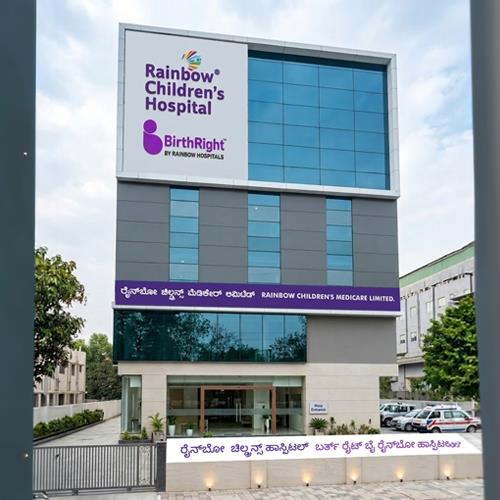
Rainbow Children's Hospital stands as a testament to the hospital's continual pursuit of excellence and innovation, providing specialized care for women and children














chennai
Blogs
Discover our most recent health articles provided by our reliable experts.




What Are People Saying About Us
Embark on a journey of inspiration and hope with our patient success stories, complemented by informative videos from our dedicated doctors.



Media
 Dr. Preethi Reddy Article on Lifestyle Changes to Improve Fertility | BirthRight Fertility by Rainbow
 Dr. Ratna Duravasula Sr. Infertility Specialist
 Surrogacy, a Boon when Normal
 Surrogacy, a Boon when Normal Pregnancy is Medically Inadvisable
 Fertility... Modern Treatments
 A month after covid subsided....
 Can the baby's heartbeat be heard in an ectopic pregnancy?
 Doctors Exploit Loopholes in Bill
 Fertility counseling
 JCI Accreditation
 Menstrual cramps
 So Why are Men Turning into Women?
 Hysteroscopy- Procedure Of Choice For Intrauterine Problems
 Diet and Exercise in Pregnancy- Bust your Myths and Know your Facts
 Recurrent Pregnancy Loss
 Do Laptops, Excessive Heat and Tight Jeans Cause Infertility?
 In Vitro Fertilization
 Menstrual cup – are we really aware of it?
 No More Worries About Menopause
 Stretch marks in pregnancy: Embracing the scars
 Egg Freezing
 Fertility Preservation: Methods and Indications for Securing Reproductive Options
 Tips for planning a pregnancy
 Inferticity
 Here is all what you need to know about IVF, the popularly known fertility treatment
 Delayed marriage among factors for birth rate dip
 Fertility against Odds: IVF hope for women above 40 years of age
 Will Pregnancy Cure Endometriosis?
 Postpartum Depression: Expert Lists Essential Foods Prevent Depression in New Mothers
 Complications of Gestational Diabetes During Pregnancy by Dr. Triveni Arun Akkiraju
 Five Key Sexual Health Facts for Women
 Six Reasons That May Cause IVF Failure
 దంపతుల్లో ఈ మూడు లోపాలుంటే పిల్లలు పుట్టరు
 IVF and Genetic Testion - Essential Insights
 In vitro fertilization (IVF)
 About In Vitro Fertilization
 What is the IVF cost?
 What is the cost of IVF?
 Tick-Tock on Biological clock: Fertility concerns multiply in Telugu States
 Diminished Ovarian Reserve (DOR): Causes, Diagnosis, and Treatment Options by Dr. Shreeja Karan
 25 Years of Anniversary - Rainbow Children's Hospital & BirthRight
 Rising infertility: Addressing Challenges with Laparoscopy & Hysteroscopy
Dr. Preethi Reddy Article on Lifestyle Changes to Improve Fertility | BirthRight Fertility by Rainbow
Dr. Ratna Duravasula Sr. Infertility Specialist
Rising infertility: Addressing Challenges with Laparoscopy & Hysteroscopy
Dr. Preethi Reddy Article on Lifestyle Changes to Improve Fertility | BirthRight Fertility by Rainbow
Dr. Ratna Duravasula Sr. Infertility Specialist
 Surrogacy, a Boon when Normal