




Luteal Phase Defect (Luteal Phase Deficiency)
A luteal phase defect, also called luteal phase deficiency or luteal insufficiency, means the days between ovulation and your next period are too short, or progesterone is too low, to prepare the uterine lining for early pregnancy. It is often linked to PCOS, thyroid problems or raised prolactin, and may show up as spotting before periods, short cycles or difficulty conceiving. With the right assessment, it is usually manageable.

Seamless support from diagnosis to post treatment care
Overview
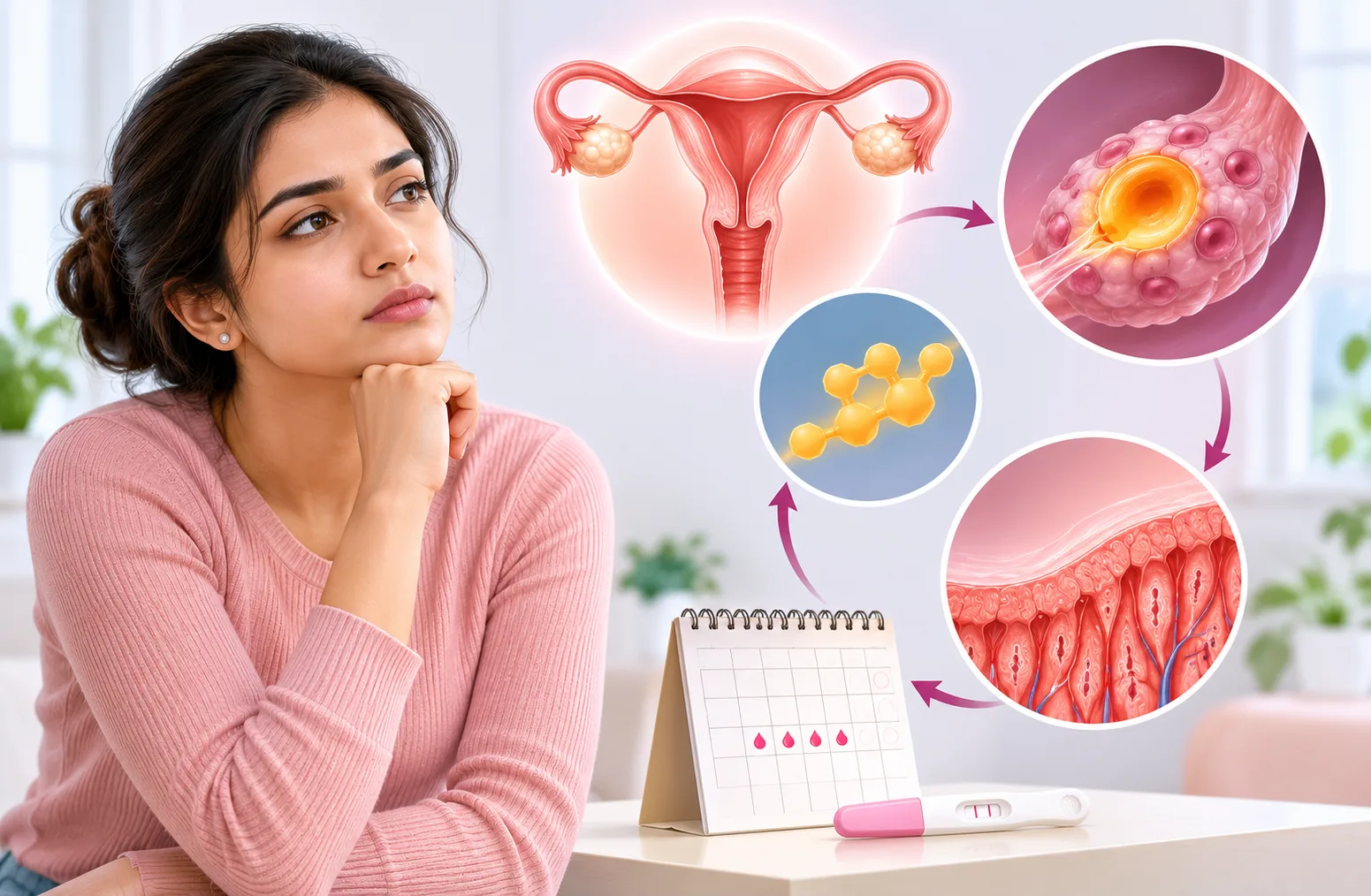
The luteal phase is the part of the menstrual cycle that begins after ovulation and helps prepare the uterus for a possible pregnancy. During a fertility evaluation, your doctor may consider a luteal phase defect, or luteal phase deficiency, if this phase does not provide the hormonal and uterine support expected after ovulation.
Because luteal phase changes can be difficult to assess with a single test, diagnosis usually needs to be considered alongside your menstrual history and other fertility findings. Understanding what normally happens during the luteal phase makes it easier to understand what doctors mean by a luteal phase defect.
What Is a Luteal Phase Defect?
A luteal phase defect, also called luteal phase deficiency or luteal insufficiency, refers to a period between ovulation and the next menstrual period that is too short, or to insufficient progesterone support for the uterine lining needed for early pregnancy. Progesterone is a hormone that helps prepare the uterine lining for a possible pregnancy.
This concern may come up during a fertility evaluation when your doctor is looking more closely at how your menstrual cycle may be affecting conception or early pregnancy. The term can sound technical, especially because no single test reliably confirms it in every case.
Your cycle pattern, test results, and overall fertility history may all be considered before deciding whether treatment is needed. To understand why, it helps to first look at what normally happens during this part of the menstrual cycle.
How Does Luteal Phase Defect Affect Fertility?
In a normal cycle, progesterone rises after ovulation and prepares the womb lining to receive a fertilised egg. This window is when an embryo needs to implant and begin to grow. The lining has to be prepared and receptive at just the right time for this to succeed.
When a luteal phase defect reduces progesterone or shortens this window, the lining may not be ready when an embryo arrives. This can make it harder for an embryo to implant, or harder for a very early pregnancy to hold. Understanding this helps explain why progesterone support may be considered as part of treatment.
Causes of Luteal Phase Defect
A luteal phase defect is usually linked to another condition that affects hormones or ovulation rather than happening on its own. Finding and treating the underlying cause is often the key to improving it. Conditions commonly linked with a luteal phase defect include:
- PCOS: Polycystic ovary syndrome (PCOS), now also called polyendocrine metabolic ovarian syndrome (PMOS), can disturb ovulation and the hormone balance that follows it.
- Thyroid problems: An underactive or overactive thyroid can affect the menstrual cycle and progesterone.
- Endometriosis: Endometriosis can affect ovulation and the hormonal signals around it.
- High levels of prolactin: Raised prolactin, the hormone linked with milk production, can interfere with ovulation.
- Significant weight concerns: Being well above or below a healthy weight can disturb the hormones that drive the cycle.
- Very intense exercise or stress: Heavy physical strain or ongoing stress can affect ovulation and the luteal phase.
Because a luteal phase defect often sits alongside another condition, your doctor will look for what is driving it. Treating that root cause frequently improves the luteal phase itself. This is why the first step is usually a careful check of your hormones and cycle.
Risk Factors of Luteal Phase Defect
Some women are more likely to experience luteal insufficiency than others, usually because of a related hormonal or health condition. Knowing your risk helps your doctor decide what to look for. The main risk factors are below.
- A hormonal condition: PCOS, thyroid problems or raised prolactin all raise the chance of a luteal phase defect.
- Endometriosis: This condition is linked with changes in ovulation and the luteal phase.
- Weight that is very high or very low: A body weight far from the healthy range can disturb the cycle.
- High physical or emotional stress: Intense training or sustained stress can affect hormone balance.
Having a risk factor does not mean you have a luteal phase defect, and many women with these conditions conceive without trouble. The point is simply that they are worth checking if conceiving is proving difficult. Your doctor can look into them as part of a fertility review.
Symptoms of Luteal Phase Defect
A luteal phase defect does not always cause obvious symptoms, and it is often noticed only when conceiving is difficult. When signs are present, they tend to relate to the cycle and to early pregnancy. The possible luteal phase defect symptoms are below.
- Short luteal phase: The time between ovulation and the start of your next period is shorter than expected.
- Spotting before a period: Light bleeding or spotting in the days before your period starts.
- Trouble conceiving: Difficulty getting pregnant despite regular trying.
- Early miscarriage: One or more very early pregnancy losses.
- Frequent periods: Menstrual cycles that occur more often than usual, typically less than 24 days apart.
These signs can have many causes besides a luteal phase defect, so they are not proof on their own. They are, however, a good reason to speak to your doctor, especially if you are trying to conceive. Tracking your cycle can give useful information to share at that visit.
Complications of Luteal Phase Defect
The main concerns with a luteal phase defect relate to fertility rather than to general health. Because the womb lining may not be fully ready, both conceiving and holding an early pregnancy can be affected. The possible complications are below.
- Difficulty conceiving: An unprepared lining can make it harder for an embryo to implant.
- Recurrent early miscarriage: Low progesterone has been suggested as one possible contributor to repeated early pregnancy loss, although the evidence is limited.
These are the reasons a luteal phase defect is worth addressing when you are trying for a baby. Treating any underlying cause may help, and luteal phase support is a routine part of IVF treatment, although its benefit outside IVF is less certain.
Treatment Options for Luteal Phase Defect
Luteal phase defect treatment depends on the likely cause and does not usually require IVF. Care focuses on supporting progesterone, encouraging good ovulation and treating any underlying cause. Your doctor will tailor the plan to you, and the main options are below.
- Progesterone support: Extra progesterone after ovulation is intended to help the uterus lining develop and support an early pregnancy.
- Ovulation support: Medicines that support ovulation may improve the luteal phase that follows.
- Treating the underlying cause: Managing a thyroid problem, PCOS, or raised prolactin often improves the luteal phase.
- Lifestyle adjustments: Reaching a healthy weight, easing very intense exercise and managing stress can all help.
Advanced fertility treatment is not usually needed for a luteal phase defect alone, although how well treatment works varies from person to person. The aim is to correct any hormone imbalance that may be affecting your cycle. Your doctor will explain which steps are right for your situation.
What Is the Prognosis (Outlook) for Luteal Phase Defect?
The outlook for women with a luteal phase defect depends on the underlying cause, age and any other fertility factors. Many women go on to conceive and carry healthy pregnancies, and treating a related condition, such as a thyroid or prolactin problem, can help.
It helps to remember that a luteal phase defect is usually a treatable piece of the picture rather than a permanent barrier. Your doctor can explain how your own results and history affect your chances of a successful pregnancy.
What Questions Should I Ask My Doctor?
Going into your appointment with a few questions ready helps you understand your situation. The prompts below give you a useful starting point. There are no wrong questions about your fertility.
- How will you check whether I have a luteal phase defect?
- Could another condition, such as a thyroid or ovulation problem, be the cause?
- Would progesterone support help me, and when would I start it?
- Do I need any treatment before trying to conceive?
- Will I need progesterone support during pregnancy as well?
- How long should we try this approach before reviewing it?
Writing your questions down makes it less likely you'll forget them on the day. A clear conversation helps you understand your options and feel more in control. Your fertility specialist can guide you through each step.
Prevention and Lifestyle Tips for Luteal Phase Defect
You cannot always prevent a luteal phase defect, especially when it comes from another condition. Even so, some habits support a healthy cycle and hormone balance. The tips below are gentle, practical steps rather than strict rules.
- Aim for a healthy weight: Keeping to a healthy weight supports the hormones that drive the cycle.
- Keep exercise moderate: Very intense training can affect ovulation, so balance is helpful.
- Manage stress: Finding ways to ease ongoing stress supports your hormone balance.
- Track your cycle: Noting your cycle length and symptoms gives your doctor useful information.
- Treat related conditions: Keeping any thyroid or hormonal condition well managed helps the luteal phase.
None of these steps guarantees results, and needing treatment is not a failure. They simply support your body alongside any medical care. Combined with your doctor's advice, they help your cycle work well.
Why Choose BirthRight Fertility by Rainbow Hospitals for Luteal Phase Defect Care?
BirthRight Fertility by Rainbow Hospitals provides coordinated fertility and hormonal care for women with luteal insufficiency. Key strengths include:
- Detailed fertility assessment: Specialists evaluate ovulation, hormone levels and other factors that may affect the luteal phase.
- Hormonal evaluation: Testing helps doctors understand whether progesterone or other hormonal factors may be contributing to the condition.
- Individualised treatment planning: Care is planned according to your test results, fertility history and any underlying condition.
- Progesterone support when needed: Your doctor may recommend progesterone support depending on your individual assessment.
- Care for related conditions: If another fertility or hormonal condition is present, specialists can address it as part of the same treatment plan.
- Coordinated fertility care: Evaluation, treatment and follow-up are managed within the same care network for better continuity.
- Three decades of expertise: Rainbow Hospitals brings extensive experience in women’s and children’s healthcare to fertility management.

Find a Doctor and Book Appointment Online
Meet our specialist doctors who bring together clinical expertise, compassion, and personalised care to support your health and well-being. Choose from 1,300+ specialists across our network and book an appointment with BirthRight and Rainbow Children Hospitals, offering 24*7 support to you and your family.

Dr. Pranathi Reddy A
Clinical Director – Obstetrics & Gynecology.
English,Hindi,Telugu Banjara Hills

Dr. Gauri Vinayak Dhamangaonkar
Senior Consultant - Fetal Medicine
15 Years English,Hindi,Marathi,Telugu Kondapur OP, Banjara Hills

Dr. Shruthi Reddy Poddutoor
Consultant Obstetrician, Gynecologist & Laparoscopic Surgeon
English,Telugu Banjara Hills

Dr. Himabindu Veerla
Consultant Obstetrician, Gynecologist & Laparoscopic Surgeon
English,Telugu Banjara Hills

Dr. Bhargavi Reddy K
Consultant - Obstetrics and Gynecology
10 Years English,Hindi,Telugu Banjara Hills, Attapur Clinic

Dr. Annie Pranutha P
Consultant Obstetrics and Gynecology
9 Years English,Hindi,Telugu Banjara Hills, Attapur Clinic

Dr. Sasikala Kola
Consultant Obstetrician & Gynecologist
English,Hindi,Telugu Banjara Hills

Dr. Atigadda Vijaya
Consultant - Obstetrics & Gynecology
Hindi,Telugu Banjara Hills, Himayatnagar, Attapur Clinic

Dr. Nishanth Reddy Inavolu
Visiting Consultant Physician and Diabetologist & Internal Medicine
English,Hindi,Telugu Banjara Hills, Himayatnagar

Dr. Tulika Tayal
Consultant - Fetal Medicine
English,Telugu Banjara Hills

Dr. M Prathyusha Reddy
Consultant Obstetrics & Gynecology
English,Telugu Banjara Hills

Dr. Nithya Narasimha Murthy
Consultant -Psychiatrist
English,Hindi,Telugu Kondapur OP, Banjara Hills, Child Development Centre - Banjarahills Rd No 10

Dr. Brundavani
Consultant - Nutritionist
English,Hindi,Telugu Kondapur OP, Hydernagar, Banjara Hills, Child Development Centre - Banjarahills Rd No 10

Dr. Niveditha Chalmeda
Consultant
English,Telugu Banjara Hills

Dr. Kirti Reddy Patlolla
Consultant Obstetrics and Gynaecology
English,Telugu Banjara Hills, Attapur Clinic

Dr. Tuheena Sharma
Consultant - Perinatal Physiotherapy
10 Years English,Telugu Banjara Hills

Dr. Aditi Shah
Consultant - Fetal Medicine
English,Telugu Banjara Hills

Dr. Swathi Naga Tulasi Rayapureddy
Lactation Consultant
8 Years English,Telugu Banjara Hills

Dr. Swetha Reddy. S
CONSULTANT PERINATAL PSYCHIATRIST AND WOMEN MENTAL HEALTH SPECIALIST
13 Years English,Hindi,Telugu Banjara Hills

Dr. Addu Kiranmayi
Chief Clinical Nutritionist and Lifestyle Medicine Consultant
15 Years English,Hindi,Telugu Himayatnagar, Banjara Hills

Dr. Palle Nalini Kumari
Lactation Consultant
17+ Years English,Hindi,Telugu Banjara Hills
Dr. Nazia Tabassum
Consultant - Breast, Plastic & Reconstructive Surgeon
9 Years English,Hindi,Telugu,Urdu Banjara Hills

Dr. Sruthi Cheera
Consultant Breast Surgeon
5 Years English,Hindi,Kannada,Telugu Banjara Hills

Dr. Supriya Reddy
Lactation Consultant
5 Years English,Hindi,Telugu Banjara Hills

Dr. Niraj Krishnamurthy Yanamandra
Senior Consultant Obstetrician & Gynaecologist, Laparoscopy & Hysteroscopy Surgeon
English,Hindi,Telugu Hydernagar, Banjara Hills

Dr. B. Rao Bahadur
Consultant – Obstetrician & Gynecologist, Laparoscopic ,& Hysteroscopic Surgeon
22 Years English,Hindi,Konkani,Marathi,Telugu Banjara Hills, Kondapur OP

Dr. Sneha Kulkarni
Consultant - Child, Adolescent & Adult Psychiatrist
10 Years English,Hindi,Kannada,Telugu Secunderabad, Banjara Hills, Child Development Centre - Banjarahills Rd No 10

Dr. Lavanya Janagama
Consultant – Obstetrics & Gynecology
10+ Years English Banjara HillsLeading Hospitals for Women Care
Rainbow Children's Hospital stands as a testament to the hospital's continual pursuit of excellence and innovation, providing specialized care for women and children













chennai
Blogs
Discover our most recent health articles provided by our reliable experts.




What Are People Saying About Us
Embark on a journey of inspiration and hope with our patient success stories, complemented by informative videos from our dedicated doctors.


Media
 Common Gynaecological Surgeries to Fix Female Reproductive Issues
 Healthy Woman - Healthy World
 Healthier Women For a Healthier Future...
 Rainbow Children’s Hospital & BirthRight by Rainbow Launch Video Consultation Facilities
 Dr.Pranthi Reddy
 What is the use of that?
 Can you try this time?
 Pregnant Women are Not Unfit
 Declining Age of Menarche - A Matter of Concern
 Important Facts about Cervical Cancer
 Be careful before preempting
 Flu every month!
 Menstrual cramps
 Premature delivery
 Whether laughing or coughing...why?
 Multi - Tasking may be Cool but it's not Healthy
 Pregnant and Worried about COVID-19? Here's Everything you Need to know
 Video Consultation in Pandamic Situation for Pregnancy Women's
 Women.. Various types of cysts
 Recurrent Pregnancy Loss in Women
 Early Onset of Puberty: Causes, Symptoms and Treatment Options
Common Gynaecological Surgeries to Fix Female Reproductive Issues
Healthy Woman - Healthy World
Healthier Women For a Healthier Future...
FAQs
Can I get pregnant naturally with a luteal phase defect?
Do I need IVF if I have a luteal phase defect?
How is a short luteal phase different from a normal luteal phase?
Can a luteal phase defect cause repeated miscarriages?
Is progesterone supplementation safe during early pregnancy?
How long does treatment take before I can try to conceive?
Can a luteal phase defect resolve on its own?
Does stress really affect my luteal phase?
Will I need progesterone support in every pregnancy?
How is a luteal phase defect confirmed if there is no single test?
Is anxiety high in the luteal phase?
When should progesterone be started for a luteal phase defect?
Quick Links
Free Calculators to Track and Predict your Pregnancy
Fertility Specialist in Other Locations
- Fertility Specialist in Hyderabad
- Fertility Specialist in Bangalore
- Fertility Specialist in Chennai
- Fertility Specialist in Delhi (NCR)
- Fertility Specialist in Vijayawada
- Fertility Specialist in Vizag
- Fertility Specialist in Guwahati
- Fertility Specialist in Rajahmundry
- Fertility Specialist in Guntur