



Rh Incompatibility in Pregnancy
Rh incompatibility can occur when an Rh-negative mother carries an Rh-positive baby. It does not cause harm by itself, but if your body starts making antibodies against your baby's red blood cells, the baby may develop anaemia. Early blood tests and timely anti-D injections prevent this in most pregnancies.

Seamless support from diagnosis to post treatment care
Overview
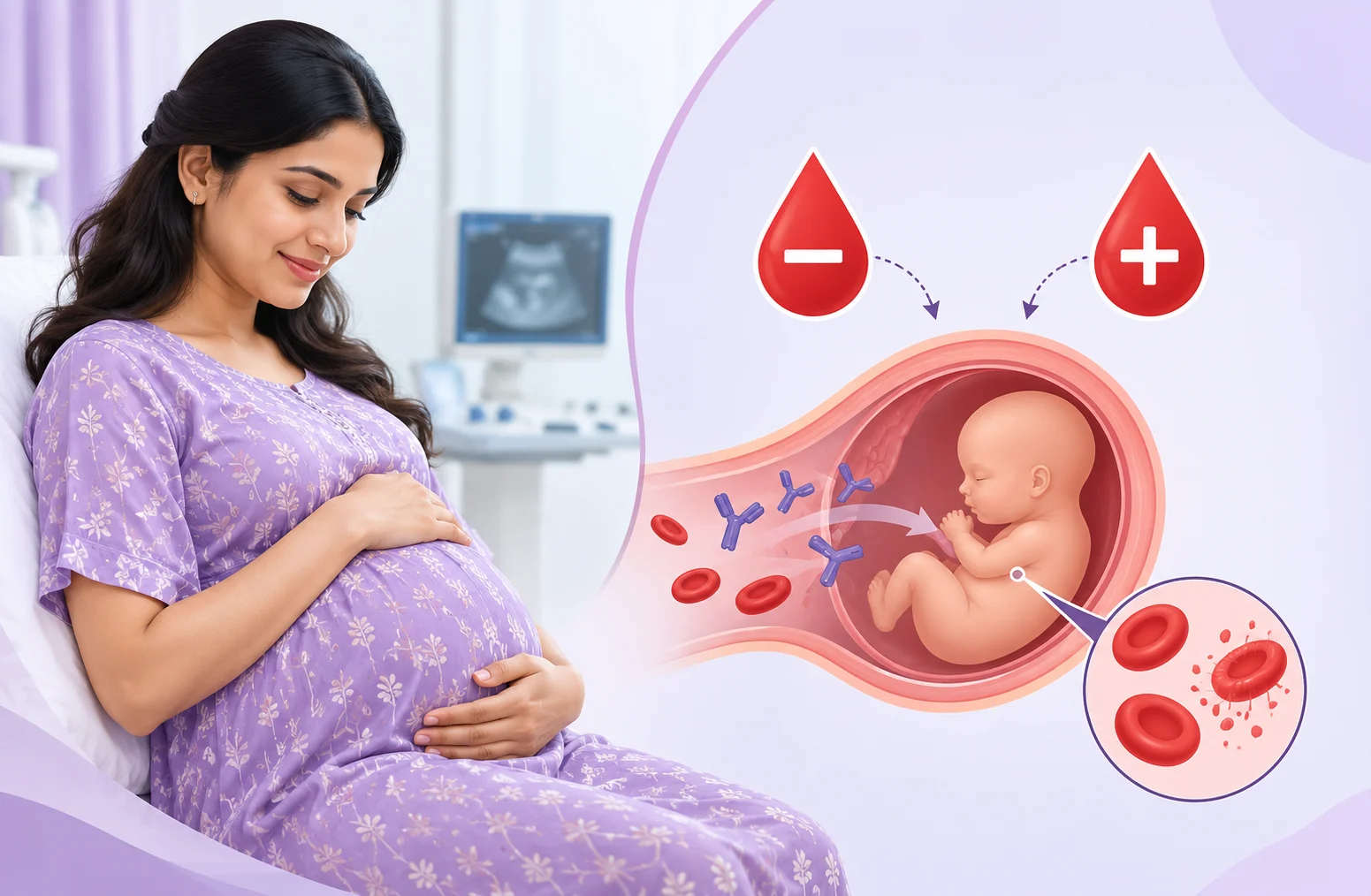
During pregnancy, a mother's health and her baby's development are closely connected. While most pregnancies progress without blood-related complications, certain differences between the mother's and baby's blood can sometimes need extra attention. One such condition is Rh incompatibility, which can be managed with early screening and appropriate care. Understanding how these differences can affect a pregnancy is key to ensuring the right care for both mother and baby.
What is Rh Incompatibility?
The Rh factor, also called the rhesus factor, is a protein found on the surface of red blood cells. The Rh blood group system contains several proteins, but in pregnancy, the term "Rh" generally refers to the D antigen (RhD), which is the most important antigen associated with Rh incompatibility.
If your red blood cells have this protein, you are Rh-positive. If they do not, you are Rh-negative.
Rh incompatibility in pregnancy can occur when an Rh-negative mother carries an Rh-positive baby. The baby may inherit the Rh-positive blood group from the father.
However, Rh incompatibility alone does not cause harm. Problems can develop only if the mother's immune system recognises the baby's Rh-positive red blood cells as foreign and produces antibodies against them. This process is called Rh sensitisation or alloimmunisation. Routine screening and timely anti-D injections can prevent this from happening in most cases.
How Does Rh Incompatibility Affect Your Baby?
During pregnancy or childbirth, a small amount of the baby's blood can sometimes enter the mother's bloodstream. This may happen during delivery or after certain events, such as bleeding or an abdominal injury.
If an Rh-negative mother's immune system comes into contact with Rh-positive blood, it may begin making antibodies against the baby's red blood cells. This is called Rh sensitisation.
These antibodies usually do not cause problems for the mother. However, if they are present during a pregnancy with an Rh-positive baby, they can cross the placenta and destroy the baby's red blood cells. This can lead to anaemia, which means the baby has fewer healthy red blood cells than needed.
Anti-D immunoglobulin helps prevent Rh sensitisation in women who have not already developed their own Rh antibodies. If sensitisation has already occurred, anti-D cannot remove the antibodies, so the pregnancy needs appropriate monitoring and care.
Causes of Rh Incompatibility
Rh incompatibility occurs when the mother is Rh-negative and the baby is Rh-positive. However, problems develop only if the mother's immune system becomes sensitised to the baby's Rh-positive blood.
This can happen when some of the baby's blood enters the mother's bloodstream during pregnancy or around the time of birth. Possible situations include:
- Childbirth: Some of the baby's blood may enter the mother's bloodstream during delivery.
- Bleeding during pregnancy: Vaginal bleeding may sometimes allow the baby's blood to enter the mother's circulation.
- Miscarriage or ectopic pregnancy (when a pregnancy develops outside the uterus, usually in a fallopian tube): These events may require assessment for anti-D, depending on the circumstances and stage of pregnancy.
- Abdominal injury: An injury to the abdomen during pregnancy may cause blood from the baby to enter the mother's bloodstream.
- Certain medical procedures: Procedures such as amniocentesis or chorionic villus sampling (CVS), which involve collecting samples for testing, may increase the chance of blood mixing.
These events do not always lead to sensitisation. If you are Rh-negative and experience bleeding, an injury, or a relevant medical procedure during pregnancy, contact your doctor promptly. They can assess whether you need an additional anti-D injection.
Risk Factors of Rh Incompatibility
The main factors that determine whether Rh incompatibility may affect a pregnancy are the mother's Rh status, the baby's Rh status, and whether the mother has developed Rh antibodies.
Situations that may increase the chance of sensitisation include:
- Being Rh-negative while carrying an Rh-positive baby: This creates the possibility of an immune reaction if the baby's blood enters the mother's bloodstream.
- Not receiving anti-D when recommended: Missing a required dose may increase the chance of developing Rh antibodies.
- A previous sensitising event: A previous pregnancy, delivery, bleeding episode, abdominal injury or certain medical procedures may lead to sensitisation if appropriate prevention was not given.
Rh sensitisation can happen during a previous pregnancy or after a blood transfusion. This means that even if you are pregnant for the first time, your body may already have developed antibodies against Rh-positive blood. Therefore, it's important to check your blood group and antibody levels early in pregnancy.
Symptoms of Rh Incompatibility
Rh incompatibility does not usually cause symptoms in the mother. You may feel completely well even if your blood group is Rh-negative or if Rh antibodies are present.
This is why blood tests are important during pregnancy. Your doctor checks your blood group and screens for antibodies to see whether you need additional care.
If Rh antibodies affect the baby, the baby may develop anaemia before birth. After birth, signs may include jaundice, which causes yellowing of the skin and eyes, or other anaemia-related symptoms. Antenatal monitoring and newborn assessment help identify these problems.
Complications of Rh Incompatibility
Most Rh-negative women do not develop complications when appropriate screening and anti-D prevention are provided. However, if a mother becomes sensitised and carries an Rh-positive baby, her antibodies can destroy the baby's red blood cells, causing haemolytic disease of the fetus and newborn (HDFN).
Possible complications include:
- Fetal anaemia: Destruction of red blood cells reduces the baby's oxygen supply.
- Hydrops fetalis: Severe anaemia can cause fluid accumulation in the baby's tissues and organs, potentially leading to heart failure.
- Newborn jaundice: Increased bilirubin from red blood cell breakdown causes yellowing of the skin and eyes.
- Kernicterus (bilirubin encephalopathy): Extremely high bilirubin levels can cause permanent brain damage if severe jaundice is not treated.
- Late-onset anaemia: Anaemia can develop or persist for up to 6–8 weeks after birth, requiring continued monitoring and sometimes treatment.
- Severe outcomes: Untreated HDFN can cause stillbirth or neonatal death.
Early screening, fetal monitoring and timely treatment can significantly reduce these risks.
Note : Rh incompatibility is not the only cause of HDFN. Other maternal red blood cell antibodies, including anti-Kell, anti-c and anti-E, can also cross the placenta and affect the baby's red blood cells. ABO incompatibility, particularly when a mother with blood group O carries a baby with blood group A or B, can also cause HDFN, commonly presenting as newborn jaundice.
Treatment Options for Rh Incompatibility
Treatment depends on whether the mother has developed Rh antibodies. If she has not been sensitised, anti-D immunoglobulin can help prevent antibody formation. If sensitisation has already occurred, the focus shifts to monitoring the baby for anaemia and managing complications.
If the antibody screening test detects antibodies other than anti-D, such as anti-Kell, anti-c or anti-E, further testing is needed to identify the specific antibody. The monitoring and treatment plan depends on the type of antibody detected and its potential effect on the baby. Anti-D immunoglobulin does not prevent or treat these other antibodies.
The aim of monitoring and treatment is to prevent severe fetal anaemia, hydrops fetalis (dangerous fluid build-up in the baby's body), and complications of severe newborn jaundice, including kernicterus (bilirubin-related brain damage).
Treatment and care may include:
- Anti-D immunoglobulin: Given to eligible Rh-negative mothers, commonly around 28 weeks and after certain sensitising events, to prevent Rh antibody formation.
- Antibody monitoring: An indirect Coombs test (antibody test) measures maternal antibodies. For immune anti-D, testing is generally repeated every four weeks until 28 weeks and every two weeks thereafter. An anti-D level of 4 IU/mL or higher warrants specialist assessment. A titre of 1:16 is another commonly used critical threshold, depending on the laboratory and antibody involved.
- Fetal monitoring: Middle cerebral artery (MCA) Doppler scans, usually every 1–2 weeks when indicated, help detect fetal anaemia. A reading above 1.5 multiples of the median (MoM) suggests significant anaemia and needs specialist assessment.
- Intrauterine blood transfusion: If the baby develops severe anaemia, a fetal medicine specialist may perform a blood transfusion through the umbilical cord, usually from around 18–20 weeks onwards.
- Timing of delivery: If the baby remains stable, delivery is generally planned around 37–38 weeks. Earlier delivery may be necessary if complications develop.
- Newborn treatment: After birth, the baby may undergo a direct antiglobulin test (DAT), bilirubin testing and assessment for anaemia. Treatment may include phototherapy for jaundice or exchange transfusion for severe cases.
If the baby is Rh-positive, an unsensitised Rh-negative mother may also need anti-D within 72 hours after delivery.
Important: Anti-D immunoglobulin prevents Rh sensitisation in eligible Rh-negative women who have not already developed immune anti-D antibodies. It cannot remove antibodies that have already formed and does not prevent sensitisation to other red blood cell antigens. Once clinically significant antibodies are detected, specialist monitoring is essential to protect the baby.
What is the Prognosis (Outlook) for Rh Incompatibility?
The outlook for Rh incompatibility is generally very good with timely screening and appropriate prevention. Approximately 5% of people in India are Rh-negative.
Anti-D immunoglobulin significantly reduces sensitisation:
- Without prophylaxis: Approximately 13–16% of at-risk women develop Rh antibodies.
- With postnatal anti-D: The risk falls to 0.5–1.8%.
- With antenatal and postnatal anti-D: The risk falls further to approximately 0.14–0.2%.
If sensitisation has already occurred, regular fetal monitoring and timely treatment can help prevent serious complications. Some babies may need phototherapy, blood transfusions or monitoring for anaemia after birth.
Since Rh-negative blood is relatively scarce in India, early coordination with the hospital blood bank is important if a transfusion may be needed.
Most Rh-incompatible pregnancies have favourable outcomes with appropriate care.
What Questions Should I Ask My Doctor?
Understanding your blood test results and care plan can help you feel more confident during pregnancy. Consider asking your gynecologist the following questions.
Screening and Prevention Questions
- What is my blood group and Rh status?
- Have I been screened for Rh antibodies?
- When should I receive anti-D immunoglobulin?
- What should I do if I have bleeding or an abdominal injury during pregnancy?
Monitoring Questions
- Have any Rh antibodies been detected in my blood?
- Does my baby need any additional monitoring?
- If I have already developed antibodies, what care will I need?
- Will my Rh status affect care in a future pregnancy?
You can write down your questions before your appointment. Your doctor can explain what your results mean and help you understand the steps needed to protect your baby's health.
Prevention & Lifestyle Tips for Rh Incompatibility
Rh sensitisation can usually be prevented with timely testing and anti-D immunoglobulin when recommended. There is no special diet or lifestyle change needed simply because you are Rh-negative.
You can take the following steps as part of your pregnancy care:
- Know your Rh status early: A blood test during your first antenatal visits identifies your blood group.
- Complete antibody screening: This test checks whether your immune system has already developed antibodies against red blood cells.
- Receive anti-D when recommended: Follow your doctor's advice on routine doses during pregnancy and after birth.
- Report bleeding or injury promptly: Contact your doctor after any bleeding, abdominal injury, or relevant procedure so they can decide whether you need additional anti-D.
- Keep a record of your care: Note your blood group, antibody test results and any anti-D doses received, particularly if you plan future pregnancies.
Following your care plan can greatly reduce the risk of Rh sensitisation. If antibodies are already present, regular monitoring and specialist guidance help the team plan the right care for your baby.
Why Choose BirthRight by Rainbow Hospitals for Rh Incompatibility Care?
At BirthRight by Rainbow Hospitals, we understand that learning you are Rh-negative can bring questions about your pregnancy and your baby's health. We believe clear information, timely screening and an individualised care plan can help you feel more confident throughout your pregnancy.
- Screening and prevention: We emphasise the importance of identifying your blood group and checking for Rh antibodies early in pregnancy so we can plan appropriate preventive care.
- Individualised pregnancy care: We recognise that each pregnancy is different. We aim to guide you based on your blood test results, pregnancy history, and any additional care you may need.
- Monitoring when needed: If Rh antibodies are detected, we encourage timely specialist assessment and appropriate monitoring to check your baby's wellbeing.
- Care for your baby: If you need additional support, the care team can guide you on appropriate newborn assessments and treatment options for your circumstances.
At BirthRight by Rainbow Hospitals, we encourage you to discuss your Rh status and any concerns with your obstetrician. Contact your nearest Rainbow Hospitals location to confirm the availability of the relevant specialists, screening services and newborn care for your needs.

Find a Doctor and Book Appointment Online
Meet our specialist doctors who bring together clinical expertise, compassion, and personalised care to support your health and well-being. Choose from 1,300+ specialists across our network and book an appointment with BirthRight and Rainbow Children Hospitals, offering 24*7 support to you and your family.

Dr. Pranathi Reddy A
Clinical Director – Obstetrics & Gynecology.
English,Hindi,Telugu Banjara Hills

Dr. Gauri Vinayak Dhamangaonkar
Senior Consultant - Fetal Medicine
15 Years English,Hindi,Marathi,Telugu Kondapur OP, Banjara Hills

Dr. Shruthi Reddy Poddutoor
Consultant Obstetrician, Gynecologist & Laparoscopic Surgeon
English,Telugu Banjara Hills

Dr. Himabindu Veerla
Consultant Obstetrician, Gynecologist & Laparoscopic Surgeon
English,Telugu Banjara Hills

Dr. Bhargavi Reddy K
Consultant - Obstetrics and Gynecology
10 Years English,Hindi,Telugu Banjara Hills, Attapur Clinic

Dr. Annie Pranutha P
Consultant Obstetrics and Gynecology
9 Years English,Hindi,Telugu Banjara Hills, Attapur Clinic

Dr. Sasikala Kola
Consultant Obstetrician & Gynecologist
English,Hindi,Telugu Banjara Hills

Dr. Atigadda Vijaya
Consultant - Obstetrics & Gynecology
Hindi,Telugu Banjara Hills, Himayatnagar, Attapur Clinic

Dr. Nishanth Reddy Inavolu
Visiting Consultant Physician and Diabetologist & Internal Medicine
English,Hindi,Telugu Banjara Hills, Himayatnagar

Dr. Tulika Tayal
Consultant - Fetal Medicine
English,Telugu Banjara Hills

Dr. M Prathyusha Reddy
Consultant Obstetrics & Gynecology
English,Telugu Banjara Hills

Dr. Nithya Narasimha Murthy
Consultant -Psychiatrist
English,Hindi,Telugu Kondapur OP, Banjara Hills, Child Development Centre - Banjarahills Rd No 10

Dr. Brundavani
Consultant - Nutritionist
English,Hindi,Telugu Kondapur OP, Hydernagar, Banjara Hills, Child Development Centre - Banjarahills Rd No 10

Dr. Niveditha Chalmeda
Consultant
English,Telugu Banjara Hills

Dr. Kirti Reddy Patlolla
Consultant Obstetrics and Gynaecology
English,Telugu Banjara Hills, Attapur Clinic

Dr. Tuheena Sharma
Consultant - Perinatal Physiotherapy
10 Years English,Telugu Banjara Hills

Dr. Aditi Shah
Consultant - Fetal Medicine
English,Telugu Banjara Hills

Dr. Swathi Naga Tulasi Rayapureddy
Lactation Consultant
8 Years English,Telugu Banjara Hills

Dr. Swetha Reddy. S
CONSULTANT PERINATAL PSYCHIATRIST AND WOMEN MENTAL HEALTH SPECIALIST
13 Years English,Hindi,Telugu Banjara Hills

Dr. Addu Kiranmayi
Chief Clinical Nutritionist and Lifestyle Medicine Consultant
15 Years English,Hindi,Telugu Himayatnagar, Banjara Hills

Dr. Palle Nalini Kumari
Lactation Consultant
17+ Years English,Hindi,Telugu Banjara Hills
Dr. Nazia Tabassum
Consultant - Breast, Plastic & Reconstructive Surgeon
9 Years English,Hindi,Telugu,Urdu Banjara Hills

Dr. Sruthi Cheera
Consultant Breast Surgeon
5 Years English,Hindi,Kannada,Telugu Banjara Hills

Dr. Supriya Reddy
Lactation Consultant
5 Years English,Hindi,Telugu Banjara Hills

Dr. Niraj Krishnamurthy Yanamandra
Senior Consultant Obstetrician & Gynaecologist, Laparoscopy & Hysteroscopy Surgeon
English,Hindi,Telugu Hydernagar, Banjara Hills

Dr. B. Rao Bahadur
Consultant – Obstetrician & Gynecologist, Laparoscopic ,& Hysteroscopic Surgeon
22 Years English,Hindi,Konkani,Marathi,Telugu Banjara Hills, Kondapur OP

Dr. Sneha Kulkarni
Consultant - Child, Adolescent & Adult Psychiatrist
10 Years English,Hindi,Kannada,Telugu Secunderabad, Banjara Hills, Child Development Centre - Banjarahills Rd No 10

Dr. Lavanya Janagama
Consultant – Obstetrics & Gynecology
10+ Years English Banjara HillsLeading Hospitals for Women Care
Rainbow Children's Hospital stands as a testament to the hospital's continual pursuit of excellence and innovation, providing specialized care for women and children








chennai
Blogs
Discover our most recent health articles provided by our reliable experts.




What Are People Saying About Us
Embark on a journey of inspiration and hope with our patient success stories, complemented by informative videos from our dedicated doctors.


Media
 Common Gynaecological Surgeries to Fix Female Reproductive Issues
 Healthy Woman - Healthy World
 Healthier Women For a Healthier Future...
 Rainbow Children’s Hospital & BirthRight by Rainbow Launch Video Consultation Facilities
 Dr.Pranthi Reddy
 What is the use of that?
 Can you try this time?
 Pregnant Women are Not Unfit
 Declining Age of Menarche - A Matter of Concern
 Important Facts about Cervical Cancer
 Be careful before preempting
 Flu every month!
 Menstrual cramps
 Premature delivery
 Whether laughing or coughing...why?
 Multi - Tasking may be Cool but it's not Healthy
 Pregnant and Worried about COVID-19? Here's Everything you Need to know
 Video Consultation in Pandamic Situation for Pregnancy Women's
 Women.. Various types of cysts
 Recurrent Pregnancy Loss in Women
 Early Onset of Puberty: Causes, Symptoms and Treatment Options
Common Gynaecological Surgeries to Fix Female Reproductive Issues
Healthy Woman - Healthy World
Healthier Women For a Healthier Future...
FAQs
Is an Rh-negative blood group a disease, and does it affect my health?
Will Rh incompatibility affect my first pregnancy?
Is anti-D immunoglobulin safe during pregnancy?
Will I need anti-D in every pregnancy if I am Rh-negative?
Can Rh incompatibility be prevented completely?
What happens if I miss or delay my anti-D injection?
Does my partner's Rh status matter if I am Rh-positive?
Can Rh incompatibility cause a miscarriage?
Will my baby need treatment after birth if I have Rh antibodies?
Can I have a normal vaginal delivery if I am Rh-negative?
Do I need anti-D after an abortion, miscarriage or MTP?
What is the cost of anti-D injection in India, and where is it available?
What if my husband is also Rh-negative?
Can Rh-negative women conceive naturally or through IVF?
How soon after delivery should anti-D be given?
Can antibodies other than Rh antibodies affect my baby?
Quick Links
Free Calculators to Track and Predict your Pregnancy
Gynecologist in Other Locations
Women's Health Conditions We Treat
- Mastitis (Breast Infection)
- PCOS (Polycystic Ovary Syndrome)
- Uterine Fibroids (Leiomyomas)
- Recurrent Pregnancy Loss
- Blocked Fallopian Tubes (Fallopian Tube Obstruction)
- Gestational Diabetes in Pregnancy
- Incompetent Cervix (Cervical Insufficiency)
- COVID-19 in Pregnancy
- Cytomegalovirus (CMV) in Pregnancy
- HELLP Syndrome
- Luteal Phase Defect
- Vasa Previa
- Listeria in Pregnancy
- Placenta Previa
- Endometrial Polyps (Uterine Polyps)
- Congenital Heart Disease in Pregnancy
- Hyperemesis Gravidarum (Severe Morning Sickness)
- Preeclampsia (toxemia)
- Fetal Distress (Non-Reassuring Fetal Status)
- Postpartum Haemorrhage (PPH)
- Placental Abruption (Abruptio Placentae)
- Placenta Accreta