




Cytomegalovirus (CMV) in Pregnancy
Cytomegalovirus (CMV) in pregnancy, also referred to clinically as maternal CMV infection, is a common viral infection that usually causes no symptoms in the mother but can pass to the baby across the placenta. It is linked to contact with young children’s saliva and urine, and may lead to congenital CMV, hearing loss or growth problems in a small number of babies. Testing and monitoring guide care.

Seamless support from diagnosis to post treatment care
Overview
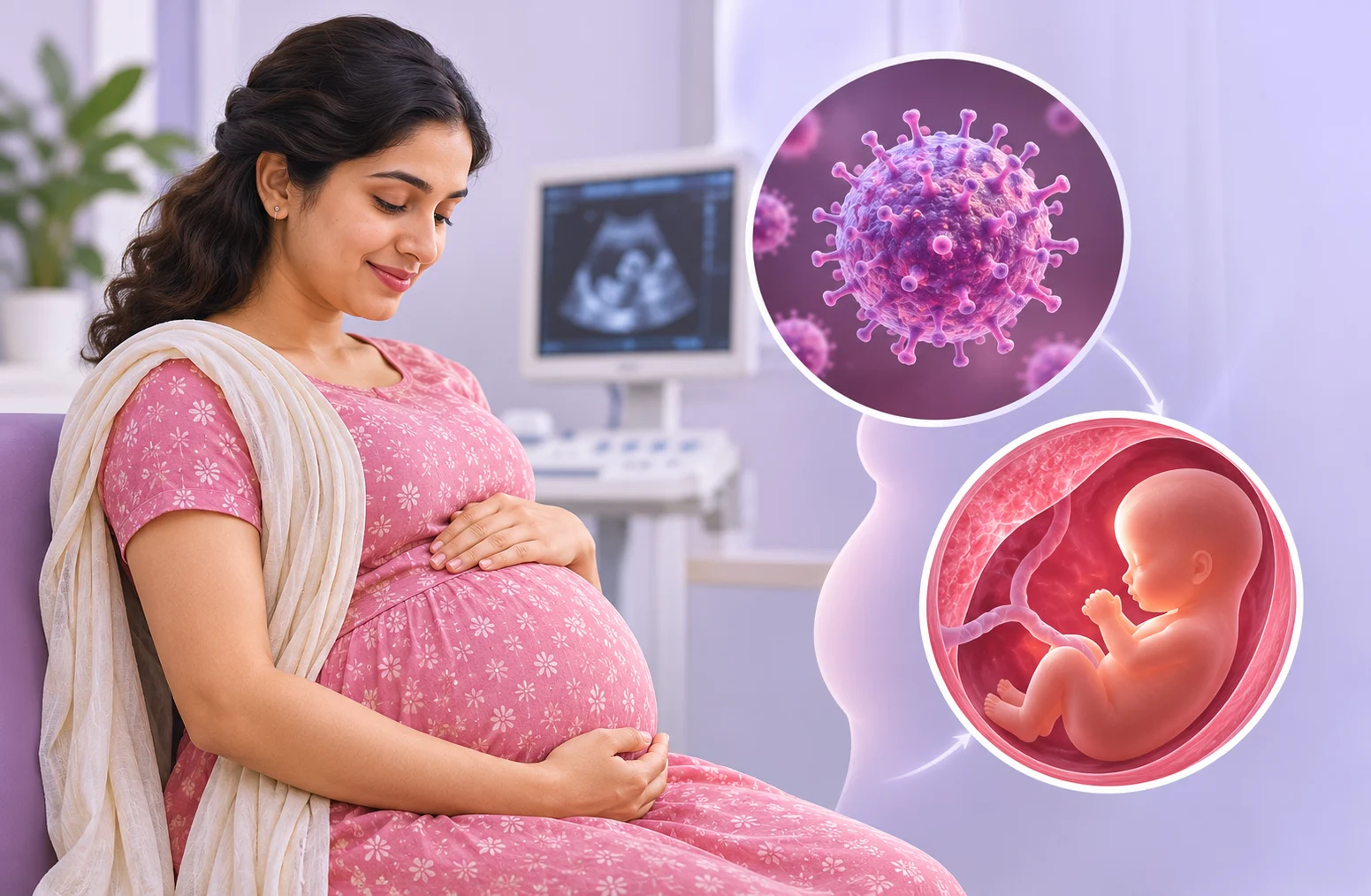
Cytomegalovirus, or CMV, often causes few or no noticeable symptoms, so some women first hear about it during pregnancy testing or a discussion with their doctor. During pregnancy, the main concern is whether the infection can pass to the baby and whether additional monitoring is needed.
Understanding how CMV spreads, what a positive test may mean, and when doctors recommend closer follow-up can make the next steps easier to understand. A useful place to begin is with what CMV is and why the infection needs particular attention during pregnancy.
What Is Cytomegalovirus (CMV) in Pregnancy?
Cytomegalovirus is a common virus from the herpesvirus family, the same family as the viruses that cause cold sores and chickenpox. Most people catch it at some point in life, usually in childhood, and it often causes no illness at all. Once you have had CMV, the virus stays in your body for life in a resting state, which is normal and usually harmless.
CMV is extremely common in India. In one hospital study of mothers in Pune, around 96 percent already carried antibodies to the virus, meaning they had been infected before. A CMV infection in pregnancy matters most when a woman catches the virus for the first time while pregnant, as this carries the highest chance of passing it to the baby. Reactivation of an old infection or reinfection with a new strain can also pass the virus to the baby, less often, and in countries like India, where most women have had CMV before, these account for many babies born with CMV.
What Does a CMV IgG Positive Result Mean in Pregnancy?
CMV blood tests look for two antibodies: IgG and IgM. A CMV IgG positive result in pregnancy usually means you were infected with CMV in the past, often long before this pregnancy. This is common and generally reassuring because past infection can provide some protection. An IgM-positive result can suggest a more recent infection and usually needs further tests, such as an avidity test, to determine the timing. Your doctor will explain what your particular results mean for you and your baby.
How Does CMV Spread in Pregnancy?
CMV passes from person to person through body fluids, not through the air like a cold. It spreads through saliva, urine, blood, breast milk and sexual contact. For pregnant women, the most common source is often closer to home than they expect.
- Contact with young children: Toddlers and young children are a common source, as they easily pass the virus through saliva and urine.
- Sharing food and utensils: Sharing cups, spoons or food with a young child can pass the virus on.
- Saliva and kissing: Kissing a young child on the mouth or wiping their nose or mouth without washing your hands afterwards can expose you to the virus.
- Sexual contact: CMV can also spread between adults through sexual contact.
- From mother to baby: During pregnancy, the virus can cross the placenta to the baby, and it can also pass through breast milk after birth.
The link with young children is worth understanding. The CDC notes that nearly one in three children has already been infected with CMV by age five, and children can shed the virus in their saliva and urine for months without any signs of illness. If you have a toddler or work with young children, simple hygiene steps make a real difference, and this page covers them later.
Causes of CMV Infection in Pregnancy
The virus causes infection by entering the body through contact with the body fluids of someone who is carrying it. In pregnancy, doctors classify the infection into a few types because each type affects the risk to the baby. The main patterns are set out below.
- A first-time (primary) infection: Catching CMV for the first time during pregnancy carries the highest chance of passing it to the baby.
- Reactivation of a past infection: The virus from an earlier infection can reactivate, though the risk to the baby is usually lower than with a first infection.
- Reinfection with a different strain: You can catch a different strain of CMV even after a past infection.
- Passage to the baby: When the virus is active, it can cross the placenta, which is how a baby develops congenital CMV.
This is why your doctor pays attention to whether an infection is new or old. A first-time infection during pregnancy is watched more closely than reactivation of a virus you had years ago. Understanding the pattern helps your team assess risk and plan the right follow-up.
Risk Factors for CMV Infection in Pregnancy
Some women come into contact with CMV more often than others, which raises the chance of a first infection during pregnancy. Knowing your risk helps you take sensible precautions. The main risk factors are below.
- Having a young child at home: Close daily contact with a toddler is one of the more common ways pregnant women are exposed.
- Working with young children: Jobs in childcare, nurseries or schools bring frequent contact with the virus.
- Not having been infected before: Women who have never had CMV have no existing antibodies, so a first infection is possible.
- Close contact with body fluids: Frequent handling of nappies, saliva and toys increases exposure without good hand hygiene.
Having a risk factor does not mean you will catch CMV or that your baby will be affected. Many women with young children go through pregnancy without any problem. The steps in the prevention section further lower your risk and are easy to build into daily life.
Symptoms of CMV in Pregnancy
One reason CMV can be hard to spot is that most infections cause no symptoms. Many women feel completely well and only learn about the virus through a blood test. When CMV symptoms in pregnancy do appear, they are usually mild and easy to mistake for a common viral illness. The possible signs are listed below.
- A mild fever: A raised temperature that usually settles on its own.
- Tiredness: Feeling more worn out than usual, which is easy to put down to pregnancy.
- A sore throat: A mild sore throat similar to the start of a cold.
- Swollen glands: Tender, swollen glands in the neck.
- Muscle aches: General body aches or a mild headache.
Because these symptoms are so mild and general, they are not a reliable way to know whether you have CMV. That's why doctors use a blood test when they suspect infection. If you feel unwell or are worried after contact with a young child, speak to your doctor rather than trying to judge it yourself.
Complications of CMV in Pregnancy
For most pregnancies, CMV causes no harm, and the majority of babies are born healthy. The main concern is when the virus passes to the baby during pregnancy. The possible complications are set out below, followed by a closer look at congenital CMV.
- Passing the virus to the baby: An infection, most often a first infection, can cross the placenta and lead to congenital CMV in the baby.
- Effects on the baby at birth: A small number of affected babies have low birth weight, jaundice, or a smaller head size.
- Preterm birth: In some cases, infection is linked with an early delivery.
- Pregnancy loss: Rarely, a severe first infection can be linked with miscarriage or stillbirth.
Congenital CMV: What It Means for the Baby
Congenital CMV means the baby was infected with the virus before birth. The reassuring point is that most babies with congenital CMV have no symptoms at birth and most grow up healthy, although a small number later develop hearing loss. A smaller number have signs at birth, such as jaundice, a small head, a rash, or problems with the liver, and some develop difficulties later.
Hearing loss is the most common long-term effect, which is why careful follow-up matters. The CDC points out that CMV-related hearing loss can appear later in childhood, even in a baby who passed the newborn hearing screening. For this reason, a baby known to have congenital CMV needs repeat hearing checks as they grow, not just the birth screen.
Treatment and Management Options for CMV in Pregnancy
There is no vaccine for CMV yet, and there is no simple cure for the infection during pregnancy. Care instead focuses on confirming the infection and closely monitoring your baby. Your doctor will tailor the plan to your test results, and the usual care steps are below.
- Blood tests to confirm the infection: IgG, IgM, and avidity tests help determine whether an infection is new or old.
- Detailed ultrasound scans: Regular scans check your baby’s growth and look for any CMV-related signs.
- Referral to a fetal medicine specialist: If a recent infection is confirmed, you may be referred for closer monitoring.
- Amniocentesis in some cases: A test of the fluid around the baby can show whether the baby has been infected, and this helps guide counselling and monitoring. It is usually done after about 20 to 21 weeks of pregnancy and at least 6 to 8 weeks after the suspected infection.
- Antiviral treatment in selected cases: Antiviral medicine (such as valaciclovir) may be considered by a fetal medicine specialist in particular situations, such as a recent first infection in early pregnancy. It is not suitable for everyone, and your doctor will weigh the benefits and risks with you.
- Newborn testing after birth: If congenital CMV is a possibility, your baby can be tested soon after delivery, ideally within the first 3 weeks of life, as later tests cannot confirm that the infection happened before birth.
Much of the value of care comes from knowing what you are dealing with and planning ahead. A confirmed infection does not mean your baby will be affected, and close monitoring helps catch anything important early. Your team will guide you through each step, so you won't be making decisions alone.
What Is the Prognosis (Outlook) for CMV in Pregnancy?
The outlook for most women with CMV in pregnancy is good. Even when a baby is born with congenital CMV, most have no symptoms at birth and many do well, although some can develop problems such as hearing loss later, so follow-up still matters. This is worth holding on to when the diagnosis feels frightening.
A smaller group of babies have longer-term effects, most often hearing loss, and a few have vision or developmental issues. Early diagnosis and regular follow-up, especially repeat hearing checks, can help identify and support these issues early. Your doctor will explain what your own results suggest and arrange the right follow-up for your baby.
What Questions Should I Ask My Gynaecologist?
A CMV result raises a lot of questions, and it helps to have them written down before your appointment with your gynaecologist. The prompts below are grouped to make them easier to use. There are no wrong questions here.
Testing and diagnosis questions
- Do my results suggest a new infection or a past one?
- Do I need any further tests, such as an avidity test or amniocentesis?
- What is the chance that my baby has been affected?
- Will I be referred to a fetal medicine specialist?
Monitoring and newborn care questions
- How often will my baby be scanned going forward?
- Will my baby be tested for CMV after birth, and how?
- Will my baby need repeat hearing checks as they grow?
- What signs should I look out for in my baby after delivery?
Asking these questions helps you understand your own situation rather than a general picture. It also lets your doctor explain the plan clearly and reassure you where they can. A short, honest conversation often takes away a lot of worry.
Prevention Tips for CMV in Pregnancy
Because CMV often spreads from young children, most prevention is about simple hygiene at home. These steps are especially useful if you have a toddler or work with children. None are difficult, and together they lower your risk.
- Wash your hands well: Use soap and water after changing nappies, wiping noses, and handling toys.
- Do not share food or utensils: Avoid sharing cups, spoons, and food with young children.
- Kiss carefully: Kiss young children on the forehead rather than on the lips or cheek near the mouth.
- Clean toys and surfaces: Wipe down toys and surfaces that come into contact with saliva.
- Practise safe sex: CMV can spread through sexual contact, so the usual precautions help.
Keep these habits throughout pregnancy, especially in the early months when a first infection carries more risk. They protect you without meaning you have to keep your distance from your child. Good hygiene lets you keep your family life close with more peace of mind.
Why Choose BirthRight by Rainbow Hospitals for CMV in Pregnancy Care?
BirthRight by Rainbow Hospitals brings together obstetricians, fetal medicine specialists, and newborn care under one roof, backed by three decades of expertise in women’s and children’s health. A CMV result needs careful interpretation and, where needed, close monitoring of the baby, and our teams are set up for exactly this kind of follow-through. From detailed scans to specialist referral, we coordinate care so you are supported at each stage.
If your baby needs checking after birth, you can access newborn testing, hearing assessment, and paediatric follow-up in the same place. This means the move from pregnancy care to your baby’s care is smooth, with the same team tracking what matters. The aim throughout is clear information, timely monitoring and steady support for you and your baby.

Find a Doctor and Book Appointment Online
Meet our specialist doctors who bring together clinical expertise, compassion, and personalised care to support your health and well-being. Choose from 1,300+ specialists across our network and book an appointment with BirthRight and Rainbow Children Hospitals, offering 24*7 support to you and your family.

Dr. Pranathi Reddy A
Clinical Director – Obstetrics & Gynecology.
English,Hindi,Telugu Banjara Hills

Dr. Gauri Vinayak Dhamangaonkar
Senior Consultant - Fetal Medicine
15 Years English,Hindi,Marathi,Telugu Kondapur OP, Banjara Hills

Dr. Shruthi Reddy Poddutoor
Consultant Obstetrician, Gynecologist & Laparoscopic Surgeon
English,Telugu Banjara Hills

Dr. Himabindu Veerla
Consultant Obstetrician, Gynecologist & Laparoscopic Surgeon
English,Telugu Banjara Hills

Dr. Bhargavi Reddy K
Consultant - Obstetrics and Gynecology
10 Years English,Hindi,Telugu Banjara Hills, Attapur Clinic

Dr. Annie Pranutha P
Consultant Obstetrics and Gynecology
9 Years English,Hindi,Telugu Banjara Hills, Attapur Clinic

Dr. Sasikala Kola
Consultant Obstetrician & Gynecologist
English,Hindi,Telugu Banjara Hills

Dr. Atigadda Vijaya
Consultant - Obstetrics & Gynecology
Hindi,Telugu Banjara Hills, Himayatnagar, Attapur Clinic

Dr. Nishanth Reddy Inavolu
Visiting Consultant Physician and Diabetologist & Internal Medicine
English,Hindi,Telugu Banjara Hills, Himayatnagar

Dr. Tulika Tayal
Consultant - Fetal Medicine
English,Telugu Banjara Hills

Dr. M Prathyusha Reddy
Consultant Obstetrics & Gynecology
English,Telugu Banjara Hills

Dr. Nithya Narasimha Murthy
Consultant -Psychiatrist
English,Hindi,Telugu Kondapur OP, Banjara Hills, Child Development Centre - Banjarahills Rd No 10

Dr. Brundavani
Consultant - Nutritionist
English,Hindi,Telugu Kondapur OP, Hydernagar, Banjara Hills, Child Development Centre - Banjarahills Rd No 10

Dr. Niveditha Chalmeda
Consultant
English,Telugu Banjara Hills

Dr. Kirti Reddy Patlolla
Consultant Obstetrics and Gynaecology
English,Telugu Banjara Hills, Attapur Clinic

Dr. Tuheena Sharma
Consultant - Perinatal Physiotherapy
10 Years English,Telugu Banjara Hills

Dr. Aditi Shah
Consultant - Fetal Medicine
English,Telugu Banjara Hills

Dr. Swathi Naga Tulasi Rayapureddy
Lactation Consultant
8 Years English,Telugu Banjara Hills

Dr. Swetha Reddy. S
CONSULTANT PERINATAL PSYCHIATRIST AND WOMEN MENTAL HEALTH SPECIALIST
13 Years English,Hindi,Telugu Banjara Hills

Dr. Addu Kiranmayi
Chief Clinical Nutritionist and Lifestyle Medicine Consultant
15 Years English,Hindi,Telugu Himayatnagar, Banjara Hills

Dr. Palle Nalini Kumari
Lactation Consultant
17+ Years English,Hindi,Telugu Banjara Hills
Dr. Nazia Tabassum
Consultant - Breast, Plastic & Reconstructive Surgeon
9 Years English,Hindi,Telugu,Urdu Banjara Hills

Dr. Sruthi Cheera
Consultant Breast Surgeon
5 Years English,Hindi,Kannada,Telugu Banjara Hills

Dr. Supriya Reddy
Lactation Consultant
5 Years English,Hindi,Telugu Banjara Hills

Dr. Niraj Krishnamurthy Yanamandra
Senior Consultant Obstetrician & Gynaecologist, Laparoscopy & Hysteroscopy Surgeon
English,Hindi,Telugu Hydernagar, Banjara Hills

Dr. B. Rao Bahadur
Consultant – Obstetrician & Gynecologist, Laparoscopic ,& Hysteroscopic Surgeon
22 Years English,Hindi,Konkani,Marathi,Telugu Banjara Hills, Kondapur OP

Dr. Sneha Kulkarni
Consultant - Child, Adolescent & Adult Psychiatrist
10 Years English,Hindi,Kannada,Telugu Secunderabad, Banjara Hills, Child Development Centre - Banjarahills Rd No 10

Dr. Lavanya Janagama
Consultant – Obstetrics & Gynecology
10+ Years English Banjara HillsLeading Hospitals for Women Care
Rainbow Children's Hospital stands as a testament to the hospital's continual pursuit of excellence and innovation, providing specialized care for women and children













chennai
Blogs
Discover our most recent health articles provided by our reliable experts.




What Are People Saying About Us
Embark on a journey of inspiration and hope with our patient success stories, complemented by informative videos from our dedicated doctors.


Media
 Common Gynaecological Surgeries to Fix Female Reproductive Issues
 Healthy Woman - Healthy World
 Healthier Women For a Healthier Future...
 Rainbow Children’s Hospital & BirthRight by Rainbow Launch Video Consultation Facilities
 Dr.Pranthi Reddy
 What is the use of that?
 Can you try this time?
 Pregnant Women are Not Unfit
 Declining Age of Menarche - A Matter of Concern
 Important Facts about Cervical Cancer
 Be careful before preempting
 Flu every month!
 Menstrual cramps
 Premature delivery
 Whether laughing or coughing...why?
 Multi - Tasking may be Cool but it's not Healthy
 Pregnant and Worried about COVID-19? Here's Everything you Need to know
 Video Consultation in Pandamic Situation for Pregnancy Women's
 Women.. Various types of cysts
 Recurrent Pregnancy Loss in Women
 Early Onset of Puberty: Causes, Symptoms and Treatment Options
Common Gynaecological Surgeries to Fix Female Reproductive Issues
Healthy Woman - Healthy World
Healthier Women For a Healthier Future...
FAQs
Does CMV stay in your body for life?
Is CMV a sexually transmitted infection?
Is there a vaccine to prevent CMV during pregnancy?
Is a C-section needed if I have CMV?
Does CMV affect fertility or the chances of getting pregnant?
Should all pregnant women be tested for CMV?
Can I breastfeed if I have CMV?
In which trimester is CMV most harmful to the baby?
Can CMV cause a miscarriage?
Will my next pregnancy also be at risk if I have had CMV before?
Quick Links
Free Calculators to Track and Predict your Pregnancy
Gynecologist in Other Locations
Women's Health Conditions We Treat
- Mastitis (Breast Infection)
- PCOS (Polycystic Ovary Syndrome)
- Uterine Fibroids (Leiomyomas)
- Recurrent Pregnancy Loss
- Blocked Fallopian Tubes (Fallopian Tube Obstruction)
- Gestational Diabetes in Pregnancy
- Incompetent Cervix (Cervical Insufficiency)
- Bacterial Vaginosis (BV)
- Ectopic Pregnancy (Extrauterine Pregnancy)
- Vitamin B12 Deficiency Anaemia