




External Cephalic Version (ECV)
External Cephalic Version (ECV), also called turning a breech baby, is a hands-on procedure that guides a bottom-first or feet-first baby head-down before labour. It is done in a hospital with fetal monitoring and emergency caesarean facilities.

Seamless support from diagnosis to post treatment care
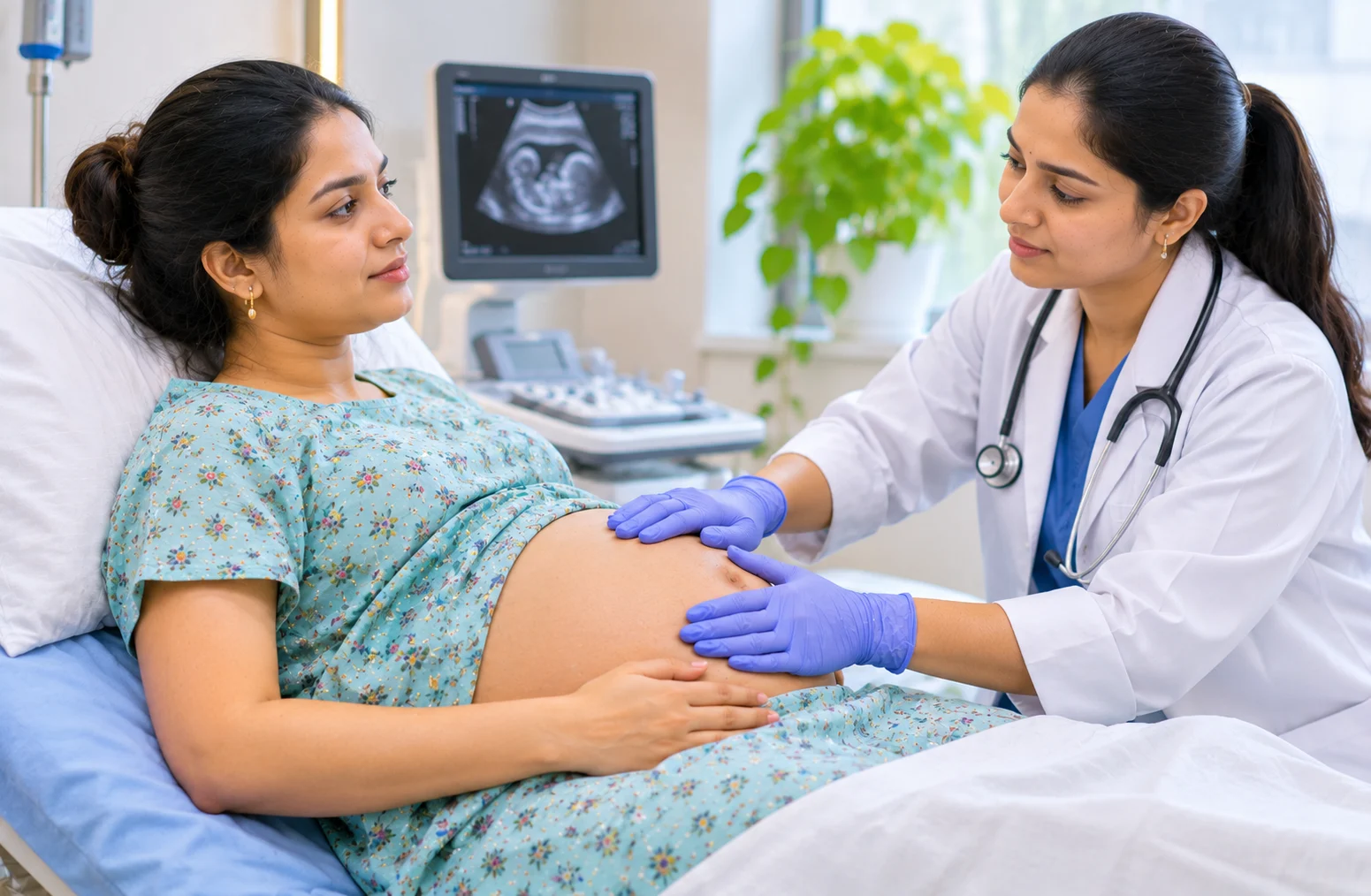
Overview
As your due date approaches, you may expect your baby to settle into a head-down position for birth. If your baby is still lying bottom-first or feet-first, your obstetrician may discuss different ways to plan a safe delivery. One option is external cephalic version (ECV), a procedure that may help turn your baby without surgery.
Learning about ECV can help you understand what the procedure involves, whether it may be suitable for you, and what to expect afterward. Your obstetrician will assess your pregnancy, explain the possible benefits and risks, and help you make an informed decision about your birth plan.
What Is External Cephalic Version (ECV)?
External cephalic version (ECV) is a procedure in which an obstetrician uses their hands to gently guide a baby from a breech position into a head-down position by applying pressure to the mother's abdomen.
A breech position means the baby's bottom or feet are positioned to come out first during birth rather than the head. ECV is usually considered towards the end of pregnancy, when the baby has less time to turn into the head-down position naturally.
The procedure does not involve surgery or an incision. The obstetrician uses ultrasound to check the baby's position and monitors the baby's heartbeat before and after the attempt.
Turning the baby head-down may improve your chances of a vaginal birth and reduce the need for a planned caesarean due to breech presentation. However, ECV does not guarantee a vaginal birth, and your delivery plan will depend on your overall pregnancy and how labour progresses.
Who Needs ECV and When Is It Right for You
ECV may be offered if your baby remains in a breech position towards the end of pregnancy. Most babies move into a head-down position before birth, but around 3–4 in every 100 babies remain breech at term.
ECV is generally offered from 36 weeks in women having their first baby and 37 weeks in women who have given birth before. It is not routinely recommended before 36 weeks because the baby may turn back into the breech position. In selected cases, ECV may also be attempted during early labour, provided your membranes (waters) are intact, and the clinical circumstances are suitable.
Your obstetrician may consider ECV in the following situations:
- Your baby remains breech towards the end of pregnancy: Your baby is still lying bottom-first or feet-first at around 36–37 weeks.
- You may be suitable for a vaginal birth: Turning your baby head-down could give you the option of vaginal delivery if there are no other medical reasons for a caesarean.
- Your pregnancy meets the safety requirements: Your obstetrician will assess your medical history, the baby's position, the placenta, the amount of amniotic fluid and your baby's wellbeing before recommending the procedure.
ECV can reduce the likelihood of your baby remaining breech at birth by approximately 58% and the likelihood of a caesarean delivery by around 43%, compared with not attempting the procedure. This can be particularly relevant in India, where caesarean rates are relatively high (21.5% nationally and 47.4% in private healthcare facilities, according to NFHS-5). ECV may provide an opportunity to avoid a caesarean when breech presentation is the main reason for considering one, particularly where expertise in planned vaginal breech delivery is limited.
However, ECV is not suitable for every pregnancy. Your obstetrician will assess whether the procedure is safe and appropriate for you. If it is not recommended, they will explain the alternatives and help you plan the safest available option for you and your baby.
What External Cephalic Version (ECV) Can Help With
ECV aims to turn a breech baby into a head-down position before labour begins. This can give you more options for planning your delivery.
The main potential benefits include:
- Turning the baby head-down: ECV may correct a breech position when the baby has not turned naturally by the end of pregnancy.
- Reducing the chance of a planned caesarean for breech presentation: If the procedure succeeds and no other medical concerns prevent vaginal birth, you may be able to plan for a vaginal delivery.
ECV does not treat an illness or guarantee a particular birth outcome. It addresses the baby's position, and your obstetrician will continue to assess your pregnancy even if the baby turns successfully.
Preparing for External Cephalic Version (ECV): Checks and Requirements
Before ECV, your medical team will assess whether the procedure is suitable, explain its benefits and possible risks, and obtain your written consent. It should be performed in a hospital with facilities for an emergency caesarean if required.
Preparation usually includes the following checks:
- Review of your pregnancy: Your obstetrician will review your medical history, previous pregnancies and any complications that could affect the procedure.
- Ultrasound scan: The scan confirms your baby's position and assesses the placenta and the amount of amniotic fluid.
- Monitoring the baby's heartbeat: Your baby's heartbeat is monitored using cardiotocography (CTG) for around 20–30 minutes before the procedure to establish their wellbeing.
- Emptying your bladder: You will usually be asked to empty your bladder before ECV to improve comfort during the procedure.
- Medication to relax the uterus: You may receive terbutaline (usually 250 micrograms by subcutaneous injection) to relax the uterine muscles and improve the chances of a successful turn. Temporary side effects may include palpitations (a racing heartbeat), flushing and trembling.
- Blood group assessment: If you are Rh-negative, you will generally be offered an anti-D injection after ECV. A Kleihauer test may also be performed to check whether any of your baby's blood cells have entered your bloodstream.
- Monitoring after ECV: The team will repeat CTG monitoring for around 20–30 minutes after the procedure to check your baby's heartbeat and wellbeing.
- Limiting attempts: The obstetrician may limit the procedure to around 2–3 attempts or a short period. They will stop if you experience significant pain or discomfort or if there are concerns about your baby's heartbeat.
- Emergency readiness: ECV should take place where staff, anaesthesia support and an emergency operating theatre are available if an immediate caesarean becomes necessary. Fasting requirements will depend on the hospital's anaesthesia and emergency-theatre protocols.
The visit may take a couple of hours because of preparation, the procedure and monitoring afterwards. The exact duration depends on your hospital's process and individual circumstances.
When May ECV Not Be Suitable
ECV is not suitable for every pregnancy. Some conditions make the procedure unsafe or mean that a caesarean birth is already necessary. Others may reduce the chances of success or require additional precautions. Your obstetrician will assess these factors before recommending ECV.
Absolute contraindications
ECV is generally not performed in the following situations:
- Placenta praevia: Placenta praevia is a condition in which the placenta covers the opening of the cervix.
- Placental abruption or recent significant vaginal bleeding: When the placenta separates from the uterus prematurely or there has been recent antepartum haemorrhage.
- Ruptured membranes: When your waters have broken, as this increases the risk of complications such as umbilical cord prolapse.
- Multiple pregnancy: ECV is generally not attempted during a twin or multiple pregnancy, except in selected circumstances involving the second twin.
- Abnormal fetal heartbeat: An abnormal cardiotocography (CTG) pattern that raises concerns about your baby's wellbeing.
- Major uterine abnormalities: Structural abnormalities that make the procedure unsafe.
- Another medical indication for caesarean birth: When a maternal or fetal condition already makes vaginal delivery unsuitable.
Relative contraindications and factors affecting success
The following conditions do not automatically rule out ECV but require careful assessment:
- Low amniotic fluid (oligohydramnios): Less fluid around the baby can make turning more difficult and reduce the chances of success.
- Fetal growth restriction (FGR): A baby who is not growing as expected, particularly with abnormal Doppler findings, may need closer assessment before ECV.
- Pre-eclampsia: Pre-eclampsia is a pregnancy-related condition involving high blood pressure that may affect whether ECV is advisable, depending on its severity.
- Previous caesarean birth: One previous caesarean with a low-transverse uterine incision does not automatically rule out ECV. Your obstetrician will review your surgical history and uterine scar before considering the procedure.
- Obesity: A higher maternal body weight may make the procedure technically more difficult and reduce its likelihood of success.
- Anterior placenta: When the placenta is attached to the front wall of the uterus, it may make the procedure more challenging, although ECV may still be possible.
Having a previous caesarean does not automatically mean you cannot undergo ECV. Your obstetrician will consider your individual circumstances and discuss the potential benefits and risks.
If ECV is not suitable or is unsuccessful, this does not mean that you have done anything wrong. Your care team will explain the available birth options and help you plan the safest approach for you and your baby.
External Cephalic Version (ECV) Procedure: Step by Step
ECV is performed by a trained obstetrician in a setting where your baby's wellbeing can be monitored, and emergency care is available.
The procedure usually follows these steps:
Step 1: Checking your baby’s position: The obstetrician uses an ultrasound scan to confirm that the baby is still breech and assess the baby's position.
Step 2: Monitoring the heartbeat: The obstetrician checks the baby's heartbeat before the procedure to establish a baseline.
Step 3: Giving medication if needed: A medicine may be given to relax the uterus, making it easier for the obstetrician to guide the baby into a head-down position.
Step 4: Applying gentle, controlled pressure: The obstetrician places their hands on your abdomen and uses controlled movements to encourage the baby to turn.
Step 5: Stopping if necessary: The attempt is stopped if the baby does not turn easily, you experience significant discomfort, or the baby's heartbeat causes concern.
Step 6: Checking your baby afterwards: The baby's heartbeat is monitored again, and an ultrasound scan may be used to confirm the final position.
You remain awake during the procedure. You may feel pressure, tightening or discomfort as the obstetrician attempts to turn the baby. You can tell the team if you need a pause or want the attempt to stop.
The turning attempt itself usually lasts only a few minutes. ECV may not succeed on the first attempt, and the obstetrician will not continue if doing so is considered unsafe.
Side Effects, Risks and Safety of External Cephalic Version (ECV)
ECV is generally considered safe when performed by a trained obstetrician in a hospital with facilities for emergency delivery. Temporary discomfort and changes in the baby's heartbeat are the most common effects, while serious complications are rare.
The possible side effects and risks include:
- Abdominal discomfort or cramping: Pressure during the procedure may cause temporary pain or discomfort. The obstetrician can stop if you find it difficult to tolerate.
- Changes in the baby's heartbeat: Temporary changes occur in approximately 5–6% of attempts and usually settle when the procedure is stopped.
- Vaginal bleeding or placental abruption: These are uncommon, with reported rates of approximately 0.5% and 0.1–0.2%, respectively.
- Breaking of the waters or early labour: ECV can occasionally cause the membranes to rupture or trigger contractions.
- Fetomaternal haemorrhage: Some of the baby's blood cells may enter your bloodstream (reported in approximately 0.5% of attempts). Rh-negative women are therefore offered an anti-D injection.
- Rare serious complications: Umbilical cord complications and stillbirth are extremely rare. Uterine rupture is also very rare but requires particular consideration if you have a previous uterine scar.
In approximately 1 in 200 ECV attempts (0.5%), an emergency caesarean may be needed immediately afterwards because of concerns about the baby's heartbeat or other complications.
ECV should only be performed by a trained professional in a hospital with fetal monitoring and emergency caesarean facilities. It should never be attempted at home or by an untrained person.
Despite these risks, ECV can reduce breech presentation at birth and the likelihood of a caesarean delivery. Your obstetrician will explain the benefits and risks, obtain your consent and discuss alternative birth plans if you choose not to undergo the procedure.
Success Rates and Alternatives
ECV is successful in approximately 50% of attempts, although the chances vary depending on your pregnancy history and other factors. It succeeds in around 40% of women having their first baby and 60% of women who have given birth before. The procedure is more likely to succeed when the uterus is relaxed, there is adequate amniotic fluid, the baby's bottom has not descended deeply into the pelvis and the placenta is positioned towards the back of the uterus (posterior placenta).
Even after a successful ECV, a small number of babies turn back into a breech position before birth. Your care team will check your baby's position again as your pregnancy progresses.
If ECV is unsuccessful, unsuitable or declined, your obstetrician will discuss the available birth options:
- Planned caesarean birth: A planned caesarean is commonly recommended for persistent breech presentation when vaginal breech birth is not considered suitable. It avoids many of the risks associated with vaginal breech delivery but involves surgery and a longer recovery.
- Planned vaginal breech birth: This may be an option for carefully selected pregnancies when an experienced obstetric team is available. It carries a small but important increase in the risk of serious complications for the baby compared with planned caesarean birth.
- Moxibustion and maternal positioning: Techniques such as moxibustion (using heat near specific acupuncture points) and certain maternal positions are sometimes suggested to encourage the baby to turn. However, evidence supporting their effectiveness is limited, and they should not replace obstetric advice.
Your obstetrician will help you compare these options based on your pregnancy, the baby's wellbeing and the facilities available at your hospital.
What If ECV Does Not Work?
If ECV is unsuccessful or is not suitable for you, there are still options for planning your baby's birth.
- Planned caesarean birth: A caesarean may be recommended if the baby remains breech, depending on your circumstances and preferences.
- Planned vaginal breech birth: This may be considered for selected pregnancies when the relevant clinical criteria are met, and an appropriately skilled team is available.
- A second ECV attempt: In some cases, your obstetrician may discuss trying again, depending on why the first attempt did not work and whether another attempt is appropriate.
Your obstetrician will explain the benefits and risks of each option. The aim is to agree on a birth plan that considers your health, your baby's wellbeing and your preferences.
After External Cephalic Version (ECV): Results and Next Steps
After the procedure, your baby's heartbeat will be monitored for a period. The team may also perform another ultrasound scan to confirm the baby's position. You can usually go home on the same day if your assessment is reassuring and there are no complications.
Your next steps will depend on the outcome:
- If ECV is successful: Your obstetrician will discuss your birth plan and continue checking the baby's position as needed. A successful turn improves the chance of vaginal birth but does not guarantee it.
- If ECV is unsuccessful: Your obstetrician will discuss whether another attempt is appropriate and explain your delivery options.
- If you are Rh-negative: Your team will assess whether you need anti-D treatment after the procedure, even if the attempt is unsuccessful.
- If a complication occurs: You may need additional monitoring, treatment or an urgent delivery, depending on the findings.
Most women recover quickly after ECV. Mild soreness or discomfort may occur for a short time, but it should not be assumed to be normal if it is severe, persistent or accompanied by other symptoms.
When Should You Seek Medical Attention After External Cephalic Version (ECV)?
Contact your maternity team immediately if you notice any of the following after the procedure:
- Vaginal bleeding.
- Fluid leaking from your vagina, which could mean your waters have broken.
- Regular contractions or persistent abdominal pain.
- Reduced or absent baby movements.
If you experience heavy bleeding, severe pain or a marked reduction in your baby's movements, seek urgent maternity assessment rather than waiting for a routine appointment.
Your team will explain what to expect after ECV and who to contact if you have symptoms or concerns.
Why Choose BirthRight by Rainbow Hospitals for External Cephalic Version (ECV)?
Choosing whether to have ECV can bring up questions about your baby's safety, the procedure itself and the birth options available afterwards. At BirthRight by Rainbow Hospitals, we believe you should have clear information and individualised guidance when making these decisions.
- Individual pregnancy assessment: We review your pregnancy history, your baby's position and relevant scan findings to help determine whether ECV may be suitable for you.
- Clear explanation and counselling: We explain how ECV works, its possible benefits and risks, and the alternatives available if the baby remains breech.
- Monitoring of maternal and fetal wellbeing: We assess your baby's heartbeat before and after the procedure and monitor you according to your clinical needs.
- Planning for unexpected complications: We prioritise your safety and your baby’s wellbeing by ensuring that ECV is considered in an appropriate clinical setting with access to emergency obstetric care if urgent delivery becomes necessary.
- Guidance on your birth plan: We discuss the next steps after a successful or unsuccessful attempt, helping you understand your options for vaginal or caesarean birth.
Our approach is to keep you informed, listen to your preferences and help you make decisions with your obstetrician. If your baby is breech towards the end of pregnancy, speak with your maternity team about whether ECV is an appropriate option for you.

Find a Doctor and Book Appointment Online
Meet our specialist doctors who bring together clinical expertise, compassion, and personalised care to support your health and well-being. Choose from 1,300+ specialists across our network and book an appointment with BirthRight and Rainbow Children Hospitals, offering 24*7 support to you and your family.

Dr. Pranathi Reddy A
Clinical Director – Obstetrics & Gynecology.
English,Hindi,Telugu Banjara Hills

Dr. Gauri Vinayak Dhamangaonkar
Senior Consultant - Fetal Medicine
15 Years English,Hindi,Marathi,Telugu Kondapur OP, Banjara Hills

Dr. Shruthi Reddy Poddutoor
Consultant Obstetrician, Gynecologist & Laparoscopic Surgeon
English,Telugu Banjara Hills

Dr. Himabindu Veerla
Consultant Obstetrician, Gynecologist & Laparoscopic Surgeon
English,Telugu Banjara Hills
Dr. Bhargavi Reddy K
Consultant - Obstetrics and Gynecology
10 Years English,Hindi,Telugu Banjara Hills, Attapur Clinic

Dr. Annie Pranutha P
Consultant Obstetrics and Gynecology
9 Years English,Hindi,Telugu Banjara Hills, Attapur Clinic

Dr. Sasikala Kola
Consultant Obstetrician & Gynecologist
English,Hindi,Telugu Banjara Hills

Dr. Atigadda Vijaya
Consultant - Obstetrics & Gynecology
Hindi,Telugu Banjara Hills, Himayatnagar, Attapur Clinic

Dr. Nishanth Reddy Inavolu
Visiting Consultant Physician and Diabetologist & Internal Medicine
English,Hindi,Telugu Banjara Hills, Himayatnagar

Dr. Tulika Tayal
Consultant - Fetal Medicine
English,Telugu Banjara Hills

Dr. M Prathyusha Reddy
Consultant Obstetrics & Gynecology
English,Telugu Banjara Hills

Dr. Nithya Narasimha Murthy
Consultant -Psychiatrist
English,Hindi,Telugu Kondapur OP, Banjara Hills, Child Development Centre - Banjarahills Rd No 10

Dr. Brundavani
Consultant - Nutritionist
English,Hindi,Telugu Kondapur OP, Hydernagar, Banjara Hills, Child Development Centre - Banjarahills Rd No 10
Dr. Niveditha Chalmeda
Consultant
English,Telugu Banjara Hills
Dr. Kirti Reddy Patlolla
Consultant Obstetrics and Gynaecology
English,Telugu Banjara Hills, Attapur Clinic

Dr. Tuheena Sharma
Consultant - Perinatal Physiotherapy
10 Years English,Telugu Banjara Hills
Dr. Aditi Shah
Consultant - Fetal Medicine
English,Telugu Banjara Hills
Dr. Swathi Naga Tulasi Rayapureddy
Lactation Consultant
8 Years English,Telugu Banjara Hills

Dr. Swetha Reddy. S
CONSULTANT PERINATAL PSYCHIATRIST AND WOMEN MENTAL HEALTH SPECIALIST
13 Years English,Hindi,Telugu Banjara Hills

Dr. Addu Kiranmayi
Chief Clinical Nutritionist and Lifestyle Medicine Consultant
15 Years English,Hindi,Telugu Himayatnagar, Banjara Hills

Dr. Palle Nalini Kumari
Lactation Consultant
17+ Years English,Hindi,Telugu Banjara Hills
Dr. Nazia Tabassum
Consultant - Breast, Plastic & Reconstructive Surgeon
9 Years English,Hindi,Telugu,Urdu Banjara Hills

Dr. Sruthi Cheera
Consultant Breast Surgeon
5 Years English,Hindi,Kannada,Telugu Banjara Hills
Dr. Supriya Reddy
Lactation Consultant
5 Years English,Hindi,Telugu Banjara Hills

Dr. Niraj Krishnamurthy Yanamandra
Senior Consultant Obstetrician & Gynaecologist, Laparoscopy & Hysteroscopy Surgeon
English,Hindi,Telugu Hydernagar, Banjara Hills

Dr. B. Rao Bahadur
Consultant – Obstetrician & Gynecologist, Laparoscopic ,& Hysteroscopic Surgeon
22 Years English,Hindi,Konkani,Marathi,Telugu Banjara Hills, Kondapur OP

Dr. Sneha Kulkarni
Consultant - Child, Adolescent & Adult Psychiatrist
10 Years English,Hindi,Kannada,Telugu Secunderabad, Banjara Hills, Child Development Centre - Banjarahills Rd No 10
Dr. Lavanya Janagama
Consultant – Obstetrics & Gynecology
10+ Years English Banjara HillsLeading Hospitals for Women Care
Rainbow Children's Hospital stands as a testament to the hospital's continual pursuit of excellence and innovation, providing specialized care for women and children














chennai
Blogs
Discover our most recent health articles provided by our reliable experts.




What Are People Saying About Us
Embark on a journey of inspiration and hope with our patient success stories, complemented by informative videos from our dedicated doctors.


Media
 Common Gynaecological Surgeries to Fix Female Reproductive Issues
 Healthy Woman - Healthy World
 Healthier Women For a Healthier Future...
 Rainbow Children’s Hospital & BirthRight by Rainbow Launch Video Consultation Facilities
 Dr.Pranthi Reddy
 What is the use of that?
 Can you try this time?
 Pregnant Women are Not Unfit
 Declining Age of Menarche - A Matter of Concern
 Important Facts about Cervical Cancer
 Be careful before preempting
 Flu every month!
 Menstrual cramps
 Premature delivery
 Whether laughing or coughing...why?
 Multi - Tasking may be Cool but it's not Healthy
 Pregnant and Worried about COVID-19? Here's Everything you Need to know
 Video Consultation in Pandamic Situation for Pregnancy Women's
 Women.. Various types of cysts
 Recurrent Pregnancy Loss in Women
 Early Onset of Puberty: Causes, Symptoms and Treatment Options
Common Gynaecological Surgeries to Fix Female Reproductive Issues
Healthy Woman - Healthy World
Healthier Women For a Healthier Future...
FAQs
Does ECV hurt, and can I have pain relief during it?
Can I have ECV if I have had a caesarean before?
Can the baby turn back to breech after a successful ECV?
Can ECV be repeated if the first attempt does not work?
Will I go into labour straight after ECV?
Will I need a caesarean if ECV does not work?
Can I do anything at home to help my breech baby turn?
Will I need someone with me on the day of ECV?
Can ECV be done if my placenta is at the front of the uterus?
Does ECV work as well in a first pregnancy?
Quick Links
Free Calculators to Track and Predict your Pregnancy
Gynecologist in Other Locations
Women's Health Conditions We Treat
- Mastitis (Breast Infection)
- PCOS (Polycystic Ovary Syndrome)
- Uterine Fibroids (Leiomyomas)
- Recurrent Pregnancy Loss
- Blocked Fallopian Tubes (Fallopian Tube Obstruction)
- Gestational Diabetes in Pregnancy
- Incompetent Cervix (Cervical Insufficiency)
- COVID-19 in Pregnancy
- Cytomegalovirus (CMV) in Pregnancy
- HELLP Syndrome
- Luteal Phase Defect
- Vasa Previa
- Listeria in Pregnancy
- Placenta Previa
- Endometrial Polyps (Uterine Polyps)
- Congenital Heart Disease in Pregnancy
- Hyperemesis Gravidarum (Severe Morning Sickness)
- Preeclampsia (toxemia)
- Fetal Distress (Non-Reassuring Fetal Status)
- Postpartum Haemorrhage (PPH)
- Placental Abruption (Abruptio Placentae)
- Placenta Accreta
- Postpartum Depression (PPD)
- Rhesus (Rh) Incompatibility
- Syphilis in Women
- Thalassemia in Pregnancy
- Gestational Thrombocytopenia
- Diabetes in Pregnancy
- Uterine Rupture
- Migraine in Pregnancy
- Eclampsia