




Uterine Rupture (Womb Rupture)
Uterine rupture is also known as womb rupture is a rare labour emergency in which the wall of the womb tears, most often along a scar from a previous caesarean or uterine surgery. Warning signs include changes in the baby’s heart rate, sudden abdominal pain and bleeding. Knowing your risk and planning your delivery with your obstetrician helps you get urgent care without delay.

Seamless support from diagnosis to post treatment care
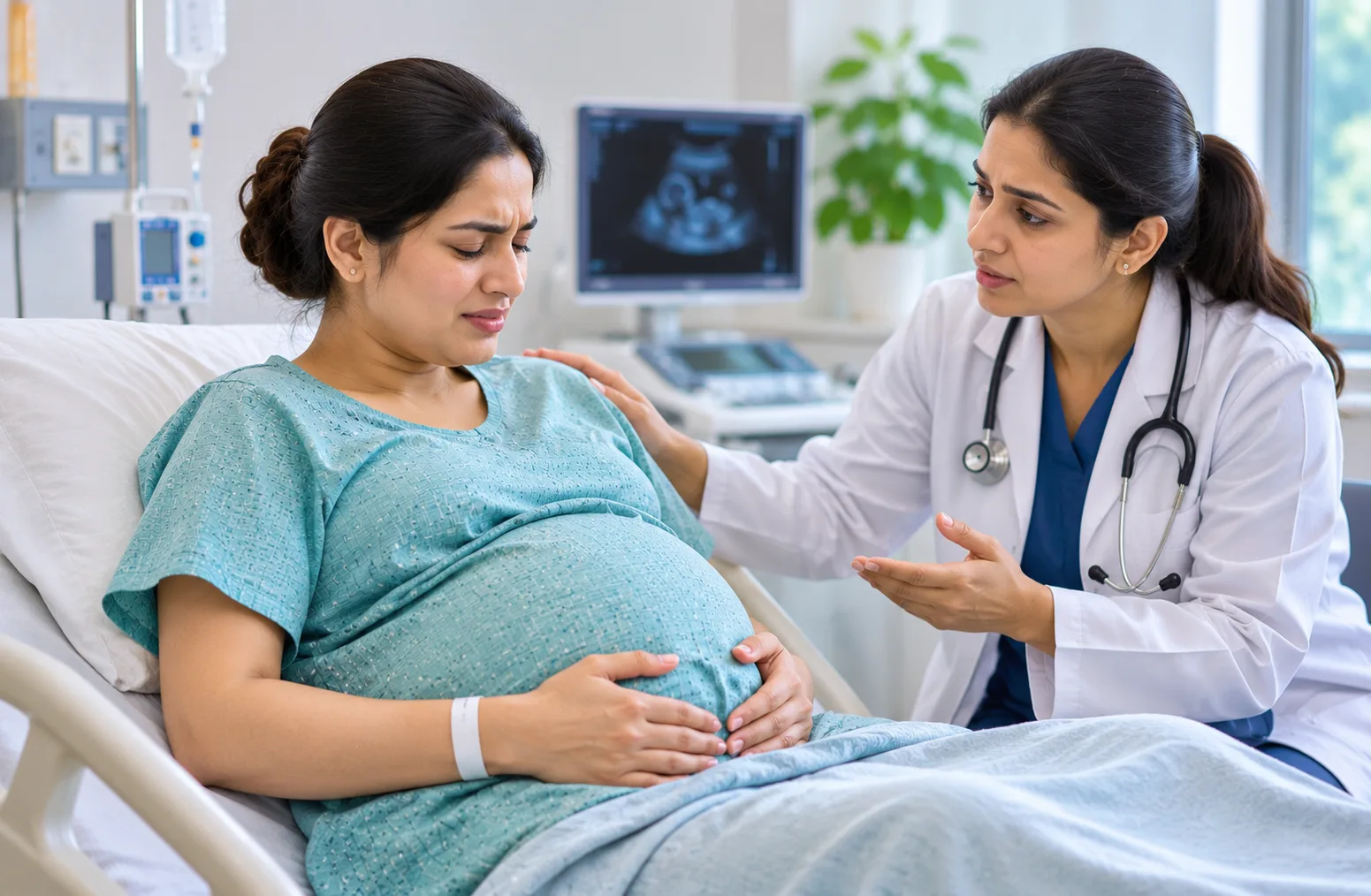
Overview
Childbirth is a significant experience, and understanding the possible complications can help you feel more prepared for delivery. While most births progress without serious problems, some rare complications may require immediate medical attention. Uterine rupture is one such complication, in which the wall of the uterus tears, usually during labour. Knowing what increases the risk and how doctors manage this condition can help you make informed decisions about your maternity care.
What is Uterine Rupture?
Uterine rupture is a tear in the wall of the uterus (the organ where a baby grows during pregnancy). It usually occurs during labour, often along a scar from a previous caesarean delivery or uterine surgery. Rarely, it can also occur in an unscarred uterus.
It occurs in approximately 1 in 8,000–17,000 deliveries involving an unscarred uterus and 0.2–1.5% of women attempting VBAC after one previous low-transverse caesarean. In India, obstructed labour, delayed access to emergency care and unbooked deliveries can contribute to severe outcomes.
Uterine rupture can cause severe maternal bleeding and reduce the baby's oxygen supply, making it a medical emergency requiring immediate treatment. It may be classified as complete or incomplete, depending on how deeply the tear extends through the uterine wall.
How Does Uterine Rupture Happen During Labour?
During labour, the uterus contracts to help the baby move through the birth canal. If an area of the uterine wall is weakened, particularly by a previous surgical scar, the pressure of these contractions can sometimes cause it to tear.
The risk depends on factors such as the type of previous uterine incision, the number of previous caesarean deliveries and the circumstances of the current labour.
Uterine rupture is different from placental abruption, a condition in which the placenta separates from the uterus before the baby is born. In uterine rupture, the uterine wall itself tears. Both conditions can be serious and require urgent medical assessment.
Causes of Uterine Rupture
Uterine rupture occurs when the wall of the uterus tears, either partially or completely. This can happen when an existing weak area of the uterine wall gives way or when excessive pressure is placed on the uterus during pregnancy or labour. Common mechanisms include:
- Separation of a previous uterine scar (scar dehiscence): A scar from a previous C-section or uterine surgery may become thin or begin to separate. During labour, contractions and pressure from the baby can cause the weakened area to tear completely.
- Obstructed labour: When the baby cannot move through the birth canal despite strong contractions, continuous pressure can place excessive strain on the uterine wall and cause it to rupture.
- Excessive uterine contractions: Inappropriate or excessive use of medicines such as oxytocin or prostaglandins to induce or strengthen labour can cause overly frequent or strong contractions, increasing the strain on the uterus.
- Abdominal or uterine trauma: A significant injury to the abdomen, such as from a road traffic accident or physical trauma, can occasionally cause the uterine wall to tear.
- Abnormal placental invasion: In rare cases, placenta percreta, a condition in which the placenta grows through the uterine wall, can cause or contribute to uterine rupture.
Uterine rupture can also occur in an unscarred uterus, although it is uncommon. The underlying mechanism and contributing factors vary from one pregnancy to another.
Risk Factors & Who is at Risk
Uterine rupture is uncommon, but certain medical, anatomical and pregnancy-related factors can increase the likelihood of it occurring. These include:
- Previous caesarean delivery or uterine surgery: A previous C-section, particularly one involving a classical (vertical) incision in the upper part of the uterus, can increase the risk. Other surgeries, such as fibroid removal (myomectomy), may also leave scars that affect the strength of the uterine wall.
- Multiple previous caesarean deliveries: Having had more than one C-section can increase the risk of rupture, particularly when considering a vaginal birth after caesarean (VBAC).
- Short interval between pregnancies: An interval of less than 18 months between two deliveries has been associated with a higher risk of uterine rupture during labour after a previous C-section.
- Single-layer closure of a previous C-section incision: Closing the uterine incision with one layer of stitches rather than two has been associated with a possible increase in rupture risk. However, the evidence is not conclusive.
- Previous uterine rupture: Women with a history of uterine rupture have a higher risk of recurrence and require specialist assessment and delivery planning.
- Previous obstructed labour or difficult delivery: A history of difficult labour or complications involving excessive pressure on the uterus may be relevant when assessing future pregnancy risks.
- Large baby (foetal macrosomia): Carrying a baby with a higher-than-average birth weight may increase the strain on the uterus, particularly when labour is obstructed.
- Grand multiparity: Women who have had five or more deliveries may have a higher risk, particularly when other factors such as obstructed labour or excessive uterine contractions are present.
- Uterine abnormalities: Structural differences, such as a bicornuate uterus (heart-shaped uterus), septate uterus (a uterus divided by a tissue wall), unicornuate uterus (a uterus with one developed side) or uterus didelphys (a double uterus), may be associated with an increased risk.
- Placenta percreta: This rare form of placenta accreta spectrum occurs when the placenta grows through the uterine wall and may increase the risk of uterine damage or rupture.
- External cephalic version (ECV): This procedure involves turning a breech baby into a head-down position by applying pressure to the mother's abdomen. Uterine rupture is a rare potential complication, particularly in women with a previous uterine scar.
The risk also depends on the type of previous uterine incision, the number of previous C-sections and how labour is managed.
Attempting vaginal birth after caesarean (VBAC) carries a risk of uterine rupture because the previous uterine scar may separate during contractions. The overall risk is generally low, but it varies according to individual circumstances. Your obstetrician can review your medical and birth history to help determine whether VBAC or a planned repeat caesarean is more suitable for your pregnancy.
Symptoms of Uterine Rupture
Uterine rupture often develops suddenly during labour. Signs can vary, and some women may not have obvious symptoms. During continuous monitoring, the baby’s heart rate may show the first sign of a problem.
Possible signs include:
- Changes in the baby’s heart rate: The heart rate may become abnormal, indicating that the baby may not be receiving enough oxygen.
- Sudden or severe abdominal pain: Pain may be persistent or feel different from usual labour contractions. However, pain alone cannot confirm a rupture.
- Vaginal bleeding: Bleeding may occur, although the amount of visible blood does not always reflect the severity of internal bleeding.
- Changes in contractions: Contractions may weaken, stop or change unexpectedly.
- Signs of blood loss in the mother: A rapid heartbeat, dizziness, faintness or a drop in blood pressure may indicate significant bleeding.
Seek immediate medical attention if uterine rupture is suspected during labour. If you are in a hospital, alert the maternity team immediately. Do not wait for all the symptoms to appear. The medical team will assess the mother and baby and act quickly if an emergency delivery is needed.
Diagnosis of Uterine Rupture
Uterine rupture is diagnosed mainly through clinical signs and continuous monitoring of the baby's heart rate. Classic symptoms are often absent, so doctors look for a combination of maternal and foetal changes.
Diagnosis may involve:
- Foetal heart rate monitoring (CTG): Late or variable decelerations, or a sudden drop in the baby's heart rate (bradycardia), may indicate fetal distress.
- Maternal examination: Doctors check for sudden abdominal pain, scar tenderness, vaginal bleeding, signs of shock and changes in the shape or contour of the uterus.
- Checking the baby's position: Loss of foetal station (the baby moving upwards in the birth canal) or unusual foetal parts felt through the mother's abdomen may suggest uterine rupture.
- Ultrasound: An ultrasound may help identify a suspected rupture, particularly when symptoms occur before labour or the diagnosis is unclear. However, a normal scan does not rule it out.
- Surgical confirmation: In many cases, the rupture is confirmed during an emergency laparotomy (abdominal surgery), when the surgeon directly examines the uterus.
Because uterine rupture can progress rapidly, doctors do not wait for every symptom or imaging confirmation before starting emergency treatment when it is strongly suspected.
Complications of Uterine Rupture
Uterine rupture can affect both the mother and the baby. Possible complications depend on the extent of the tear, the amount of bleeding, and how quickly treatment begins.
For the Baby
- Reduced oxygen supply: A rupture can disrupt oxygen flow to the baby, making urgent delivery necessary.
- Brain injury: If the baby experiences prolonged oxygen deprivation, it can cause brain injury and affect development.
- Death around the time of birth: In severe cases, particularly when treatment is delayed, uterine rupture can be fatal for the baby.
For the Mother
- Severe bleeding: A tear in the uterine wall can cause heavy internal or external bleeding.
- Blood transfusion: A transfusion may be needed to replace blood lost during the emergency.
- Damage to nearby organs: In some cases, the tear may extend to nearby structures, such as the bladder.
- Hysterectomy: If bleeding cannot be controlled or the uterus cannot be safely repaired, surgery to remove the uterus may be necessary. This is called a hysterectomy and means that carrying a future pregnancy is no longer possible.
These complications are serious, but they do not occur in every case. Rapid recognition, emergency delivery, and appropriate treatment help reduce the risk of harm to both mother and baby.
Treatment Options for Uterine Rupture
Uterine rupture is a life-threatening obstetric emergency that requires immediate surgery and resuscitation. The medical team works simultaneously to stabilise the mother, control bleeding and deliver the baby.
Treatment may include:
- Emergency team activation: The senior obstetrician, anaesthetist, neonatologist and operating theatre team are called immediately. The blood bank is alerted to prepare for possible major blood loss.
- Stabilising the mother: Two large-bore intravenous (IV) lines are inserted to administer fluids and blood products. Blood samples are sent for crossmatching, and fluid and blood transfusions are given as needed to manage blood loss and shock. Any medicines being used to strengthen contractions are stopped.
- Emergency delivery and surgery: An immediate laparotomy (surgery through an abdominal incision) is performed to deliver the baby and control bleeding. Delivery should happen as soon as possible, ideally within 30 minutes of the decision in most emergency caesarean situations, or sooner if clinically necessary.
- Surgical repair or hysterectomy: The surgeon may repair the uterine tear if it can be safely closed and bleeding controlled. If the damage is extensive or bleeding cannot be controlled, a hysterectomy (removal of the uterus) may be necessary to save the mother's life.
- Checking for injuries and preventing infection: The surgeon checks nearby organs, particularly the bladder and ureters, for injuries. Antibiotics are given to reduce the risk of infection.
- Post-operative and newborn care: The mother may need intensive care unit (ICU) or high-dependency unit (HDU) monitoring. The newborn is assessed by the neonatology team and receives resuscitation if needed. Babies with moderate-to-severe hypoxic-ischaemic encephalopathy (HIE), a brain injury caused by reduced oxygen supply, may be eligible for therapeutic hypothermia (controlled cooling).
The treatment plan depends on the extent of the rupture and the condition of both mother and baby. The priority is to control bleeding, stabilise the mother and provide timely newborn care.
What is the Prognosis (Outlook) for Uterine Rupture?
The outlook after uterine rupture depends on the severity of the tear and how quickly treatment is provided. With prompt emergency care, many women recover well, although serious complications can occur.
- Maternal outcomes: Severe bleeding may require a hysterectomy (removal of the uterus). Maternal death is uncommon with timely treatment but remains a possible complication.
- Newborn outcomes: Perinatal mortality is around 6% in some high-income country studies but may be much higher when treatment is delayed. Babies who experience oxygen deprivation may develop hypoxic-ischaemic encephalopathy (HIE), a type of brain injury.
- Future pregnancies: Another pregnancy may be possible if the uterus is repaired. However, recurrence risk is around 6% after a lower-segment rupture and may reach 30% after an upper-segment rupture. A planned caesarean, usually at 36–37 weeks and before labour begins, is generally recommended. Future labour is not advised.
After recovery, seek specialist pre-pregnancy counselling to discuss the risks and timing of another pregnancy. Your obstetrician can guide you on follow-up care and individualised pregnancy planning.
What Questions Should I Ask My Doctor?
If you have had a caesarean delivery or uterine surgery, discussing your birth options with your obstetrician can help you understand your individual risk. Consider asking the following questions.
VBAC and Risk Questions
- Am I a suitable candidate for a vaginal birth after caesarean (VBAC)?
- What type of incision was made in my uterus during my previous caesarean?
- How does my medical and surgical history affect my risk of uterine rupture?
- Would a planned repeat caesarean be a safer option for me?
- How might my risk change if labour needs to be induced?
Labour and Delivery Questions
- How will my baby and I be monitored during labour?
- What signs would make the medical team recommend an emergency caesarean?
- What emergency services would be available if a uterine rupture occurred?
- If I have had a uterine rupture before, how should a future pregnancy be managed?
- If my uterus is repaired after a rupture, what should I know before planning another pregnancy?
Your obstetrician can help you understand your options and decide based on your health, preferences, and pregnancy history. You do not need to make this decision without guidance.
Prevention & Lifestyle Tips for Uterine Rupture
Uterine rupture cannot always be prevented, and it is not necessarily caused by anything a mother has done. However, assessing risk factors and planning delivery carefully can help reduce the likelihood of complications.
The following steps can help:
- Share your complete medical history: Tell your obstetrician about previous caesarean deliveries, uterine surgery or any history of uterine rupture.
- Discuss your birth options early: If you are considering a VBAC, ask your gynecologist to explain the benefits and risks in your specific circumstances.
- Attend antenatal appointments: Regular check-ups give your care team opportunities to review your pregnancy and plan your delivery.
- Discuss labour induction when needed: If your doctor needs to start or strengthen labour, they can assess the safest approach based on your history.
- Plan delivery in an appropriately equipped facility: If you have a higher risk of uterine rupture, your team may recommend a setting where emergency surgery, blood transfusion and newborn care can be provided promptly.
No lifestyle change or home remedy can reliably prevent uterine rupture. The most useful steps are appropriate medical assessment, a clear birth plan and timely access to emergency care when needed.
Why Choose BirthRight by Rainbow Hospitals for High-Risk Delivery Care?
At BirthRight by Rainbow Hospitals, we understand that a pregnancy involving a previous caesarean delivery or a risk of uterine rupture can bring additional concerns. We help mothers make informed birth decisions and receive appropriate care throughout pregnancy, labour, and delivery.
- Experienced maternity specialists: Our obstetric and gynaecology teams assess your medical history, previous uterine surgeries and pregnancy-related risks to help plan your delivery.
- Personalised birth plans: We help you understand the benefits and risks of a vaginal birth after caesarean (VBAC) and a planned repeat caesarean, so you can discuss the most suitable option with your doctor.
- Coordinated care for high-risk pregnancies: Our approach brings together the relevant medical specialists to support mothers who need additional monitoring or specialised delivery care.
- Emergency and newborn care: Timely access to emergency surgery, anaesthesia, blood transfusion and specialised newborn care is important when serious complications arise. The availability of these services varies by hospital location, so please confirm the facilities at your chosen centre.
- Support beyond delivery: We provide guidance on recovery, follow-up care and planning future pregnancies after a complicated delivery.
At BirthRight by Rainbow Hospitals, we aim to make your maternity care experience informed, supportive and focused on your individual needs. Speak with our maternity team to discuss your pregnancy history, understand your delivery options and plan the care that is right for you.

Find a Doctor and Book Appointment Online
Meet our specialist doctors who bring together clinical expertise, compassion, and personalised care to support your health and well-being. Choose from 1,300+ specialists across our network and book an appointment with BirthRight and Rainbow Children Hospitals, offering 24*7 support to you and your family.

Dr. Pranathi Reddy A
Clinical Director – Obstetrics & Gynecology.
English,Hindi,Telugu Banjara Hills

Dr. Gauri Vinayak Dhamangaonkar
Senior Consultant - Fetal Medicine
15 Years English,Hindi,Marathi,Telugu Kondapur OP, Banjara Hills

Dr. Shruthi Reddy Poddutoor
Consultant Obstetrician, Gynecologist & Laparoscopic Surgeon
English,Telugu Banjara Hills

Dr. Himabindu Veerla
Consultant Obstetrician, Gynecologist & Laparoscopic Surgeon
English,Telugu Banjara Hills

Dr. Bhargavi Reddy K
Consultant - Obstetrics and Gynecology
10 Years English,Hindi,Telugu Banjara Hills, Attapur Clinic

Dr. Annie Pranutha P
Consultant Obstetrics and Gynecology
9 Years English,Hindi,Telugu Banjara Hills, Attapur Clinic

Dr. Sasikala Kola
Consultant Obstetrician & Gynecologist
English,Hindi,Telugu Banjara Hills

Dr. Atigadda Vijaya
Consultant - Obstetrics & Gynecology
Hindi,Telugu Banjara Hills, Himayatnagar, Attapur Clinic

Dr. Nishanth Reddy Inavolu
Visiting Consultant Physician and Diabetologist & Internal Medicine
English,Hindi,Telugu Banjara Hills, Himayatnagar

Dr. Tulika Tayal
Consultant - Fetal Medicine
English,Telugu Banjara Hills

Dr. M Prathyusha Reddy
Consultant Obstetrics & Gynecology
English,Telugu Banjara Hills

Dr. Nithya Narasimha Murthy
Consultant -Psychiatrist
English,Hindi,Telugu Kondapur OP, Banjara Hills, Child Development Centre - Banjarahills Rd No 10

Dr. Brundavani
Consultant - Nutritionist
English,Hindi,Telugu Kondapur OP, Hydernagar, Banjara Hills, Child Development Centre - Banjarahills Rd No 10

Dr. Niveditha Chalmeda
Consultant
English,Telugu Banjara Hills

Dr. Kirti Reddy Patlolla
Consultant Obstetrics and Gynaecology
English,Telugu Banjara Hills, Attapur Clinic

Dr. Tuheena Sharma
Consultant - Perinatal Physiotherapy
10 Years English,Telugu Banjara Hills

Dr. Aditi Shah
Consultant - Fetal Medicine
English,Telugu Banjara Hills

Dr. Swathi Naga Tulasi Rayapureddy
Lactation Consultant
8 Years English,Telugu Banjara Hills

Dr. Swetha Reddy. S
CONSULTANT PERINATAL PSYCHIATRIST AND WOMEN MENTAL HEALTH SPECIALIST
13 Years English,Hindi,Telugu Banjara Hills

Dr. Addu Kiranmayi
Chief Clinical Nutritionist and Lifestyle Medicine Consultant
15 Years English,Hindi,Telugu Himayatnagar, Banjara Hills

Dr. Palle Nalini Kumari
Lactation Consultant
17+ Years English,Hindi,Telugu Banjara Hills
Dr. Nazia Tabassum
Consultant - Breast, Plastic & Reconstructive Surgeon
9 Years English,Hindi,Telugu,Urdu Banjara Hills

Dr. Sruthi Cheera
Consultant Breast Surgeon
5 Years English,Hindi,Kannada,Telugu Banjara Hills

Dr. Supriya Reddy
Lactation Consultant
5 Years English,Hindi,Telugu Banjara Hills

Dr. Niraj Krishnamurthy Yanamandra
Senior Consultant Obstetrician & Gynaecologist, Laparoscopy & Hysteroscopy Surgeon
English,Hindi,Telugu Hydernagar, Banjara Hills

Dr. B. Rao Bahadur
Consultant – Obstetrician & Gynecologist, Laparoscopic ,& Hysteroscopic Surgeon
22 Years English,Hindi,Konkani,Marathi,Telugu Banjara Hills, Kondapur OP

Dr. Sneha Kulkarni
Consultant - Child, Adolescent & Adult Psychiatrist
10 Years English,Hindi,Kannada,Telugu Secunderabad, Banjara Hills, Child Development Centre - Banjarahills Rd No 10

Dr. Lavanya Janagama
Consultant – Obstetrics & Gynecology
10+ Years English Banjara HillsLeading Hospitals for Women Care
Rainbow Children's Hospital stands as a testament to the hospital's continual pursuit of excellence and innovation, providing specialized care for women and children














chennai
Blogs
Discover our most recent health articles provided by our reliable experts.




What Are People Saying About Us
Embark on a journey of inspiration and hope with our patient success stories, complemented by informative videos from our dedicated doctors.


Media
 Common Gynaecological Surgeries to Fix Female Reproductive Issues
 Healthy Woman - Healthy World
 Healthier Women For a Healthier Future...
 Rainbow Children’s Hospital & BirthRight by Rainbow Launch Video Consultation Facilities
 Dr.Pranthi Reddy
 What is the use of that?
 Can you try this time?
 Pregnant Women are Not Unfit
 Declining Age of Menarche - A Matter of Concern
 Important Facts about Cervical Cancer
 Be careful before preempting
 Flu every month!
 Menstrual cramps
 Premature delivery
 Whether laughing or coughing...why?
 Multi - Tasking may be Cool but it's not Healthy
 Pregnant and Worried about COVID-19? Here's Everything you Need to know
 Video Consultation in Pandamic Situation for Pregnancy Women's
 Women.. Various types of cysts
 Recurrent Pregnancy Loss in Women
 Early Onset of Puberty: Causes, Symptoms and Treatment Options
Common Gynaecological Surgeries to Fix Female Reproductive Issues
Healthy Woman - Healthy World
Healthier Women For a Healthier Future...
FAQs
Can a woman survive a uterine rupture?
Can uterine rupture happen if I have never had a C-section before?
How do I know if I am a good candidate for VBAC?
Can uterine rupture happen before labour starts?
Can my baby be permanently affected if a uterine rupture happens during labour?
Does labour induction increase the risk of uterine rupture?
Can I have more children after a uterine rupture and hysterectomy?
Is uterine rupture more likely with twins or a larger baby?
What is the difference between uterine rupture and normal labour pain?
Can uterine rupture happen during a planned repeat C-section or after delivery?
How soon can I try for another pregnancy after a uterine rupture?
Quick Links
Free Calculators to Track and Predict your Pregnancy
Gynecologist in Other Locations
Women's Health Conditions We Treat
- Mastitis (Breast Infection)
- PCOS (Polycystic Ovary Syndrome)
- Uterine Fibroids (Leiomyomas)
- Recurrent Pregnancy Loss
- Blocked Fallopian Tubes (Fallopian Tube Obstruction)
- Gestational Diabetes in Pregnancy
- Incompetent Cervix (Cervical Insufficiency)
- COVID-19 in Pregnancy
- Cytomegalovirus (CMV) in Pregnancy
- HELLP Syndrome
- Luteal Phase Defect
- Vasa Previa
- Listeria in Pregnancy
- Placenta Previa
- Endometrial Polyps (Uterine Polyps)
- Congenital Heart Disease in Pregnancy
- Hyperemesis Gravidarum (Severe Morning Sickness)
- Preeclampsia (toxemia)
- Fetal Distress (Non-Reassuring Fetal Status)
- Postpartum Haemorrhage (PPH)
- Placental Abruption (Abruptio Placentae)
- Placenta Accreta
- Postpartum Depression (PPD)
- Rhesus (Rh) Incompatibility
- Syphilis in Women