


Eclampsia
Eclampsia is a pregnancy emergency in which high blood pressure from pre-eclampsia leads to seizures. It can happen before delivery, during labour or up to six weeks after birth. Know the warning signs, such as a severe headache, vision changes and upper abdominal pain, and call 112 or go to hospital straight away if a seizure occurs.

Seamless support from diagnosis to post treatment care
Overview
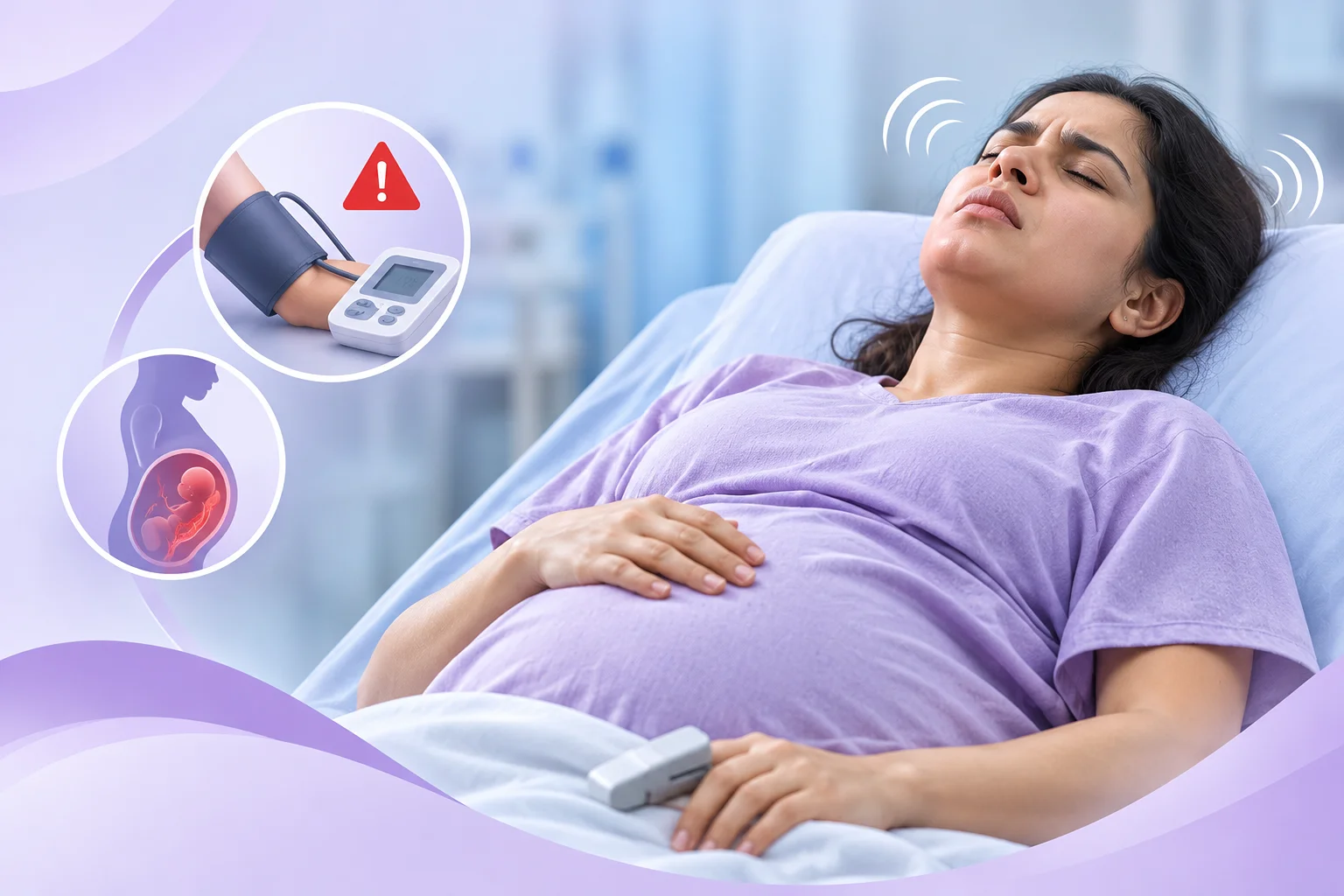
Pregnancy brings many changes, making regular antenatal check-ups important for monitoring the health of both mother and baby. Some conditions can develop even when everything seems fine, so recognising warning signs and seeking timely medical care is essential.
One such serious pregnancy-related complication is eclampsia, which can cause seizures and requires immediate emergency treatment. Understanding its symptoms and how it is managed can help you recognise when urgent medical attention is needed.
What is Eclampsia?
Eclampsia is a serious pregnancy-related condition in which a woman develops seizures (fits). It is usually associated with pre-eclampsia, a condition involving high blood pressure. It can occur after 20 weeks of pregnancy, during labour or after childbirth.
Eclampsia can affect both the mother and baby, so it requires immediate medical attention. Although it is a serious condition, prompt treatment can help control seizures and reduce the risk of complications.
A seizure during pregnancy or after childbirth requires immediate medical attention.
Do not wait for the seizure to stop or attempt to manage it at home. Call India's emergency number 112 or the National Ambulance Service at 102, and seek immediate hospital care. Eclampsia can be life-threatening for both mother and baby, but prompt treatment can help prevent serious complications.
How Does Eclampsia Develop from Pre-eclampsia?
Pre-eclampsia is a pregnancy-related condition that involves high blood pressure and may affect organs such as the kidneys, liver and brain. It usually develops after 20 weeks of pregnancy and can sometimes occur after childbirth.
Eclampsia can develop when pre-eclampsia affects the brain and causes seizures. However, the exact reasons why some women in this situation develop seizures are not fully understood.
Eclampsia can occasionally occur without classic markers of pre-eclampsia. This is why a new seizure during pregnancy or after delivery must always be treated as an emergency, even if earlier check-ups were normal.
Causes of Eclampsia
The underlying changes involve the placenta and blood vessels, which can affect blood pressure and blood flow to different organs.
The exact process that leads to a seizure is not fully understood. Eclampsia is not caused simply by stress, and it can sometimes develop in women who had no obvious warning signs.
Pre-eclampsia that is not recognised or adequately controlled can increase the risk of eclampsia. This is why regular pregnancy check-ups and timely treatment matter.
Risk Factors for Eclampsia
Certain factors can increase a woman's chance of developing pre-eclampsia, which may then lead to eclampsia. These include:
- Previous pre-eclampsia or eclampsia: Having experienced either condition in an earlier pregnancy increases the risk in a future pregnancy.
- Maternal age: Pregnancy in women younger than 18 or older than 35 may be associated with a higher risk of pre-eclampsia.
- A first pregnancy: Pre-eclampsia is more common during a first pregnancy.
- Multiple pregnancy: Carrying twins, triplets or more babies increases the risk of pre-eclampsia.
- Existing high blood pressure: Chronic hypertension can increase the risk of pregnancy-related blood pressure complications.
- Kidney disease or diabetes: These conditions can increase the risk of pre-eclampsia.
- Obesity or high BMI: Having a higher body mass index (BMI) before pregnancy is associated with an increased risk.
- Autoimmune conditions: Systemic lupus erythematosus (SLE) and antiphospholipid syndrome can increase the risk of pre-eclampsia.
- IVF or assisted reproduction: Pregnancies conceived through in vitro fertilisation (IVF) or other assisted reproductive techniques may have a higher risk.
- Long interpregnancy interval: A long gap between pregnancies, particularly 10 years or more, may increase the risk.
- Low calcium intake: Inadequate calcium intake may be associated with a higher risk of pre-eclampsia, particularly in populations where dietary calcium intake is low.
- Family history: Having a close family member who experienced pre-eclampsia may increase the risk.
Having one or more risk factors does not mean you will develop eclampsia. The condition can also occur without recognised risk factors. Your obstetrician can assess your individual risk and recommend appropriate monitoring and preventive care.
Symptoms of Eclampsia
Eclampsia causes seizures, but some women experience warning signs associated with pre-eclampsia before a seizure occurs. Others may develop a seizure without noticeable warning symptoms.
Knowing the symptoms can help you recognise when you need urgent medical attention.
Pre-Seizure Warning Signs
Warning signs that may occur with pre-eclampsia include:
- Severe or persistent headache: A headache that does not improve or feels unusual for you.
- Vision changes: Blurred vision, flashing lights, spots in your vision, or temporary vision loss.
- Upper abdominal pain: Pain, particularly under the right ribs.
- Difficulty breathing: New or unexplained breathlessness.
- Sudden swelling: Rapid swelling of the face or hands, especially when accompanied by other symptoms.
These symptoms do not always mean that eclampsia will develop. However, they can indicate a serious pregnancy-related complication and need prompt medical assessment.
The Seizure Itself
An eclamptic seizure may involve:
- Loss of consciousness: The woman may become unresponsive.
- Stiffening and shaking: The arms, legs, or entire body may stiffen and jerk uncontrollably.
- Confusion afterwards: She may feel drowsy, confused, or disoriented after the seizure.
If a seizure occurs, call emergency services immediately. Keep the woman away from nearby objects that could cause injury, protect her head if possible, and do not restrain her movements or put anything in her mouth. Once the seizure stops, turn her onto her side if it is safe. Do not give food, drink, or medication by mouth while she is unconscious or not fully alert. Stay with her until help arrives.
Diagnosis of Eclampsia
Eclampsia is diagnosed when a pregnant or recently postpartum woman develops seizures associated with pre-eclampsia, after other possible causes have been considered. Doctors assess her symptoms, blood pressure, blood and urine test results, and neurological condition.
Diagnosis may involve:
- Blood pressure measurement: A reading of 140/90 mmHg or higher may indicate hypertension in pregnancy. Severe hypertension is defined as 160/110 mmHg or higher.
- Urine test: A urine test checks for protein, which may indicate pre-eclampsia. However, its absence does not rule out eclampsia.
- Blood tests: Platelet counts, liver enzymes, and kidney function tests (including creatinine) help identify complications such as HELLP syndrome and organ damage.
- Neurological assessment and brain imaging: If symptoms are unusual, persistent, or suggest another neurological condition, doctors may recommend an MRI or CT scan to rule out conditions such as epilepsy, posterior reversible encephalopathy syndrome (PRES), stroke, or cerebral venous thrombosis (a blood clot in the brain's veins).
Eclampsia is a medical emergency. Treatment should not be delayed while waiting for all test results or imaging investigations.
Complications of Eclampsia
With prompt treatment, many women recover well after eclampsia. However, seizures and the underlying blood pressure disorder can cause serious complications for the mother and baby, particularly without timely medical care.
Possible complications include:
- HELLP syndrome: A serious condition involving the breakdown of red blood cells, elevated liver enzymes and low platelet counts.
- Pulmonary oedema: Fluid accumulation in the lungs, which can cause severe breathing difficulties.
- Acute kidney injury: Sudden damage to the kidneys that affects their ability to filter waste from the blood.
- Brain complications: These include posterior reversible encephalopathy syndrome (PRES), cerebral haemorrhage (bleeding in the brain) and stroke.
- Recurrent seizures and aspiration: Further seizures can occur, while inhaling saliva or stomach contents into the lungs during a seizure can cause serious respiratory complications.
- Placental abruption: The placenta separates from the uterus before birth, potentially reducing the baby's oxygen supply and causing bleeding.
- Preterm birth and fetal growth restriction: Reduced placental function or the need for early delivery can affect the baby's growth and increase the risk of prematurity.
- Stillbirth: Severe complications affecting the placenta and the baby's oxygen supply can result in fetal death.
- Maternal death: In severe cases, uncontrolled seizures, stroke, organ failure or other complications can be life-threatening.
Hypertensive disorders of pregnancy account for approximately 16% of maternal deaths worldwide, according to WHO. In India, national studies have attributed a median of approximately 8.6% of maternal deaths to hypertensive disorders, including pre-eclampsia and eclampsia.
Eclampsia can also develop after childbirth. Approximately one in three eclamptic seizures occur postpartum, although most occur within the first seven days after delivery. Postpartum eclampsia can occur up to six weeks after childbirth, making continued monitoring important.
The risk and severity of complications vary from one woman to another. Emergency treatment helps control seizures, manage blood pressure and guide decisions about delivery and newborn care.
Treatment & Management of Eclampsia
Eclampsia is a medical emergency. Treatment begins with stabilising the mother, controlling seizures and managing dangerously high blood pressure. The healthcare team also assesses the baby's condition and determines the safest time and method of delivery.
Treatment may include the following:
- Magnesium sulfate: This is the preferred medicine for controlling eclamptic seizures and preventing recurrence. It is given as a loading dose followed by maintenance doses, using the Pritchard or Zuspan regimen. If seizures recur, an additional dose may be administered under medical supervision.
- Monitoring during treatment: Doctors monitor knee reflexes, breathing rate and urine output to detect magnesium toxicity. Calcium gluconate is kept available as an antidote if toxicity occurs.
- Blood pressure medicines: Severe hypertension (160/110 mmHg or higher) requires treatment within 30–60 minutes. Doctors may use medicines such as labetalol, nifedipine or hydralazine to lower blood pressure and reduce the risk of stroke.
- Monitoring of the mother and baby: The team closely monitors the mother's vital signs, neurological condition, and blood pressure, along with the baby's heart rate and wellbeing where appropriate.
- Corticosteroids when indicated: If preterm delivery is expected, these medicines may be given to help the baby's lungs mature, depending on the stage of pregnancy and the clinical situation.
- Delivery: Once the mother has been stabilised, delivery is generally necessary because the pregnancy-related condition can continue to pose a risk. The timing and method of delivery depend on the mother's condition, the baby's wellbeing and the stage of pregnancy. A caesarean birth is not automatically required in every case.
Magnesium sulfate is an established treatment for eclampsia and is also used to prevent seizures in women with severe pre-eclampsia when indicated. Delivery does not mean that monitoring can stop immediately. Eclampsia and high blood pressure can still occur or persist after childbirth, so continued medical observation and follow-up are important.
What Is the Prognosis (Outlook) for Eclampsia?
Recovery after eclampsia depends on the severity of the condition, the complications that have occurred and how promptly treatment is provided. With timely treatment and appropriate monitoring, many women recover well. However, the risk of developing pre-eclampsia in a subsequent pregnancy is approximately 15–25%, while recurrence of eclampsia itself is much lower, at around 2%. The actual risk varies depending on the severity and timing of the previous episode.
Blood pressure may remain high for days or weeks after childbirth, and some women need medication and follow-up appointments during recovery. A blood pressure check is recommended within 3–10 days after delivery, with earlier assessment if symptoms develop or blood pressure is severely elevated. Medicines such as nifedipine, labetalol and enalapril can generally be used during breastfeeding when prescribed by a doctor.
A history of eclampsia or pre-eclampsia is also associated with approximately twice the lifetime risk of chronic hypertension, ischaemic heart disease and stroke compared with women who have not experienced these pregnancy complications. Discuss long-term cardiovascular health with your doctor. Regular monitoring, including at least annual checks of blood pressure, cholesterol (lipid profile) and blood glucose, can help identify risk factors early.
What Questions Should I Ask My Doctor?
Talking openly with your gynecologist can help you understand your risk, the monitoring you may need, and what to expect during recovery. Consider asking the following questions.
Risk and Monitoring Questions
- Based on my medical history, am I at increased risk of pre-eclampsia or eclampsia?
- Which symptoms mean I should seek urgent medical attention?
- How often should my blood pressure and my baby's wellbeing be checked?
- Would low-dose aspirin be appropriate for me to help prevent pre-eclampsia?
Delivery and Recovery Questions
- How might my condition affect the timing or method of delivery?
- Will I need magnesium sulfate during labour or after delivery?
- How long will my blood pressure need to be monitored after childbirth?
- What follow-up care will I need, and what does this mean for a future pregnancy?
Your care plan will depend on your medical history, symptoms and the stage of pregnancy. Your obstetrician can explain the options and help you make informed decisions.
Prevention of Eclampsia
Regular antenatal check-ups, early detection of pre-eclampsia and timely treatment can help reduce the risk of eclampsia. Certain preventive measures, including low-dose aspirin and calcium supplementation for eligible women, may also lower the risk of developing pre-eclampsia.
Steps that may help include:
- Attend regular antenatal appointments: Your healthcare team should check your blood pressure and test your urine for protein at every antenatal visit. These checks help identify signs of pre-eclampsia early and allow timely assessment and treatment.
- Take low-dose aspirin if prescribed: Women at high risk of pre-eclampsia may be advised to take 75–150 mg of aspirin daily, preferably at bedtime. Treatment should ideally begin before 16 weeks of pregnancy and continue at least until 36 completed weeks, as advised by the obstetrician. Do not start aspirin without medical advice.
- Discuss calcium supplementation: If your dietary calcium intake is low, your doctor may recommend 1.5–2 g of elemental calcium daily during pregnancy to reduce the risk of pre-eclampsia. This is particularly relevant in populations where calcium intake is inadequate. Take supplements only in the recommended dose.
- Follow your treatment plan: If you have high blood pressure or another existing medical condition, take prescribed medicines and attend recommended follow-up appointments. If you develop pre-eclampsia, your doctor may recommend closer monitoring or hospital care, depending on its severity.
- Receive magnesium sulphate when indicated: If you develop severe pre-eclampsia, your healthcare team may administer magnesium sulphate (MgSO₄) to prevent seizures. It is an established treatment for reducing the risk of eclampsia in women with severe pre-eclampsia.
- Report warning signs promptly: Seek immediate medical assessment for a persistent or severe headache, vision changes, pain under the ribs or unexplained difficulty breathing. A seizure requires emergency medical care.
- Follow postpartum advice: Continue blood pressure monitoring and attend follow-up appointments after childbirth, especially if you had pre-eclampsia during pregnancy, as the condition can persist or develop after delivery.
These measures can help lower the risk of eclampsia and its complications, but they cannot eliminate it completely. Regular monitoring and prompt medical attention remain important throughout pregnancy and after childbirth.
Why Choose BirthRight by Rainbow Hospitals for Eclampsia Care?
BirthRight by Rainbow Hospitals provides coordinated high-risk pregnancy care and emergency maternity care for women with eclampsia. Key strengths include:
- High-risk pregnancy expertise: Obstetricians and maternal-fetal medicine specialists manage pregnancy-related complications that need close monitoring.
- Rapid emergency assessment: When eclampsia is suspected, the care team promptly assesses the mother’s condition and the baby’s wellbeing.
- Seizure and blood pressure management: Doctors focus on controlling seizures, managing high blood pressure, and stabilising the mother.
- Multidisciplinary care: Obstetricians, anaesthesia teams, maternal-fetal medicine specialists, and newborn care teams work together when needed.
- Delivery planning: The maternity team decides the timing and method of delivery based on the mother’s condition and the baby’s wellbeing.
- Newborn support: Neonatal specialists are available if the baby needs additional care after birth.
- Post-delivery monitoring: Care continues after childbirth because blood pressure and other complications may still need close observation.
- Coordinated maternity care: Pregnancy monitoring, emergency treatment, delivery care, and postnatal support are available within the same care network.
If you experience a seizure during pregnancy or after childbirth, seek emergency medical care immediately.
Disclaimer
This article is for general educational purposes and does not replace individual medical advice, diagnosis, or treatment. Eclampsia is a medical emergency. A seizure during pregnancy or after childbirth requires immediate emergency care.

Find a Doctor and Book Appointment Online
Meet our specialist doctors who bring together clinical expertise, compassion, and personalised care to support your health and well-being. Choose from 1,300+ specialists across our network and book an appointment with BirthRight and Rainbow Children Hospitals, offering 24*7 support to you and your family.

Dr. Pranathi Reddy A
Clinical Director – Obstetrics & Gynecology.
English,Hindi,Telugu Banjara Hills

Dr. Gauri Vinayak Dhamangaonkar
Senior Consultant - Fetal Medicine
15 Years English,Hindi,Marathi,Telugu Kondapur OP, Banjara Hills

Dr. Shruthi Reddy Poddutoor
Consultant Obstetrician, Gynecologist & Laparoscopic Surgeon
English,Telugu Banjara Hills

Dr. Himabindu Veerla
Consultant Obstetrician, Gynecologist & Laparoscopic Surgeon
English,Telugu Banjara Hills

Dr. Bhargavi Reddy K
Consultant - Obstetrics and Gynecology
10 Years English,Hindi,Telugu Banjara Hills, Attapur Clinic

Dr. Annie Pranutha P
Consultant Obstetrics and Gynecology
9 Years English,Hindi,Telugu Banjara Hills, Attapur Clinic

Dr. Sasikala Kola
Consultant Obstetrician & Gynecologist
English,Hindi,Telugu Banjara Hills

Dr. Atigadda Vijaya
Consultant - Obstetrics & Gynecology
Hindi,Telugu Banjara Hills, Himayatnagar, Attapur Clinic

Dr. Nishanth Reddy Inavolu
Visiting Consultant Physician and Diabetologist & Internal Medicine
English,Hindi,Telugu Banjara Hills, Himayatnagar

Dr. Tulika Tayal
Consultant - Fetal Medicine
English,Telugu Banjara Hills

Dr. M Prathyusha Reddy
Consultant Obstetrics & Gynecology
English,Telugu Banjara Hills

Dr. Nithya Narasimha Murthy
Consultant -Psychiatrist
English,Hindi,Telugu Kondapur OP, Banjara Hills, Child Development Centre - Banjarahills Rd No 10

Dr. Brundavani
Consultant - Nutritionist
English,Hindi,Telugu Kondapur OP, Hydernagar, Banjara Hills, Child Development Centre - Banjarahills Rd No 10

Dr. Niveditha Chalmeda
Consultant
English,Telugu Banjara Hills

Dr. Kirti Reddy Patlolla
Consultant Obstetrics and Gynaecology
English,Telugu Banjara Hills, Attapur Clinic

Dr. Tuheena Sharma
Consultant - Perinatal Physiotherapy
10 Years English,Telugu Banjara Hills

Dr. Aditi Shah
Consultant - Fetal Medicine
English,Telugu Banjara Hills
Dr. Swathi Naga Tulasi Rayapureddy
Lactation Consultant
8 Years English,Telugu Banjara Hills

Dr. Swetha Reddy. S
CONSULTANT PERINATAL PSYCHIATRIST AND WOMEN MENTAL HEALTH SPECIALIST
13 Years English,Hindi,Telugu Banjara Hills

Dr. Addu Kiranmayi
Chief Clinical Nutritionist and Lifestyle Medicine Consultant
15 Years English,Hindi,Telugu Himayatnagar, Banjara Hills

Dr. Palle Nalini Kumari
Lactation Consultant
17+ Years English,Hindi,Telugu Banjara Hills
Dr. Nazia Tabassum
Consultant - Breast, Plastic & Reconstructive Surgeon
9 Years English,Hindi,Telugu,Urdu Banjara Hills

Dr. Sruthi Cheera
Consultant Breast Surgeon
5 Years English,Hindi,Kannada,Telugu Banjara Hills
Dr. Supriya Reddy
Lactation Consultant
5 Years English,Hindi,Telugu Banjara Hills

Dr. Niraj Krishnamurthy Yanamandra
Senior Consultant Obstetrician & Gynaecologist, Laparoscopy & Hysteroscopy Surgeon
English,Hindi,Telugu Hydernagar, Banjara Hills

Dr. B. Rao Bahadur
Consultant – Obstetrician & Gynecologist, Laparoscopic ,& Hysteroscopic Surgeon
22 Years English,Hindi,Konkani,Marathi,Telugu Banjara Hills, Kondapur OP

Dr. Sneha Kulkarni
Consultant - Child, Adolescent & Adult Psychiatrist
10 Years English,Hindi,Kannada,Telugu Secunderabad, Banjara Hills, Child Development Centre - Banjarahills Rd No 10

Dr. Lavanya Janagama
Consultant – Obstetrics & Gynecology
10+ Years English Banjara HillsLeading Hospitals for Women Care
Rainbow Children's Hospital stands as a testament to the hospital's continual pursuit of excellence and innovation, providing specialized care for women and children






chennai
Blogs
Discover our most recent health articles provided by our reliable experts.



What Are People Saying About Us
Embark on a journey of inspiration and hope with our patient success stories, complemented by informative videos from our dedicated doctors.


Media
 Common Gynaecological Surgeries to Fix Female Reproductive Issues
 Healthy Woman - Healthy World
 Healthier Women For a Healthier Future...
 Rainbow Children’s Hospital & BirthRight by Rainbow Launch Video Consultation Facilities
 Dr.Pranthi Reddy
 What is the use of that?
 Can you try this time?
 Pregnant Women are Not Unfit
 Declining Age of Menarche - A Matter of Concern
 Important Facts about Cervical Cancer
 Be careful before preempting
 Flu every month!
 Menstrual cramps
 Premature delivery
 Whether laughing or coughing...why?
 Multi - Tasking may be Cool but it's not Healthy
 Pregnant and Worried about COVID-19? Here's Everything you Need to know
 Video Consultation in Pandamic Situation for Pregnancy Women's
 Women.. Various types of cysts
 Recurrent Pregnancy Loss in Women
 Early Onset of Puberty: Causes, Symptoms and Treatment Options
Common Gynaecological Surgeries to Fix Female Reproductive Issues
Healthy Woman - Healthy World
Healthier Women For a Healthier Future...
FAQs
Can a woman survive eclampsia?
Can I breastfeed after eclampsia or while taking blood pressure medicines?
Will I need an emergency C-section if I have an eclamptic seizure?
Can eclampsia happen after delivery as well as before?
Will my blood pressure go back to normal after I give birth?
Can eclampsia happen again in a future pregnancy?
Can a seizure in pregnancy be caused by something other than eclampsia?
Can eclampsia happen before 20 weeks of pregnancy?
Can stress or anxiety cause eclampsia?
What is the difference between severe pre-eclampsia and eclampsia?
Can eclampsia cause long-term brain or memory problems?
Quick Links
Free Calculators to Track and Predict your Pregnancy
Understand your cycle and plan ahead with these quick, free fertility tools.
Gynecologist in Other Locations
Women's Health Conditions We Treat
- Mastitis (Breast Infection)
- PCOS (Polycystic Ovary Syndrome)
- Uterine Fibroids (Leiomyomas)
- Recurrent Pregnancy Loss
- Blocked Fallopian Tubes (Fallopian Tube Obstruction)
- Gestational Diabetes in Pregnancy
- Incompetent Cervix (Cervical Insufficiency)
- COVID-19 in Pregnancy
- Cytomegalovirus (CMV) in Pregnancy
- HELLP Syndrome
- Luteal Phase Defect
- Vasa Previa
- Listeria in Pregnancy
- Placenta Previa
- Endometrial Polyps (Uterine Polyps)
- Congenital Heart Disease in Pregnancy
- Hyperemesis Gravidarum (Severe Morning Sickness)
- Preeclampsia (toxemia)
- Fetal Distress (Non-Reassuring Fetal Status)
- Postpartum Haemorrhage (PPH)
- Placental Abruption (Abruptio Placentae)
- Placenta Accreta
- Postpartum Depression (PPD)
- Rhesus (Rh) Incompatibility
- Syphilis in Women
- Thalassemia in Pregnancy
- Gestational Thrombocytopenia
- Diabetes in Pregnancy
- Uterine Rupture
- Migraine in Pregnancy