




Vasa Previa
Vasa previa is a rare pregnancy complication in which the baby’s blood vessels run through the membranes over or close to the cervix, without the cord or placenta to protect them. It often causes no symptoms and is usually found on an ultrasound scan with colour Doppler. When it is diagnosed before labour, regular monitoring and a planned caesarean delivery protect your baby.

Seamless support from diagnosis to post treatment care
Overview
Vasa previa may be identified during pregnancy scans and can change how doctors monitor the pregnancy and plan delivery. Detecting the condition before labour gives the obstetric team time to decide the appropriate timing and method of birth.
Regular follow-up helps doctors assess the pregnancy as it progresses and plan the next steps accordingly. The need for this additional monitoring becomes clearer once you understand what vasa previa means and how it can affect delivery.
What Is Vasa Previa?
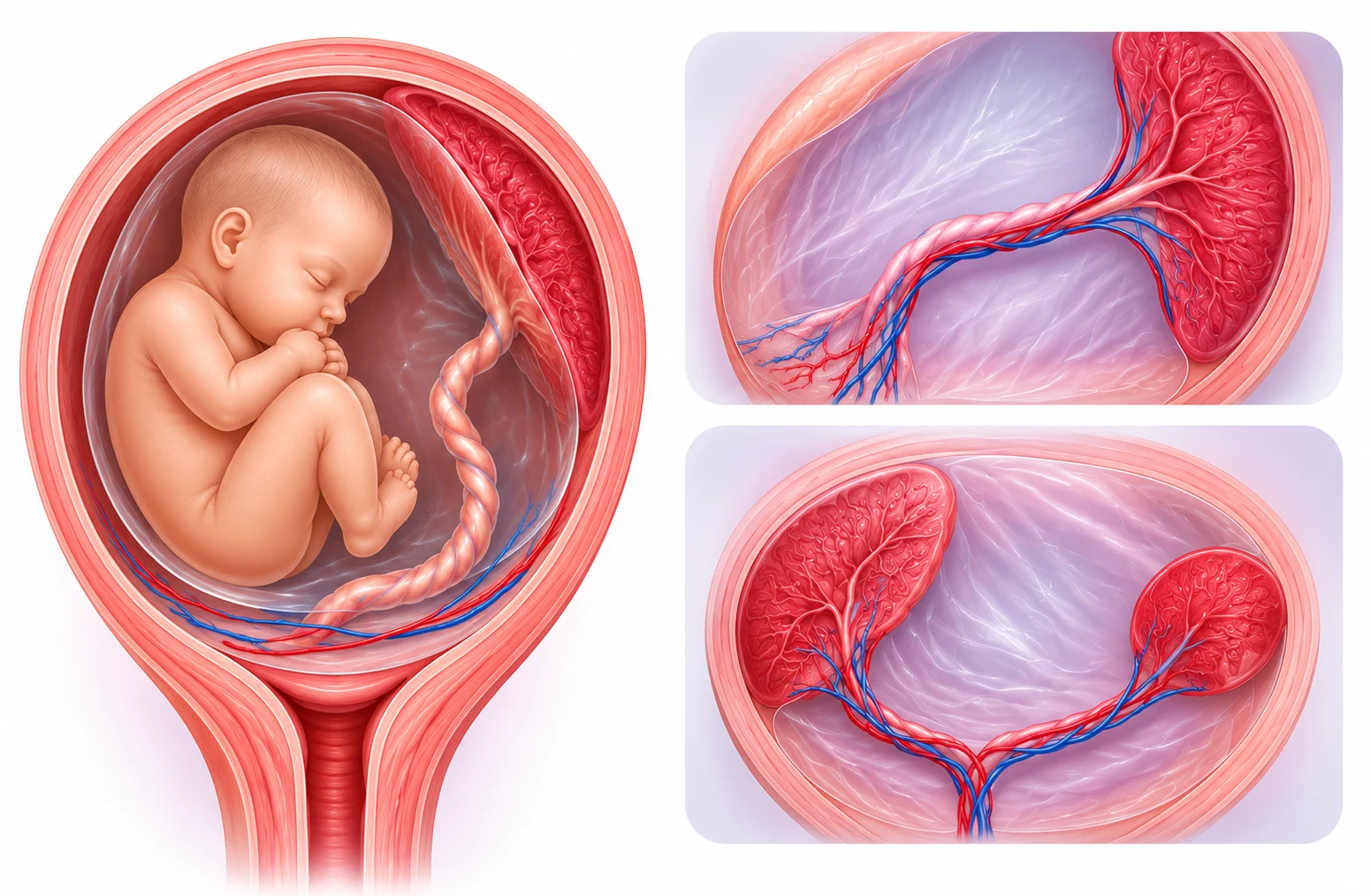
Vasa previa is a rare pregnancy complication in which the baby's blood vessels run through the membranes surrounding the baby and pass over or close to the cervix (the opening of the uterus). Unlike the vessels inside the umbilical cord, these vessels are not adequately protected by the cord or placental tissue.
If the membranes rupture when your waters break, or during labour, these exposed blood vessels may tear. Because they carry the baby's blood, bleeding can become serious very quickly.
Vasa previa affects approximately 1 in 1,200 to 1 in 5,000 pregnancies. Although it is uncommon, identifying it before labour allows your obstetrician to plan a caesarean birth before the exposed vessels are put at risk.
How Does Vasa Previa Affect the Umbilical Cord and Placenta
Vasa previa develops because of the way the umbilical cord and placenta are arranged during pregnancy. It is generally classified into two main types.
- Type 1 – Velamentous cord insertion: The umbilical cord attaches to the membranes surrounding the baby rather than directly to the placenta. Blood vessels travel through these membranes before reaching the placenta, and some may pass over or near the cervix.
- Type 2 – Blood vessels connecting separate placental sections: The placenta has two or more sections, such as a main section and an accessory lobe. The blood vessels connecting these sections may pass over or close to the cervix.
In both types, the concern is that the exposed blood vessels may tear if the membranes rupture or labour begins. Identifying their location helps your obstetrician determine the best monitoring and delivery plan for your pregnancy.
Causes of Vasa Previa
Vasa previa develops because of how the umbilical cord, blood vessels, and placenta are arranged. For example, the cord may attach to the membranes instead of directly to the placenta, or the placenta may develop into separate sections connected by exposed blood vessels.
The exact reasons these structural variations occur are not always known. Vasa previa is not caused by something you ate, an activity you performed or stress during pregnancy. You cannot reliably prevent it through lifestyle changes.
The focus is therefore on identifying the condition during pregnancy and planning appropriate care to reduce the risk of complications during birth.
Risk Factors of Vasa Previa
Certain pregnancy and placental features are associated with a higher chance of vasa previa. These include:
- Velamentous cord insertion: The umbilical cord attaches to the membranes rather than directly to the placenta.
- Low-lying placenta or placenta previa: The placenta lies close to or covers the cervix. Vasa previa may remain a concern even if a previously low-lying placenta moves higher as the uterus grows.
- Bilobed or accessory-lobe placenta: The placenta has separate sections connected by blood vessels.
- Pregnancy through in vitro fertilisation (IVF): Assisted conception is associated with a higher likelihood of vasa previa.
- Twin or multiple pregnancy: Pregnancies involving more than one baby have a higher chance of this condition.
Having one or more of these risk factors does not mean that you will develop vasa previa. Similarly, the condition can occur without an obvious risk factor. Your obstetrician may recommend closer ultrasound monitoring if your pregnancy has associated features.
Signs & Symptoms of Vasa Previa
Vasa previa usually causes no symptoms during pregnancy. Many cases are identified during an ultrasound scan rather than through physical signs.
If the exposed blood vessels tear, vaginal bleeding may occur, particularly after the waters break. Bleeding may be accompanied by changes in the baby's heart rate. This is an emergency because the blood loss may be coming from the baby rather than the mother.
When to seek medical care: Contact your maternity unit or seek urgent medical attention immediately if you experience vaginal bleeding during pregnancy. If you have been diagnosed with vasa previa, seek emergency care if your waters break, you develop contractions, or you notice bleeding. Do not wait for symptoms to settle or assume that the bleeding is harmless.
Complications of Untreated Vasa Previa
When vasa previa is diagnosed before labour, a planned delivery can substantially reduce the risk of serious complications. The main concern arises when the condition has not been identified and the exposed blood vessels tear during labour or when the waters break.
Possible complications include:
- Fetal bleeding: The exposed vessels may rupture, causing the baby to lose blood.
- Reduced oxygen supply: Significant blood loss can reduce the oxygen reaching the baby's organs.
- Emergency delivery: A sudden rupture of the vessels may require an immediate caesarean birth.
- Stillbirth or neonatal death: Severe blood loss can be life-threatening for the baby if the condition is not recognised and treated promptly.
The Royal College of Obstetricians and Gynaecologists reports that fetal mortality can be at least 60% when vasa previa presents during labour or after the membrane rupture, despite emergency caesarean delivery. In contrast, studies report survival rates above 95% when the condition is diagnosed before birth and managed with a planned caesarean.
These figures describe different clinical situations and should not be interpreted as a prediction of an individual baby's outcome. The key message is that antenatal diagnosis and careful delivery planning can make a substantial difference.
Treatment Options for Vasa Previa
Vasa previa cannot be corrected with medication or a procedure that moves the exposed blood vessels away from the cervix. Treatment focuses on monitoring the pregnancy and planning delivery before labour or rupture of the membranes occurs.
Your obstetrician will recommend a plan based on your pregnancy, symptoms, ultrasound findings, and risk of early labour.
- Planned caesarean delivery: A caesarean birth is generally recommended for confirmed vasa previa that persists near the cervix. It is usually scheduled before labour begins. Timing varies with the clinical situation and applicable guidelines; delivery may be planned around 34–37 weeks of pregnancy.
- Regular monitoring: Follow-up ultrasound scans may be recommended to check the location of the blood vessels and reassess whether vasa previa persists. Your doctor may also arrange checks of your baby's wellbeing based on your individual needs.
- Corticosteroids: If an early birth is anticipated, your obstetrician may recommend corticosteroid injections to help your baby's lungs mature and reduce certain complications associated with premature birth. The timing depends on how likely an early delivery is.
- Hospital admission, when needed: Some pregnant women may be advised to stay in hospital before delivery, particularly if they have symptoms, additional risk factors for early labour or limited access to emergency care. Admission is not necessary for every patient, and the decision should be individualised.
Your obstetrician will also discuss what to do if you experience contractions, vaginal bleeding or rupture of the membranes before the planned delivery date. If any of these occur, seek urgent medical assessment.
What Is the Prognosis (Outlook) for Vasa Previa?
The outlook for babies with vasa previa is generally favourable when the condition is diagnosed before labour and managed with appropriate monitoring and a planned caesarean delivery. Studies show that survival rates are above 95% in pregnancies where vasa previa is detected before birth and managed appropriately.
The main aim of treatment is to prevent the exposed blood vessels from tearing during labour or when the waters break. Follow-up scans and a carefully timed delivery help your team manage this risk.
Every pregnancy is different, and the outcome also depends on factors such as gestational age at birth and any other medical complications. Your obstetrician can explain what the diagnosis means for your pregnancy and discuss the safest delivery plan for you and your baby.
What Questions Should I Ask My Doctor?
The questions you may want to ask can change as the pregnancy progresses. It can help to discuss your baby’s monitoring, whether hospital admission may be needed, and how your obstetrician plans the timing and method of delivery.
Monitoring and Diagnosis Questions
- Has vasa previa been confirmed, and which type do I have?
- Where are the exposed blood vessels in relation to my cervix?
- Will I need follow-up ultrasound or colour Doppler scans?
- Is there a possibility that the condition may no longer be present on a later scan?
- How often will my baby and I need monitoring?
- Do I need to stay in the hospital before delivery?
Delivery and Warning-Sign Questions
- At what stage of pregnancy should my caesarean be planned?
- Which symptoms mean I should seek emergency medical care?
- What should I do if my waters break or contractions begin before the planned date?
- Will my baby need any additional care after birth?
- What arrangements should I make if I need to get to the hospital urgently?
Consider writing down your questions before your appointment. Your healthcare team can explain your options, discuss the benefits and risks of different care arrangements, and help you understand what to expect.
Prevention & Lifestyle Tips for Vasa Previa
Preventing vasa previa through diet, exercise, or other lifestyle changes is not possible because it develops from the arrangement of the placenta and umbilical cord. However, appropriate screening and timely medical care can help reduce the risk of complications.
The following steps may help you follow your care plan:
- Attend your recommended ultrasound scans: Routine pregnancy scans may identify features that warrant a closer examination for vasa previa.
- Follow up on abnormal scan findings: If your placenta is low-lying or your doctor identifies an unusual cord insertion, attend any recommended additional scans.
- Report vaginal bleeding promptly: Seek urgent medical assessment for any bleeding during pregnancy, particularly if you have been diagnosed with vasa previa.
- Follow your individual monitoring plan: Attend appointments and follow your obstetrician's advice about monitoring and the timing of delivery.
- Discuss travel, exercise and sexual activity: Your doctor can advise whether any changes are appropriate for your circumstances. No single restriction applies to everyone with vasa previa.
- Plan access to emergency care: If you have confirmed vasa previa, understand where to go if your waters break, contractions begin, or bleeding occurs.
These steps do not change the position of the exposed vessels. Their purpose is to support early identification, timely assessment and a planned delivery when needed.
Why Choose BirthRight by Rainbow Hospitals for Vasa Previa Care?
BirthRight by Rainbow Hospitals provides coordinated pregnancy and delivery care for women diagnosed with vasa previa. Key strengths include:
- Specialist pregnancy assessment: Obstetrics and gynaecology teams review ultrasound findings and assess the pregnancy based on individual needs.
- Fetal monitoring and imaging: Where available, specialist fetal assessment and ultrasound services help doctors monitor the condition and plan care.
- Individualised monitoring: The team plans the frequency of follow-up and scans based on the pregnancy and assessment findings.
- Delivery planning: The maternity team discusses the appropriate timing and method of delivery based on the mother’s and baby’s needs.
- Preparation for an early birth: If early delivery is expected, the care team plans ahead for the support that may be needed at birth.
- Newborn care support: Access to neonatal care lets the team plan appropriate support for the baby after delivery, if needed.
- Coordinated care: Depending on the hospital location, the same care network can manage pregnancy monitoring, delivery planning, and newborn support.
- Clear communication: Doctors explain the diagnosis, monitoring plan, and delivery options so you can understand each stage of care.

Find a Doctor and Book Appointment Online
Meet our specialist doctors who bring together clinical expertise, compassion, and personalised care to support your health and well-being. Choose from 1,300+ specialists across our network and book an appointment with BirthRight and Rainbow Children Hospitals, offering 24*7 support to you and your family.

Dr. Pranathi Reddy A
Clinical Director – Obstetrics & Gynecology.
English,Hindi,Telugu Banjara Hills

Dr. Gauri Vinayak Dhamangaonkar
Senior Consultant - Fetal Medicine
15 Years English,Hindi,Marathi,Telugu Kondapur OP, Banjara Hills

Dr. Shruthi Reddy Poddutoor
Consultant Obstetrician, Gynecologist & Laparoscopic Surgeon
English,Telugu Banjara Hills

Dr. Himabindu Veerla
Consultant Obstetrician, Gynecologist & Laparoscopic Surgeon
English,Telugu Banjara Hills

Dr. Bhargavi Reddy K
Consultant - Obstetrics and Gynecology
10 Years English,Hindi,Telugu Banjara Hills, Attapur Clinic

Dr. Annie Pranutha P
Consultant Obstetrics and Gynecology
9 Years English,Hindi,Telugu Banjara Hills, Attapur Clinic

Dr. Sasikala Kola
Consultant Obstetrician & Gynecologist
English,Hindi,Telugu Banjara Hills

Dr. Atigadda Vijaya
Consultant - Obstetrics & Gynecology
Hindi,Telugu Banjara Hills, Himayatnagar, Attapur Clinic

Dr. Nishanth Reddy Inavolu
Visiting Consultant Physician and Diabetologist & Internal Medicine
English,Hindi,Telugu Banjara Hills, Himayatnagar

Dr. Tulika Tayal
Consultant - Fetal Medicine
English,Telugu Banjara Hills

Dr. M Prathyusha Reddy
Consultant Obstetrics & Gynecology
English,Telugu Banjara Hills

Dr. Nithya Narasimha Murthy
Consultant -Psychiatrist
English,Hindi,Telugu Kondapur OP, Banjara Hills, Child Development Centre - Banjarahills Rd No 10

Dr. Brundavani
Consultant - Nutritionist
English,Hindi,Telugu Kondapur OP, Hydernagar, Banjara Hills, Child Development Centre - Banjarahills Rd No 10

Dr. Niveditha Chalmeda
Consultant
English,Telugu Banjara Hills

Dr. Kirti Reddy Patlolla
Consultant Obstetrics and Gynaecology
English,Telugu Banjara Hills, Attapur Clinic

Dr. Tuheena Sharma
Consultant - Perinatal Physiotherapy
10 Years English,Telugu Banjara Hills

Dr. Aditi Shah
Consultant - Fetal Medicine
English,Telugu Banjara Hills

Dr. Swathi Naga Tulasi Rayapureddy
Lactation Consultant
8 Years English,Telugu Banjara Hills

Dr. Swetha Reddy. S
CONSULTANT PERINATAL PSYCHIATRIST AND WOMEN MENTAL HEALTH SPECIALIST
13 Years English,Hindi,Telugu Banjara Hills

Dr. Addu Kiranmayi
Chief Clinical Nutritionist and Lifestyle Medicine Consultant
15 Years English,Hindi,Telugu Himayatnagar, Banjara Hills

Dr. Palle Nalini Kumari
Lactation Consultant
17+ Years English,Hindi,Telugu Banjara Hills
Dr. Nazia Tabassum
Consultant - Breast, Plastic & Reconstructive Surgeon
9 Years English,Hindi,Telugu,Urdu Banjara Hills

Dr. Sruthi Cheera
Consultant Breast Surgeon
5 Years English,Hindi,Kannada,Telugu Banjara Hills

Dr. Supriya Reddy
Lactation Consultant
5 Years English,Hindi,Telugu Banjara Hills

Dr. Niraj Krishnamurthy Yanamandra
Senior Consultant Obstetrician & Gynaecologist, Laparoscopy & Hysteroscopy Surgeon
English,Hindi,Telugu Hydernagar, Banjara Hills

Dr. B. Rao Bahadur
Consultant – Obstetrician & Gynecologist, Laparoscopic ,& Hysteroscopic Surgeon
22 Years English,Hindi,Konkani,Marathi,Telugu Banjara Hills, Kondapur OP

Dr. Sneha Kulkarni
Consultant - Child, Adolescent & Adult Psychiatrist
10 Years English,Hindi,Kannada,Telugu Secunderabad, Banjara Hills, Child Development Centre - Banjarahills Rd No 10

Dr. Lavanya Janagama
Consultant – Obstetrics & Gynecology
10+ Years English Banjara HillsLeading Hospitals for Women Care
Rainbow Children's Hospital stands as a testament to the hospital's continual pursuit of excellence and innovation, providing specialized care for women and children














chennai
Blogs
Discover our most recent health articles provided by our reliable experts.




What Are People Saying About Us
Embark on a journey of inspiration and hope with our patient success stories, complemented by informative videos from our dedicated doctors.


Media
 Common Gynaecological Surgeries to Fix Female Reproductive Issues
 Healthy Woman - Healthy World
 Healthier Women For a Healthier Future...
 Rainbow Children’s Hospital & BirthRight by Rainbow Launch Video Consultation Facilities
 Dr.Pranthi Reddy
 What is the use of that?
 Can you try this time?
 Pregnant Women are Not Unfit
 Declining Age of Menarche - A Matter of Concern
 Important Facts about Cervical Cancer
 Be careful before preempting
 Flu every month!
 Menstrual cramps
 Premature delivery
 Whether laughing or coughing...why?
 Multi - Tasking may be Cool but it's not Healthy
 Pregnant and Worried about COVID-19? Here's Everything you Need to know
 Video Consultation in Pandamic Situation for Pregnancy Women's
 Women.. Various types of cysts
 Recurrent Pregnancy Loss in Women
 Early Onset of Puberty: Causes, Symptoms and Treatment Options
Common Gynaecological Surgeries to Fix Female Reproductive Issues
Healthy Woman - Healthy World
Healthier Women For a Healthier Future...
FAQs
Can vasa previa be detected before labour starts?
Will I definitely need a C-section if I have vasa previa?
Is vasa previa dangerous for me, or mainly for my baby?
Can vasa previa resolve on its own during pregnancy?
How is vasa previa different from placenta previa?
Will my baby need NICU care after an early delivery?
Can vasa previa occur in a twin or multiple pregnancy?
Will vasa previa happen again in a future pregnancy?
Can I travel, exercise or have sex if I have vasa previa?
Does vasa previa cause pain or contractions?
Is vasa previa hereditary?
Quick Links
Free Calculators to Track and Predict your Pregnancy
Gynecologist in Other Locations
Women's Health Conditions We Treat
- Mastitis (Breast Infection)
- PCOS (Polycystic Ovary Syndrome)
- Uterine Fibroids (Leiomyomas)
- Recurrent Pregnancy Loss
- Blocked Fallopian Tubes (Fallopian Tube Obstruction)
- Gestational Diabetes in Pregnancy
- Incompetent Cervix (Cervical Insufficiency)
- COVID-19 in Pregnancy
- Cytomegalovirus (CMV) in Pregnancy
- HELLP Syndrome