




Syphilis in Women
Syphilis is a sexually transmitted infection that can go unnoticed in women, because the first sore is usually painless and may be inside the vagina or on the cervix. It moves through stages and can be passed to a baby in pregnancy. Simple blood tests find it, and early penicillin treatment can cure it.

Seamless support from diagnosis to post treatment care
Overview
When a health condition causes no clear symptoms, it can be easy to miss. This can also happen with sexually transmitted infections. Symptoms may be mild, hard to notice, or may go away on their own. Syphilis is one such infection and may remain unnoticed for some time, even when the infection is still present in the body.
Recognising the possible signs and getting tested when needed can help ensure timely treatment. With the right treatment, syphilis can be cured, and its further progression can be prevented.
What is Syphilis in Women?
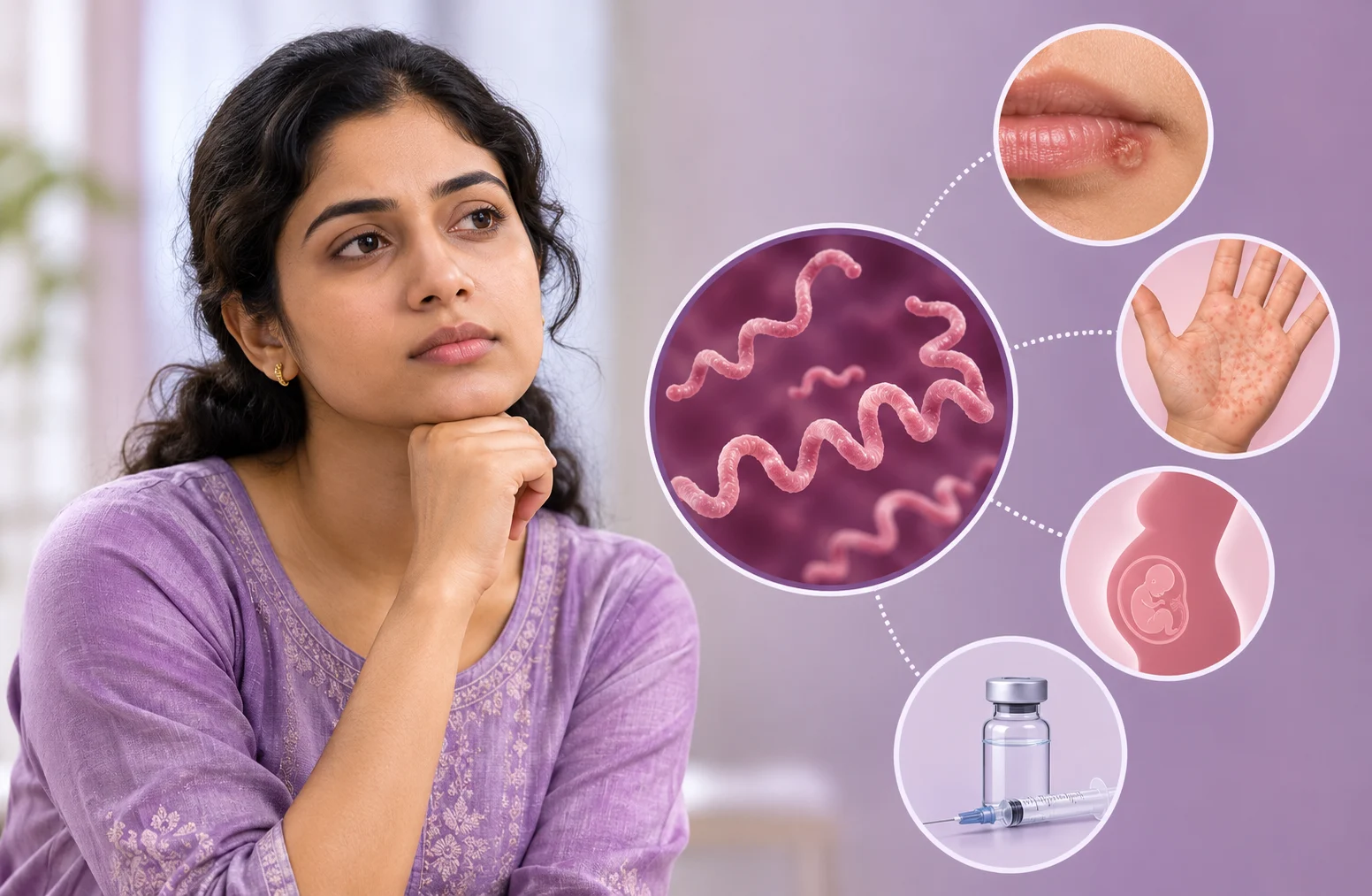
Syphilis is a sexually transmitted infection (STI) caused by the bacterium Treponema pallidum. It can affect different parts of the body, and its symptoms can change or disappear as the infection progresses.
Syphilis in women is curable with the right antibiotic treatment. However, treatment may not reverse damage that has already occurred if the infection goes untreated for a long time.
Syphilis is also a global health concern. The World Health Organization estimates that about 8 million adults aged 15–49 developed syphilis in 2022. Among women in this age group, about 0.6% had active syphilis.
How Does Syphilis Spread in Women?
Syphilis spreads mainly through direct contact with an infectious syphilis sore during vaginal, anal or oral sex. These painless sores may occur around the genitals, anus, lips or inside the mouth and can go unnoticed.
Syphilis can also pass from a pregnant woman to her baby through the placenta during pregnancy. This is known as congenital syphilis.
A person can transmit syphilis without knowing they have it because symptoms may be mild, hidden or absent. Having syphilis does not necessarily mean a woman has had multiple sexual partners or done anything wrong.
Syphilis is not spread through ordinary household contact, such as sharing toilets, utensils, clothing, or swimming pools.
Risk Factors of Syphilis in Women
Certain sexual and behavioural factors can increase the likelihood of syphilis infection. These include:
- Multiple or new sexual partners: Having multiple or new sexual partners can increase the chance of exposure to syphilis.
- Unprotected sex: Having vaginal, anal or oral sex without consistently using barrier protection, such as condoms, can increase the risk of infection.
- Previous or current sexually transmitted infections: Having another sexually transmitted infection, including HIV, may be associated with a higher risk of syphilis.
- Having a partner with an STI or HIV: Having sex with a partner diagnosed with syphilis or another STI can increase the risk of exposure.
- Substance use: Drug or alcohol use associated with sexual activity may increase the likelihood of behaviours that raise STI exposure risk.
Having one or more risk factors does not mean you have syphilis. A syphilis test can confirm whether the infection is present.
Symptoms of Syphilis in Women
The symptoms of syphilis in women can vary depending on the stage. Some women may have no noticeable symptoms at all. Some symptoms may be mild or difficult to notice, particularly when sores develop inside the vagina or on the cervix.
Primary Stage: First 10 to 90 Days
- Chancre sore: A small, firm, round, and usually painless sore may appear where the infection entered the body. In women, it may develop on the vulva, inside the vagina, on the cervix, around the anus, rectum, lips, or mouth.
- Easy to miss: Because the sore usually does not hurt and may develop in an area that is difficult to see, some women may not notice it.
- Healing: The sore may heal on its own within about 3 to 6 weeks. However, the infection remains in the body without treatment.
Secondary Stage: About 1 to 6 Months After the First Sore
- Skin rash: A reddish-brown rash may develop and spread across the body, including the palms of the hands and soles of the feet. It often does not itch.
- Sores in moist areas: Wart-like or moist sores may appear around the mouth, vagina, or anus.
- Other symptoms: Some women may develop fever, swollen lymph nodes, sore throat, headache, muscle aches, tiredness, patchy hair loss, or weight loss.
These symptoms may improve or disappear even without treatment, but the infection can remain in the body.
Latent Stage
During the latent stage, there are no visible signs or symptoms, but blood tests can still detect the infection. This stage is classified as:
- Early latent syphilis: Infection acquired within the previous year.
- Late latent syphilis: Infection acquired more than a year ago, with no symptoms of active syphilis.
The distinction is important because the recommended antibiotic treatment duration differs between these stages.
Tertiary Stage
Tertiary syphilis is a late complication that can develop years or decades after untreated infection, sometimes 10–30 years later. It may affect several organs and cause:
- Gummas: Soft, destructive lumps or lesions that can affect the skin, bones and internal organs.
- Cardiovascular complications: Damage to the aorta (the main artery carrying blood from the heart), potentially causing an aortic aneurysm.
- Neurological complications: Problems affecting the brain and nervous system, including changes in memory, movement and coordination.
Syphilis can also affect the brain, eyes, or ears at other stages. Seek prompt medical assessment if symptoms such as vision changes, hearing problems, severe headaches, or confusion develop.
Diagnosis and Tests for Syphilis in Women
Syphilis is diagnosed through a combination of medical history, physical examination and laboratory tests. Since symptoms can be absent or resemble other conditions, blood tests are important for detecting the infection.
1. Blood Tests for Syphilis
Two main types of blood tests are used to diagnose syphilis:
- Non-treponemal tests (RPR and VDRL): These detect antibodies produced in response to the infection. They are used for initial screening in some testing approaches and to monitor treatment response by measuring antibody levels (titres).
- Treponemal tests (TPHA, TPPA, FTA-ABS and EIA): These detect antibodies specifically directed against Treponema pallidum. Rapid point-of-care tests can also detect these antibodies and are useful for screening.
Both types of tests help establish the diagnosis. Depending on the testing approach, a treponemal test may be used first, followed by an RPR or VDRL test, or the reverse. Using both helps distinguish a likely current infection from a previous treated infection or a potentially false-positive result.
2. Dark-Field Microscopy
If a woman has an active syphilis sore, a doctor may collect fluid from it and examine it under a special microscope. This test looks directly for Treponema pallidum bacteria and can help confirm early syphilis.
3. Cerebrospinal Fluid (CSF) Testing
If syphilis is suspected to have affected the nervous system, a doctor may recommend a lumbar puncture (spinal tap) to collect cerebrospinal fluid (CSF), the fluid surrounding the brain and spinal cord. Testing may include CSF-VDRL and other investigations.
Women with vision or hearing symptoms also need appropriate eye or ear examinations. A lumbar puncture may be considered depending on the findings; it is not automatically required for every eye or ear symptom.
4. HIV and Other STI Testing
Since syphilis can occur alongside other sexually transmitted infections, your doctor may recommend HIV testing and screening for other STIs based on your exposure history and symptoms.
5. Follow-Up Blood Tests After Treatment
RPR and VDRL titres are also used to check how well treatment is working. A fourfold decrease in the titre (for example, from 1:32 to 1:8) generally indicates a good response to treatment, although the expected timeline varies with the stage of infection and initial titre.
Treponemal tests, such as TPHA and TPPA, usually remain positive even after successful treatment. Therefore, a positive treponemal test alone does not mean that the infection is still active or has returned.
When To Get Tested After Exposure?
Syphilis blood tests may not detect an infection immediately after exposure. They can remain negative during the early window period, particularly in the first 3–6 weeks. If recent exposure is suspected, your doctor may recommend an initial test and repeat testing at 6–12 weeks, depending on the test used and your symptoms.
Do not wait for the repeat testing window if you develop a sore, rash or other symptoms, or if your partner has been diagnosed with syphilis. Seek medical advice promptly.
Complications of Syphilis in Women
Without treatment, syphilis can remain in the body and cause serious health problems. Possible complications include:
- Damage to the heart and blood vessels
- Problems affecting the brain and nervous system
- Vision problems or loss of vision
- Hearing loss or ringing in the ears
- Transmission of the infection to a baby during pregnancy
Syphilis during pregnancy
All pregnant women should be screened for syphilis during their first antenatal visit, ideally in the first trimester (before 12 weeks). Untreated syphilis can pass to the baby through the placenta and lead to miscarriage, stillbirth, premature birth, low birth weight or congenital syphilis (infection passed from the mother to the baby).
More than half of pregnancies affected by active, untreated syphilis may result in adverse outcomes, including stillbirth, early neonatal death, premature birth or serious newborn infection.
Screening during pregnancy: Under India's National Guidelines for Elimination of Vertical Transmission of HIV and Syphilis (2024), all pregnant women should be screened in the first trimester. Repeat screening in the third trimester and at delivery is recommended for women at increased risk or those living in areas with high syphilis prevalence (above 1% among pregnant women). Testing may include dual HIV-syphilis rapid diagnostic tests, RPR or VDRL.
Treatment during pregnancy: Penicillin is the recommended treatment. The complete course should ideally be finished at least 30 days before delivery. Treatment completed less than 30 days before delivery is considered inadequate for preventing congenital syphilis under India's national guidelines.
Monitoring after treatment: The Jarisch-Herxheimer reaction may cause fever, chills and body aches within 24 hours of the first antibiotic dose. During pregnancy, it may trigger contractions or changes in the baby's heart rate. Treatment should not be delayed, but medical supervision is important. Seek immediate obstetric attention if you develop contractions or reduced fetal movements.
Care for the baby: Babies born to mothers with syphilis need a paediatric assessment after birth. Depending on the mother's treatment history and the baby's test results, the baby may need penicillin treatment, including a 10-day course of intravenous or intramuscular antibiotics, and follow-up testing.
In India, 212 infants were identified with congenital syphilis in FY 2024–25, and 189 (89%) received treatment. Syphilis seropositivity among antenatal-care attendees was 0.10% in the 2021 surveillance round. However, the true national incidence of congenital syphilis is uncertain because active surveillance of infants born to syphilis-reactive mothers is limited.
Treatment Options for Syphilis in Women
Syphilis can be treated with antibiotics. The choice of medicine, dose and treatment duration depend on the stage of infection and whether you are pregnant.
Antibiotics used to treat syphilis
1. Penicillin
Penicillin is the preferred treatment for syphilis. The commonly recommended adult regimens include:
| Stage of syphilis | Recommended treatment |
|---|---|
| Primary, secondary or early latent syphilis (infection acquired within the last year) | Benzathine penicillin G 2.4 million units, given as a single intramuscular (IM) injection |
| Late latent syphilis or infection of unknown duration | Benzathine penicillin G 2.4 million units IM once weekly for 3 weeks (total 7.2 million units) |
| Neurosyphilis (infection affecting the brain or nervous system) | Aqueous crystalline penicillin G, 18–24 million units daily through an intravenous (IV) infusion for 10–14 days |
2. Alternative antibiotics for penicillin allergy
For non-pregnant women with a penicillin allergy, doctors may prescribe doxycycline as an alternative:
- Early syphilis: 100 mg twice daily for 14 days.
- Late latent syphilis or infection of unknown duration: 100 mg twice daily for 28 days.
Doxycycline is not recommended as a substitute for penicillin during pregnancy.
Other important aspects of syphilis treatment
- Treatment during pregnancy: Penicillin is the only treatment with established effectiveness for treating maternal syphilis and preventing congenital syphilis. Women with a penicillin allergy may need desensitisation before receiving it.
- Jarisch-Herxheimer reaction: Some women may develop fever, chills, headache or muscle aches within 24 hours of starting treatment. This temporary reaction occurs because of the body's response to the dying bacteria. It is not a penicillin allergy. During pregnancy, it may cause contractions or fetal distress, so contact your maternity team if symptoms develop.
- Follow-up testing: Repeat blood tests, usually RPR or VDRL, help check whether treatment is working. Your doctor will determine the testing schedule based on the stage of infection and your HIV status.
- Partner testing and treatment: Sexual partners should be informed, tested and treated when necessary to prevent reinfection.
When can you resume sexual activity? Avoid vaginal, anal and oral sex until you and your partner have completed treatment, at least two weeks have passed after both have finished treatment, and any infectious sores have healed.
Do not self-treat syphilis or stop antibiotics early. Even if sores or rashes disappear, follow the complete treatment plan prescribed by your doctor.
What Is the Prognosis (Outlook) With Treatment?
With early diagnosis and appropriate antibiotic treatment, syphilis can be cured, and its progression to later stages can be prevented. However, treatment may not reverse permanent damage caused by long-standing infection. Without treatment, around one-third of infected people may develop late complications over time. These can affect the heart, brain and other organs. Neurological, eye or ear complications can also occur at any stage of the infection.
After treatment, regular follow-up blood tests help your doctor assess your response to antibiotics and check for possible reinfection. Treponemal tests may remain positive even after successful treatment, so your doctor will interpret the results alongside your RPR or VDRL titres.
You can also get syphilis again after successful treatment if you are exposed to the infection. Both partners should be tested and treated when necessary.
What Questions Should I Ask My Doctor?
Talking openly with your doctor can help you understand your test results, treatment, and any steps needed to protect your health and your partner.
Testing & Diagnosis Questions
- Do my symptoms suggest syphilis or another condition?
- Which tests do I need to confirm whether I have syphilis?
- Could I have syphilis even if I have no symptoms?
- What does my test result mean?
- Which stage of syphilis do I have?
- Should I also be tested for HIV or other STIs?
- Does my sexual partner need testing or treatment?
- Do I need repeat testing after treatment?
Treatment & Pregnancy Screening Questions
- Which treatment is appropriate for my stage of syphilis?
- Is penicillin safe for me if I am pregnant?
- What should I do if I am allergic to penicillin?
- Could syphilis affect my pregnancy or baby?
- Do I need additional pregnancy monitoring?
- When should I have follow-up blood tests?
- When is it safe to have sex again after treatment?
- Can I breastfeed if I have syphilis?
Prevention Tips for Syphilis in Women
You can reduce your risk of syphilis by:
- Using condoms correctly every time you have vaginal, anal, or oral sex
- Having an open conversation with your partner about STI testing
- Getting tested if you have a partner diagnosed with syphilis
- Getting tested when recommended because of your sexual or medical history
- Completing treatment exactly as prescribed if you are diagnosed with syphilis
- Ensuring sexual partners are evaluated and treated when advised
- Avoiding sexual contact with infectious sores
- Getting syphilis screening during pregnancy as part of antenatal care
Condoms reduce the risk of syphilis but cannot provide complete protection because sores may occur in areas that a condom does not cover.
Why Choose BirthRight by Rainbow Hospitals for Syphilis Care?
At BirthRight by Rainbow Hospitals, we provide coordinated pregnancy and maternity care for women who need screening, treatment, or follow-up for syphilis. Key strengths include:
- Timely infection screening: Doctors can recommend syphilis testing during pregnancy or while planning pregnancy when appropriate.
- Obstetric and gynaecology expertise: Specialists assess the infection alongside your pregnancy needs and overall health.
- High-risk pregnancy care: Women who need closer monitoring can receive specialist support throughout pregnancy.
- Treatment guidance: Doctors explain the recommended treatment and monitor your response based on your individual condition.
- Pregnancy follow-up: Ongoing care helps doctors monitor both maternal health and pregnancy progress after treatment begins.
- Preconception support: Women planning pregnancy can receive counselling, testing, and guidance before conception.
- Coordinated maternity care: Screening, pregnancy monitoring, high-risk care, and delivery services are available within the same care network.
- Care across multiple cities: BirthRight by Rainbow Hospitals provides pregnancy and maternity services across several locations in India.

Find a Doctor and Book Appointment Online
Meet our specialist doctors who bring together clinical expertise, compassion, and personalised care to support your health and well-being. Choose from 1,300+ specialists across our network and book an appointment with BirthRight and Rainbow Children Hospitals, offering 24*7 support to you and your family.

Dr. Pranathi Reddy A
Clinical Director – Obstetrics & Gynecology.
English,Hindi,Telugu Banjara Hills

Dr. Gauri Vinayak Dhamangaonkar
Senior Consultant - Fetal Medicine
15 Years English,Hindi,Marathi,Telugu Kondapur OP, Banjara Hills

Dr. Shruthi Reddy Poddutoor
Consultant Obstetrician, Gynecologist & Laparoscopic Surgeon
English,Telugu Banjara Hills

Dr. Himabindu Veerla
Consultant Obstetrician, Gynecologist & Laparoscopic Surgeon
English,Telugu Banjara Hills

Dr. Bhargavi Reddy K
Consultant - Obstetrics and Gynecology
10 Years English,Hindi,Telugu Banjara Hills, Attapur Clinic

Dr. Annie Pranutha P
Consultant Obstetrics and Gynecology
9 Years English,Hindi,Telugu Banjara Hills, Attapur Clinic

Dr. Sasikala Kola
Consultant Obstetrician & Gynecologist
English,Hindi,Telugu Banjara Hills

Dr. Atigadda Vijaya
Consultant - Obstetrics & Gynecology
Hindi,Telugu Banjara Hills, Himayatnagar, Attapur Clinic

Dr. Nishanth Reddy Inavolu
Visiting Consultant Physician and Diabetologist & Internal Medicine
English,Hindi,Telugu Banjara Hills, Himayatnagar

Dr. Tulika Tayal
Consultant - Fetal Medicine
English,Telugu Banjara Hills

Dr. M Prathyusha Reddy
Consultant Obstetrics & Gynecology
English,Telugu Banjara Hills

Dr. Nithya Narasimha Murthy
Consultant -Psychiatrist
English,Hindi,Telugu Kondapur OP, Banjara Hills, Child Development Centre - Banjarahills Rd No 10

Dr. Brundavani
Consultant - Nutritionist
English,Hindi,Telugu Kondapur OP, Hydernagar, Banjara Hills, Child Development Centre - Banjarahills Rd No 10

Dr. Niveditha Chalmeda
Consultant
English,Telugu Banjara Hills

Dr. Kirti Reddy Patlolla
Consultant Obstetrics and Gynaecology
English,Telugu Banjara Hills, Attapur Clinic

Dr. Tuheena Sharma
Consultant - Perinatal Physiotherapy
10 Years English,Telugu Banjara Hills

Dr. Aditi Shah
Consultant - Fetal Medicine
English,Telugu Banjara Hills

Dr. Swathi Naga Tulasi Rayapureddy
Lactation Consultant
8 Years English,Telugu Banjara Hills

Dr. Swetha Reddy. S
CONSULTANT PERINATAL PSYCHIATRIST AND WOMEN MENTAL HEALTH SPECIALIST
13 Years English,Hindi,Telugu Banjara Hills

Dr. Addu Kiranmayi
Chief Clinical Nutritionist and Lifestyle Medicine Consultant
15 Years English,Hindi,Telugu Himayatnagar, Banjara Hills

Dr. Palle Nalini Kumari
Lactation Consultant
17+ Years English,Hindi,Telugu Banjara Hills
Dr. Nazia Tabassum
Consultant - Breast, Plastic & Reconstructive Surgeon
9 Years English,Hindi,Telugu,Urdu Banjara Hills

Dr. Sruthi Cheera
Consultant Breast Surgeon
5 Years English,Hindi,Kannada,Telugu Banjara Hills

Dr. Supriya Reddy
Lactation Consultant
5 Years English,Hindi,Telugu Banjara Hills

Dr. Niraj Krishnamurthy Yanamandra
Senior Consultant Obstetrician & Gynaecologist, Laparoscopy & Hysteroscopy Surgeon
English,Hindi,Telugu Hydernagar, Banjara Hills

Dr. B. Rao Bahadur
Consultant – Obstetrician & Gynecologist, Laparoscopic ,& Hysteroscopic Surgeon
22 Years English,Hindi,Konkani,Marathi,Telugu Banjara Hills, Kondapur OP

Dr. Sneha Kulkarni
Consultant - Child, Adolescent & Adult Psychiatrist
10 Years English,Hindi,Kannada,Telugu Secunderabad, Banjara Hills, Child Development Centre - Banjarahills Rd No 10

Dr. Lavanya Janagama
Consultant – Obstetrics & Gynecology
10+ Years English Banjara HillsLeading Hospitals for Women Care
Rainbow Children's Hospital stands as a testament to the hospital's continual pursuit of excellence and innovation, providing specialized care for women and children















chennai
Blogs
Discover our most recent health articles provided by our reliable experts.




What Are People Saying About Us
Embark on a journey of inspiration and hope with our patient success stories, complemented by informative videos from our dedicated doctors.


Media
 Common Gynaecological Surgeries to Fix Female Reproductive Issues
 Healthy Woman - Healthy World
 Healthier Women For a Healthier Future...
 Rainbow Children’s Hospital & BirthRight by Rainbow Launch Video Consultation Facilities
 Dr.Pranthi Reddy
 What is the use of that?
 Can you try this time?
 Pregnant Women are Not Unfit
 Declining Age of Menarche - A Matter of Concern
 Important Facts about Cervical Cancer
 Be careful before preempting
 Flu every month!
 Menstrual cramps
 Premature delivery
 Whether laughing or coughing...why?
 Multi - Tasking may be Cool but it's not Healthy
 Pregnant and Worried about COVID-19? Here's Everything you Need to know
 Video Consultation in Pandamic Situation for Pregnancy Women's
 Women.. Various types of cysts
 Recurrent Pregnancy Loss in Women
 Early Onset of Puberty: Causes, Symptoms and Treatment Options
Common Gynaecological Surgeries to Fix Female Reproductive Issues
Healthy Woman - Healthy World
Healthier Women For a Healthier Future...
FAQs
Can syphilis be completely cured?
Can syphilis sores go unnoticed in women?
Will syphilis affect my ability to have children in the future?
Can syphilis come back after I've been treated?
Can you have syphilis and HIV at the same time?
Is syphilis treatment safe during pregnancy?
Is it safe to breastfeed if I have syphilis?
How long after exposure should I get tested for syphilis?
Can syphilis be mistaken for another skin condition?
Can you get syphilis from oral sex or kissing?
Can syphilis be cured with one injection?
Can I have sex after syphilis treatment?
Are syphilis symptoms different in females and males?
Quick Links
Free Calculators to Track and Predict your Pregnancy
Gynecologist in Other Locations
Women's Health Conditions We Treat
- Mastitis (Breast Infection)
- PCOS (Polycystic Ovary Syndrome)
- Uterine Fibroids (Leiomyomas)
- Recurrent Pregnancy Loss
- Blocked Fallopian Tubes (Fallopian Tube Obstruction)
- Gestational Diabetes in Pregnancy
- Incompetent Cervix (Cervical Insufficiency)
- COVID-19 in Pregnancy
- Cytomegalovirus (CMV) in Pregnancy
- HELLP Syndrome
- Luteal Phase Defect
- Vasa Previa
- Listeria in Pregnancy
- Placenta Previa
- Endometrial Polyps (Uterine Polyps)
- Congenital Heart Disease in Pregnancy
- Hyperemesis Gravidarum (Severe Morning Sickness)
- Preeclampsia (toxemia)
- Fetal Distress (Non-Reassuring Fetal Status)
- Postpartum Haemorrhage (PPH)
- Placental Abruption (Abruptio Placentae)
- Placenta Accreta