




Placenta Previa
Placenta previa is a pregnancy condition in which the placenta sits low in the uterus and covers part or all of the cervix. It often causes no symptoms and is found on a routine scan, but it can cause sudden, painless bleeding in the second half of pregnancy. With regular scans, careful monitoring and a planned delivery, most women and babies do well.

Seamless support from diagnosis to post treatment care
Overview
Placenta previa may first come to attention during a routine pregnancy scan or when bleeding occurs during pregnancy. When the placenta is positioned lower in the uterus than expected, doctors may recommend follow-up scans to see whether its position changes as the pregnancy progresses.
The placenta's location can affect the monitoring needed later in pregnancy and delivery planning. In many cases, the position of the placenta changes as the pregnancy progresses, and your doctor will monitor it closely. Understanding why its position matters, what symptoms to look out for, and how it may affect your pregnancy and delivery can help you feel more informed and prepared.
What is Placenta Previa?
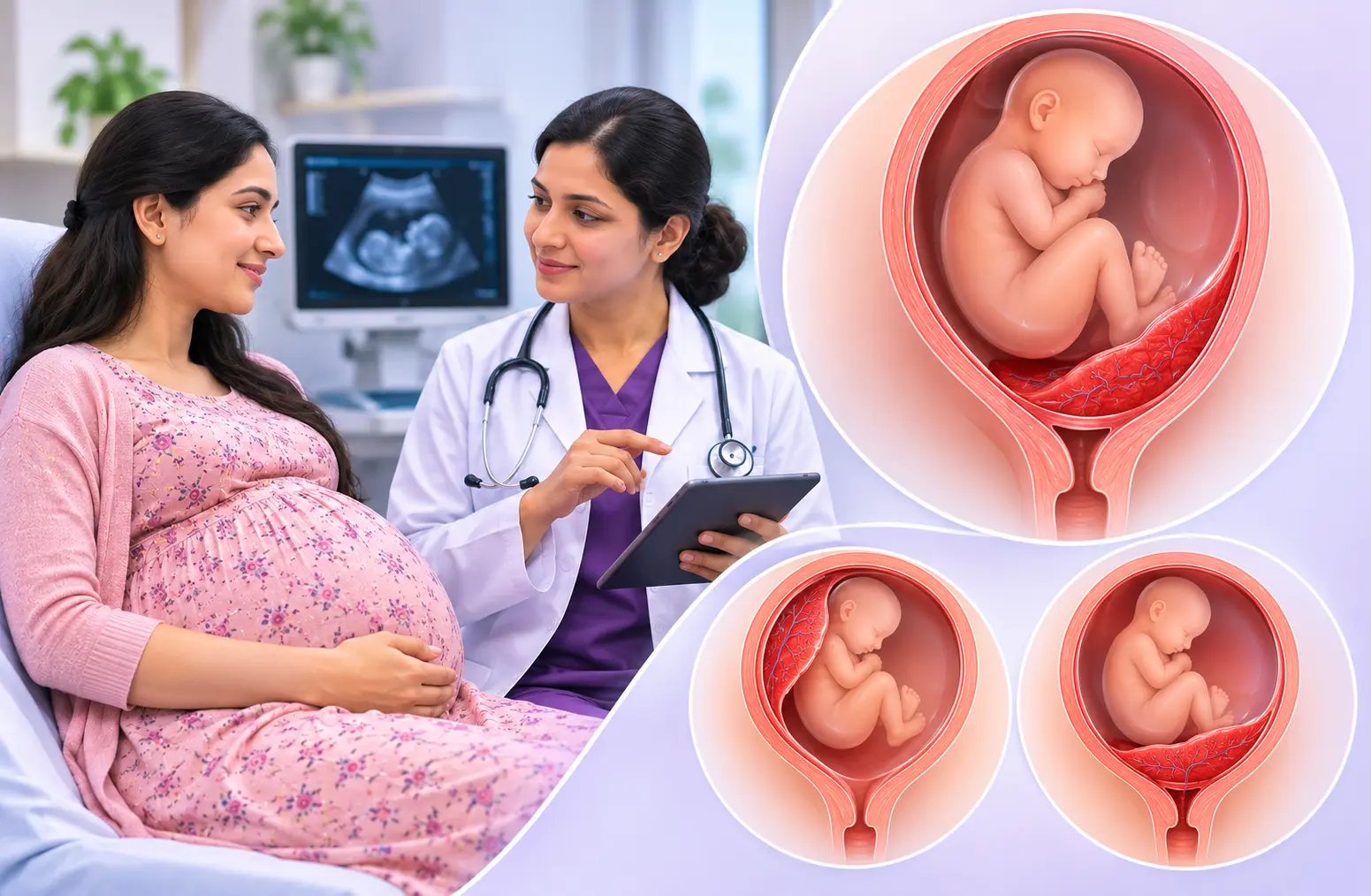
Placenta previa is when the placenta sits low in the uterus and covers part or all of the cervix - the opening at the neck of the uterus. Normally, the placenta attaches higher up in the uterus, away from the cervix, leaving the birth passage clear for the baby to be born. When it covers the cervix, it can cause bleeding and affect how the baby is delivered.
Based on its position in relation to the cervix, the placenta is described as:
- Placenta previa: The placenta covers the internal opening of the cervix, either partially or completely.
- Low-lying placenta: The placenta does not cover the opening but its lower edge is within 20 mm (2 cm) of it.
Placenta previa is uncommon, affecting about 5.2 per 1000 pregnancies worldwide, with higher prevalence reported in Asian studies. Many low-lying placentas found early in pregnancy move away from the cervix as the uterus grows.
How Does Placenta Previa Affect Pregnancy and Delivery
The placenta is rich in blood vessels, so when it covers the cervix, it can bleed, especially as the cervix starts to change later in pregnancy. This is why doctors monitor placenta previa closely in the second half of pregnancy. The main concern is bleeding, which can be heavy if the cervix opens over the placenta.
Placental position also matters for delivery, because the placenta would block the baby’s path in a vaginal birth. For this reason, a baby with placenta previa covering the cervix is almost always delivered by caesarean. Knowing the position in advance lets your team plan how and when to deliver safely.
Causes of Placenta Previa
The exact cause of placenta previa is not fully understood. In most cases, there is no clear reason why the placenta attaches lower down in the uterus. It depends largely on where the fertilised egg implants and where the placenta develops early in pregnancy.
This is different from the risk factors listed below. Risk factors can increase the chance of placenta previa but do not directly cause it.
It is important to know that nothing a woman did caused the placenta to lie low. Her diet, activity, or anything else within her control did not cause it. Understanding this can help ease any guilt or worry she may feel after the diagnosis.
Risk Factors and Who Is at Risk in Placenta Previa
While the exact cause is unclear, several factors can increase the risk of placenta previa:
- Previous caesarean or uterine surgery: Scarring from a previous C-section, fibroid removal or other uterine surgery can increase the risk.
- Previous abortion or D&C: A history of abortion, particularly when followed by surgical uterine evacuation or D&C, may increase the risk.
- Older maternal age: The risk increases in women over 35.
- Several previous pregnancies: Multiple previous pregnancies increase the likelihood.
- Carrying twins or more: Multiple pregnancies are associated with a higher risk.
- IVF or assisted reproductive technology (ART): Pregnancies conceived through fertility treatment have a higher likelihood of placenta previa.
- Smoking: Smoking during pregnancy is linked with an increased risk.
- Previous placenta previa: Having had placenta previa in an earlier pregnancy increases the chance of recurrence.
Symptoms and Signs of Placenta Previa
The most important thing to know about placenta previa symptoms is the nature of the bleeding. The classic sign is sudden, bright red bleeding from the vagina in the second half of pregnancy that is usually painless. The main signs and symptoms of placenta previa are listed below.
- Painless vaginal bleeding: Sudden, bright red bleeding that typically comes without pain is the hallmark sign.
- Bleeding later in pregnancy: It most often appears from around the middle of pregnancy onward.
- Bleeding that may stop and return: The bleeding can settle and then come back later.
- Mild cramping in some cases: Some women have mild contractions along with the bleeding.
- No symptoms at all: Some cases are silent and found only on a routine scan.
Note: The painless nature of the bleeding is a key clue because it helps distinguish placenta previa from placental abruption, where the placenta separates early, and the bleeding is usually painful. Any bleeding in pregnancy should be reported to your doctor straight away, whether or not it hurts. Prompt assessment keeps you and your baby safe.
Complications of Placenta Previa
With careful monitoring, most women with placenta previa and their babies do well. The possible complications affect both mother and baby, as set out below.
- Heavy bleeding: Bleeding can be severe, during pregnancy, at delivery or afterwards.
- Anaemia: Repeated or heavy bleeding can lower the mother’s blood count.
- Placenta accreta: The placenta can occasionally attach too deeply into the uterine wall, which needs specialist care.
- Preterm birth: Bleeding may mean the baby has to be delivered early.
- Low birth weight: An early delivery can mean a smaller baby who needs extra support.
Diagnosis and Treatment Options for Placenta Previa
Placenta previa is usually detected during a routine ultrasound scan around 20 weeks of pregnancy. If the placenta is low-lying or covers the cervix, follow-up scans, often including a transvaginal ultrasound, check whether its position changes as the uterus grows. Management depends on the placenta's position, your pregnancy stage and whether you have bleeding.
- Follow-up scans: Repeat ultrasounds, usually in the third trimester, check the placenta's position and help plan delivery.
- Activity and pelvic rest: Your doctor may advise avoiding sexual intercourse, vaginal insertion such as tampons and strenuous activities, particularly if you have had bleeding. Strict bed rest is not routinely recommended because it has not been shown to prevent bleeding.
- Monitoring and treatment for bleeding: Heavy bleeding or repeated episodes may require hospital admission, observation, blood tests and treatment. Iron supplements or other treatment may be prescribed if you have anaemia. If you are Rh-negative, your doctor may recommend anti-D immunoglobulin after a bleeding episode.
- Planned delivery: If placenta previa persists and the pregnancy remains stable, a caesarean is generally planned between 36+0 and 37+6 weeks. If the placental edge is more than 20 mm from the cervix on the late-pregnancy scan, vaginal birth may be considered. Earlier delivery may be necessary if significant bleeding or other complications occur.
- Preparing for an early birth: If preterm delivery is likely, antenatal corticosteroids such as betamethasone may be given at the appropriate gestational age to help the baby's lungs mature. These medicines are given when early birth is anticipated, not automatically to everyone with placenta previa.
Delivery should be planned at a hospital with access to blood transfusion services and newborn care, including a neonatal intensive care unit (NICU) if needed. This helps the team respond promptly if heavy bleeding occurs or the baby needs additional support.
When to Go to the Hospital
Seek immediate medical assessment if you experience:
- Any vaginal bleeding, even if it is light or stops.
- Contractions, regular tightening, or abdominal pain.
- Reduced or absent baby movements.
Do not wait to see whether symptoms settle. Heavy bleeding, dizziness, or fainting require emergency care.
What is the Prognosis (Outlook) for Placenta Previa?
The outlook for placenta previa depends on the placenta's position as pregnancy progresses, whether bleeding occurs, and your medical history.
Most low-lying placentas detected at the 20-week scan move away from the cervix before delivery. However, this is less likely when the placenta covers the cervical opening, especially if the overlap is greater. Follow-up scans help confirm its position and guide delivery planning.
If placenta previa persists, a caesarean delivery is usually recommended. The risk of placenta accreta spectrum (when the placenta attaches too deeply to the uterus) also increases with previous caesarean deliveries. It is around 3% with no previous caesarean, 11% after one and 40% after three. Your doctor may recommend additional assessment.
Placenta previa can recur in a future pregnancy, with an estimated risk of around 4–8%. Report any vaginal bleeding immediately, even if it is light or stops, so your maternity team can assess you and your baby.
What Questions Should I Ask My Doctor?
Going to your appointment with a few questions in mind can help you better understand your situation and what to expect. The questions below can be a useful starting point:
- Which type of placenta previa do I have, and is it likely to move up?
- Are there any restrictions on activities, travel, or sex that I should follow?
- What should I do if I start bleeding?
- Will I need a caesarean, and when might it be planned?
- How often will I have scans from now on?
- What signs mean I should come to hospital straight away?
Writing your questions down means you are less likely to forget them on the day. A clear conversation helps you feel more in control of your care. Your team is there to guide you at every stage.
Prevention and Precaution Tips for Placenta Previa
If you have placenta previa, a few practical precautions can help you manage the pregnancy more comfortably and know when to contact your gynecologist. Your care plan will depend on the position of the placenta, whether you have bleeding, and how your pregnancy progresses.
Following your doctor’s advice, attending scheduled scans, and watching for new symptoms can help your maternity team monitor the condition and plan next steps appropriately.
- Avoid smoking: Not smoking lowers one of the few changeable risks and benefits your pregnancy overall.
- Attend every scan: Regular scans track the placenta and catch any change early.
- Report bleeding at once: Tell your doctor about any bleeding straight away, however light.
- Follow activity advice: Stick to any guidance on rest, lifting and sexual intercourse given for your situation.
None of this prevents the condition itself, which is not a personal failing. It is about staying safe and giving your team the chance to act early. Good antenatal care is the most useful step of all.
Why Choose BirthRight by Rainbow Hospitals for Placenta Previa Care?
BirthRight by Rainbow Hospitals brings together obstetricians, maternal-fetal medicine specialists and newborn care under one roof, backed by three decades of expertise in women’s and children’s health. Placenta previa needs careful monitoring and a well-planned delivery, and our teams are set up to provide both. From detailed scans to planning a caesarean when needed, your care is carefully coordinated to support you and your baby throughout pregnancy and delivery.
If your baby needs to arrive early or if heavy bleeding occurs, you have access to high-risk pregnancy care and a well-equipped neonatal unit in the same place. This means help is ready whatever your delivery brings. The aim throughout is close monitoring, a safe delivery, and steady support for you and your baby.

Find a Doctor and Book Appointment Online
Meet our specialist doctors who bring together clinical expertise, compassion, and personalised care to support your health and well-being. Choose from 1,300+ specialists across our network and book an appointment with BirthRight and Rainbow Children Hospitals, offering 24*7 support to you and your family.

Dr. Pranathi Reddy A
Clinical Director – Obstetrics & Gynecology.
English,Hindi,Telugu Banjara Hills

Dr. Gauri Vinayak Dhamangaonkar
Senior Consultant - Fetal Medicine
15 Years English,Hindi,Marathi,Telugu Kondapur OP, Banjara Hills

Dr. Shruthi Reddy Poddutoor
Consultant Obstetrician, Gynecologist & Laparoscopic Surgeon
English,Telugu Banjara Hills

Dr. Himabindu Veerla
Consultant Obstetrician, Gynecologist & Laparoscopic Surgeon
English,Telugu Banjara Hills

Dr. Bhargavi Reddy K
Consultant - Obstetrics and Gynecology
10 Years English,Hindi,Telugu Banjara Hills, Attapur Clinic

Dr. Annie Pranutha P
Consultant Obstetrics and Gynecology
9 Years English,Hindi,Telugu Banjara Hills, Attapur Clinic

Dr. Sasikala Kola
Consultant Obstetrician & Gynecologist
English,Hindi,Telugu Banjara Hills

Dr. Atigadda Vijaya
Consultant - Obstetrics & Gynecology
Hindi,Telugu Banjara Hills, Himayatnagar, Attapur Clinic

Dr. Nishanth Reddy Inavolu
Visiting Consultant Physician and Diabetologist & Internal Medicine
English,Hindi,Telugu Banjara Hills, Himayatnagar

Dr. Tulika Tayal
Consultant - Fetal Medicine
English,Telugu Banjara Hills

Dr. M Prathyusha Reddy
Consultant Obstetrics & Gynecology
English,Telugu Banjara Hills

Dr. Nithya Narasimha Murthy
Consultant -Psychiatrist
English,Hindi,Telugu Kondapur OP, Banjara Hills, Child Development Centre - Banjarahills Rd No 10

Dr. Brundavani
Consultant - Nutritionist
English,Hindi,Telugu Kondapur OP, Hydernagar, Banjara Hills, Child Development Centre - Banjarahills Rd No 10

Dr. Niveditha Chalmeda
Consultant
English,Telugu Banjara Hills

Dr. Kirti Reddy Patlolla
Consultant Obstetrics and Gynaecology
English,Telugu Banjara Hills, Attapur Clinic

Dr. Tuheena Sharma
Consultant - Perinatal Physiotherapy
10 Years English,Telugu Banjara Hills

Dr. Aditi Shah
Consultant - Fetal Medicine
English,Telugu Banjara Hills

Dr. Swathi Naga Tulasi Rayapureddy
Lactation Consultant
8 Years English,Telugu Banjara Hills

Dr. Swetha Reddy. S
CONSULTANT PERINATAL PSYCHIATRIST AND WOMEN MENTAL HEALTH SPECIALIST
13 Years English,Hindi,Telugu Banjara Hills

Dr. Addu Kiranmayi
Chief Clinical Nutritionist and Lifestyle Medicine Consultant
15 Years English,Hindi,Telugu Himayatnagar, Banjara Hills

Dr. Palle Nalini Kumari
Lactation Consultant
17+ Years English,Hindi,Telugu Banjara Hills
Dr. Nazia Tabassum
Consultant - Breast, Plastic & Reconstructive Surgeon
9 Years English,Hindi,Telugu,Urdu Banjara Hills

Dr. Sruthi Cheera
Consultant Breast Surgeon
5 Years English,Hindi,Kannada,Telugu Banjara Hills
Dr. Supriya Reddy
Lactation Consultant
5 Years English,Hindi,Telugu Banjara Hills

Dr. Niraj Krishnamurthy Yanamandra
Senior Consultant Obstetrician & Gynaecologist, Laparoscopy & Hysteroscopy Surgeon
English,Hindi,Telugu Hydernagar, Banjara Hills

Dr. B. Rao Bahadur
Consultant – Obstetrician & Gynecologist, Laparoscopic ,& Hysteroscopic Surgeon
22 Years English,Hindi,Konkani,Marathi,Telugu Banjara Hills, Kondapur OP

Dr. Sneha Kulkarni
Consultant - Child, Adolescent & Adult Psychiatrist
10 Years English,Hindi,Kannada,Telugu Secunderabad, Banjara Hills, Child Development Centre - Banjarahills Rd No 10

Dr. Lavanya Janagama
Consultant – Obstetrics & Gynecology
10+ Years English Banjara HillsLeading Hospitals for Women Care
Rainbow Children's Hospital stands as a testament to the hospital's continual pursuit of excellence and innovation, providing specialized care for women and children









chennai
Blogs
Discover our most recent health articles provided by our reliable experts.




What Are People Saying About Us
Embark on a journey of inspiration and hope with our patient success stories, complemented by informative videos from our dedicated doctors.


Media
 Common Gynaecological Surgeries to Fix Female Reproductive Issues
 Healthy Woman - Healthy World
 Healthier Women For a Healthier Future...
 Rainbow Children’s Hospital & BirthRight by Rainbow Launch Video Consultation Facilities
 Dr.Pranthi Reddy
 What is the use of that?
 Can you try this time?
 Pregnant Women are Not Unfit
 Declining Age of Menarche - A Matter of Concern
 Important Facts about Cervical Cancer
 Be careful before preempting
 Flu every month!
 Menstrual cramps
 Premature delivery
 Whether laughing or coughing...why?
 Multi - Tasking may be Cool but it's not Healthy
 Pregnant and Worried about COVID-19? Here's Everything you Need to know
 Video Consultation in Pandamic Situation for Pregnancy Women's
 Women.. Various types of cysts
 Recurrent Pregnancy Loss in Women
 Early Onset of Puberty: Causes, Symptoms and Treatment Options
Common Gynaecological Surgeries to Fix Female Reproductive Issues
Healthy Woman - Healthy World
Healthier Women For a Healthier Future...
FAQs
Is bleeding from placenta previa always a medical emergency?
What is the best sleeping position with placenta previa?
Can I have a normal delivery with placenta previa, or is a C-section always needed?
Can I breastfeed after a C-section for placenta previa?
Is placenta previa hereditary?
Can placenta previa happen again in a future pregnancy?
Is walking or sex safe with placenta previa?
What is the difference between placenta previa and a low-lying placenta?
Does placenta previa mean something is wrong with my baby?
What do grades 1, 2, 3 and 4 of placenta previa mean?
Can placenta previa be cured, or will the placenta move up?
Do I need complete bed rest with placenta previa?
When is delivery planned for placenta previa?
Quick Links
Free Calculators to Track and Predict your Pregnancy
Gynecologist in Other Locations
Women's Health Conditions We Treat
- Mastitis (Breast Infection)
- PCOS (Polycystic Ovary Syndrome)
- Uterine Fibroids (Leiomyomas)
- Recurrent Pregnancy Loss
- Blocked Fallopian Tubes (Fallopian Tube Obstruction)
- Gestational Diabetes in Pregnancy
- Incompetent Cervix (Cervical Insufficiency)
- COVID-19 in Pregnancy
- Cytomegalovirus (CMV) in Pregnancy
- HELLP Syndrome
- Luteal Phase Defect
- Vasa Previa
- Listeria in Pregnancy