



Congenital Heart Disease in Pregnancy
Congenital heart disease in pregnancy means a woman born with a heart defect becomes pregnant, and her heart must handle the extra blood volume and workload that pregnancy brings. Many women with mild or repaired defects have safe pregnancies, but risks rise with more complex conditions. A pre-pregnancy heart check, a medicine review and care from a heart and pregnancy team help you plan with confidence.

Seamless support from diagnosis to post treatment care
Overview
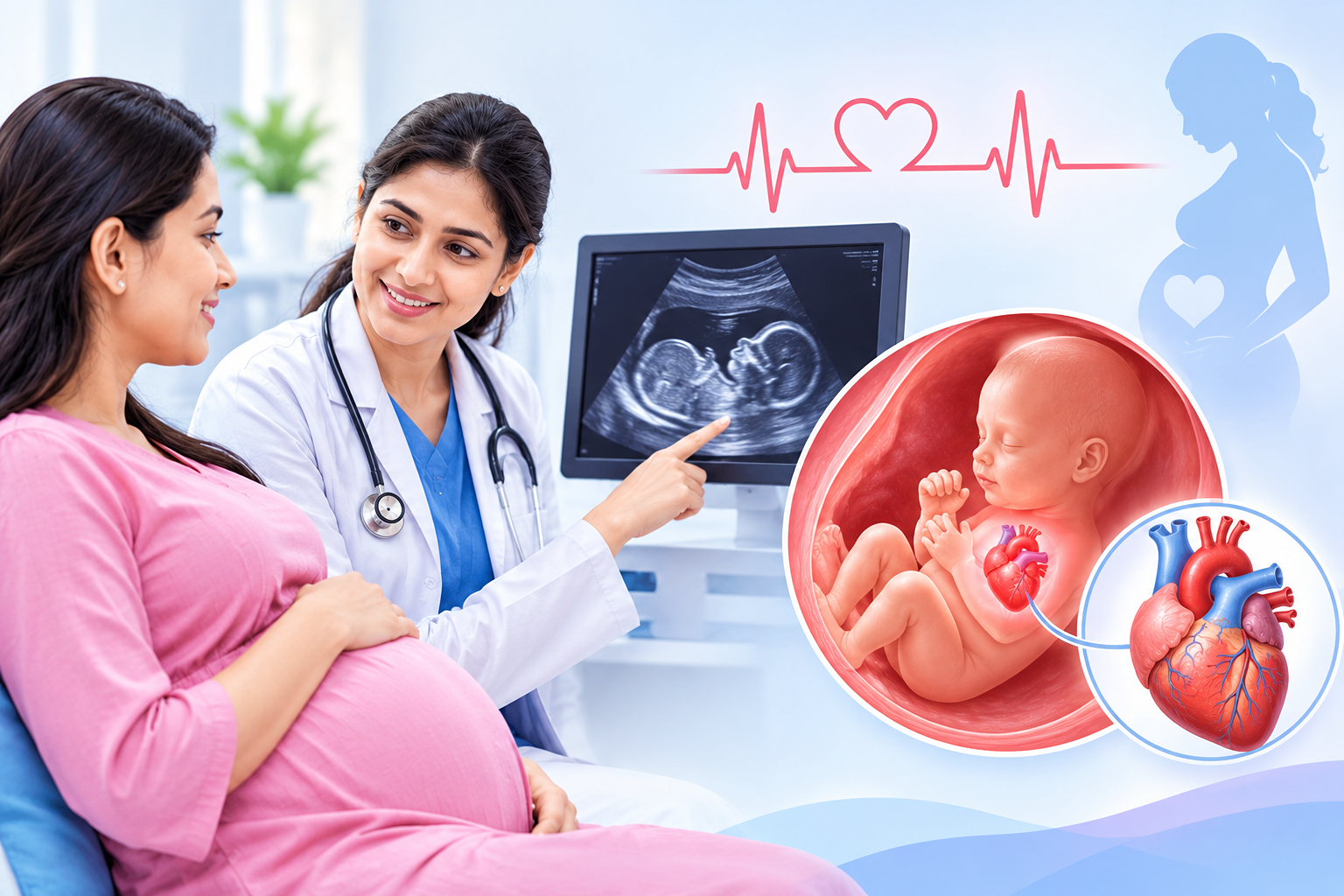
Finding out that you are pregnant can bring extra questions when you have a heart condition from birth. You may wonder whether pregnancy will put too much strain on your heart, whether your medicines are safe to take, or whether your heart condition could affect your baby.
These concerns are understandable, but having a congenital heart condition does not mean that pregnancy is not possible. With the right care and planning, many women can have a safe pregnancy and delivery. Knowing what to discuss before and during pregnancy, how your heart may be monitored and which symptoms need prompt attention can help you feel more prepared.
What is Congenital Heart Disease in Pregnancy?
Congenital heart disease is a heart problem that a person is born with. It develops when the heart or the blood vessels connected to it do not form normally before birth. Some congenital heart conditions are mild and may cause few or no symptoms, while others can affect how the heart works and may need treatment or surgery. When a woman with congenital heart disease becomes pregnant, her heart needs to cope with the normal changes that happen during pregnancy. How well it does so depends on the type and severity of the heart condition.
How Does Pregnancy Affect a Heart with a Congenital Defect?
During pregnancy, the body makes more blood to support the growing baby, so the heart has to pump more blood and work harder. The heart rate also increases, placing extra demands on the heart throughout pregnancy and around the time of delivery. Most healthy hearts can manage these changes, but a heart affected by a congenital condition may have less ability to cope with the additional workload.
The level of risk varies from woman to woman. Some women with mild or successfully repaired heart conditions have few problems during pregnancy, while others may face a higher risk of complications, particularly with conditions such as severe valve problems or high blood pressure in the lungs. This is why an assessment of the heart before and during pregnancy is important to understand the individual risks and plan the right care.
Causes and Common Types of Congenital Heart Disease in Pregnancy
Congenital heart disease (CHD) develops before birth when the heart or nearby blood vessels do not form normally. In most cases, no single cause can be identified. Genetic or chromosomal conditions, such as Down syndrome, 22q11 deletion and Turner syndrome, can be associated with CHD. Maternal diabetes, rubella and other infections, alcohol exposure, and certain medicines, including lithium and valproate, may also increase the risk of CHD developing in the baby.
Common types of CHD seen in women during pregnancy include:
- Atrial septal defect (ASD): A hole between the heart's upper chambers.
- Ventricular septal defect (VSD): A hole between the heart's lower chambers.
- Repaired tetralogy of Fallot: A complex heart condition usually repaired during childhood, but requiring lifelong follow-up.
- Bicuspid aortic valve: An aortic valve with two flaps instead of the usual three, which may become narrowed or leaky.
- Coarctation of the aorta: A narrowing of the main artery carrying blood from the heart to the body, which may need monitoring even after treatment.
Risk Factors of Congenital Heart Disease in Pregnancy
Pregnancy risks vary depending on the type of heart defect, its severity and how well the heart functions. Doctors use the modified World Health Organization (mWHO) classification to assess these risks and plan the level of care needed.
Important factors include:
- Severity of the defect: More complex heart defects or significant remaining problems after repair can increase pregnancy risks.
- Type of previous repair: The type of surgery and any remaining heart or rhythm problems affect how well the heart handles pregnancy.
- Valve problems: Severe narrowing or leakage of heart valves can place additional strain on the heart.
- Pulmonary hypertension: High blood pressure in the arteries supplying the lungs is a major risk factor, particularly when associated with Eisenmenger syndrome.
- Heart rhythm problems or heart failure: Previous arrhythmias or reduced heart function may increase the risk of complications.
- Aortic disease: Conditions such as Marfan syndrome can cause the aorta to widen, increasing the risk of a potentially life-threatening tear or rupture. The risk depends partly on the size of the aortic root.
How Is Pregnancy Risk Classified?
The mWHO classification groups pregnancy-related heart risks into categories:
- mWHO I–II (lower risk): Includes successfully repaired simple defects, such as ASD, VSD or patent ductus arteriosus (PDA), without significant remaining problems. Uncomplicated, unrepaired ASD or VSD may also fall into class II.
- mWHO III (high risk): Includes conditions such as moderate impairment of heart function, certain complex heart defects and some significant valve problems. Pregnancy requires specialist assessment and care from a Pregnancy Heart Team.
- mWHO IV (extremely high risk): Includes severe pulmonary arterial hypertension or Eisenmenger syndrome, severe heart pumping weakness (ejection fraction below 30%), severe symptomatic mitral or aortic stenosis, and Fontan circulation with complications. Pregnancy is strongly discouraged because of the very high risk to the mother.
For women with Eisenmenger syndrome, reported maternal mortality has reached 30–50%, although outcomes vary with the severity of the condition and available treatment.
Marfan syndrome also requires separate aortic risk assessment. An aortic root diameter above 45 mm is classified as very high risk in pregnancy under the 2025 ESC guidelines.
Having a risk factor does not automatically mean pregnancy is unsafe. Your cardiologist will assess your individual condition and recommend appropriate counselling, monitoring and care before and during pregnancy.
Symptoms and Warning Signs of Congenital Heart Disease in Pregnancy
Pregnancy can cause some normal changes that may feel similar to heart problems, such as mild breathlessness, a faster heartbeat and mild swelling in the ankles. The challenge is telling these expected changes apart from symptoms of congenital heart disease that need medical attention. The warning signs to take seriously are below:
- Worsening chest pain: New or worsening chest pain should always be checked.
- Breathlessness with exertion: Becoming breathless with activity that did not trouble you before.
- An irregular or racing heartbeat: A noticeable change in your heart rhythm or a racing heart.
- Waking at night breathless: Waking from sleep short of breath is an important warning sign.
- Fainting or severe dizziness: Passing out or feeling faint needs urgent assessment.
Complications of Congenital Heart Disease in Pregnancy
With good care, most women with congenital heart disease have healthy pregnancies, but the condition can raise the chance of certain problems. Knowing these explains why monitoring is so thorough. The main complications are below.
- Heart rhythm problems: Arrhythmias can appear or worsen during pregnancy.
- Heart failure: In higher-risk conditions, the heart may struggle to meet demand.
- Blood clots and stroke: Some heart conditions raise the risk of clots, which need careful management.
- Preterm birth: The baby may need to be delivered early in some cases.
- Slower growth: Reduced blood flow can affect the baby’s growth.
- A heart defect in the baby: There is a higher chance the baby also has a congenital heart condition.
Treatment and Management Options for Congenital Heart Disease in Pregnancy
Managing congenital heart disease during pregnancy involves planning ahead and careful monitoring by a Pregnancy Heart Team. Ideally, this starts before conception, with an assessment of your heart condition and a review of your medicines. The main aspects of care include:
- A pre-pregnancy heart assessment: A cardiology review checks how well your heart is functioning and assesses the risks of pregnancy.
- A careful medicine review: ACE inhibitors, ARBs and ARNIs are not recommended during pregnancy and usually need to be changed before conception. Warfarin requires specialist planning, particularly at doses above 5 mg daily. Amiodarone is generally avoided, while most women are advised to stop statins, although exceptions may apply in very high-risk cases. Beta-blockers may be continued when needed, with monitoring of the baby's growth.
- A specialist anticoagulation plan: Women with mechanical heart valves or Fontan circulation may need carefully adjusted blood-thinning treatment, such as low-molecular-weight heparin (LMWH) or warfarin, depending on their condition. Changes must be supervised by specialists because both bleeding and blood-clot risks need to be managed.
- A combined care team: A cardiologist, obstetrician and other specialists coordinate care throughout pregnancy, with additional input from an `1XQwhen needed.
- Extra heart and growth checks: Regular heart assessments and pregnancy scans help monitor the mother's condition and the baby's growth.
- A fetal heart scan: A detailed fetal echocardiogram checks the baby's heart for possible congenital abnormalities, particularly when there is a family history or another increased risk.
- A planned delivery at an appropriately equipped centre: Delivery should be planned according to the mother's heart condition, with access to cardiology, anaesthesia and intensive care support when required.
- Postpartum monitoring: The hours and days after delivery are important because changes in blood circulation and fluid levels can strain the heart. Women at higher risk may need close monitoring in a cardiac or intensive care unit during the first 24–48 hours.
- Endocarditis prevention: Antibiotics are not routinely required for every vaginal delivery. They may be considered for women at particularly high risk of infective endocarditis, following specialist advice.
- Contraception counselling: Your team can discuss suitable contraception after pregnancy. Oestrogen-containing contraceptives may be unsuitable for women with cyanotic heart disease or pulmonary arterial hypertension because of their increased risk of blood clots.
What is the Prognosis (Outlook) for Congenital Heart Disease in Pregnancy?
The outlook depends on the type and severity of congenital heart disease. Many women with lower-risk conditions have successful pregnancies, but the risks increase with more complex heart conditions. Cardiovascular disease complicates up to 4% of pregnancies, and adverse neonatal outcomes, including premature birth and low birth weight, occur in around 25% of pregnancies affected by maternal heart disease.
The modified WHO (mWHO) classification helps estimate maternal risk. In the 2025 ESC guideline data, reported maternal cardiac event rates range from around 3–10% in mWHO class I to approximately 21–29% in class III and 36–50% in class IV. These figures cover different types of cardiovascular disease and do not predict an individual's outcome.
Pregnancy is strongly discouraged in some very high-risk conditions (mWHO class IV). If pregnancy occurs, specialist counselling should include a clear discussion of the risks and available options, including termination.
Care does not end after delivery. Cardiac complications can occur during the postpartum period, particularly in the first six weeks, and some women need monitoring for longer. Lifelong follow-up with an adult congenital heart disease specialist is important.
What Questions Should I Ask My Doctor?
Going into your appointment with a few questions ready helps you understand your own situation. The prompts below are a useful starting point. There are no wrong questions about your heart or your pregnancy.
- How is my particular heart condition likely to cope with pregnancy?
- Which of my medicines are safe to continue, and which need to be changed?
- How often will my heart be monitored during pregnancy?
- What is the chance my baby could have a heart condition?
- What warning signs mean I should contact you straight away?
- How will my delivery be planned around my heart?
Writing your questions down means you are less likely to forget them on the day. A clear conversation helps you plan the pregnancy with confidence. Your team will guide you at every stage.
Prevention and Preconception Tips for Congenital Heart Disease in Pregnancy
Congenital heart disease cannot be prevented, as it is present from birth, but planning ahead makes pregnancy much safer. Ideally, you do most of this before you conceive. The steps below help.
- Have a pre-pregnancy heart check: A cardiology assessment before pregnancy shows how your heart is likely to cope.
- Ask about genetic counselling: Counselling explains the chance of passing on a heart condition and what it means for you.
- Review your medicines early: Switching to pregnancy-safe heart medicines before conceiving protects the baby.
- Know your condition and repair: Gathering your records helps your team plan the right care.
- Plan your pregnancy timing: For some conditions, treating or stabilising the heart first makes pregnancy safer.
If one parent has a congenital heart condition, the chance a baby also has a heart defect rises to around 3 to 6 per cent, and for some single-gene conditions such as Marfan syndrome it can be as high as 50 per cent. This is why genetic counselling is offered, so you have clear information. A fetal heart scan in pregnancy then checks your baby’s heart.
Why Choose BirthRight by Rainbow Hospitals for Congenital Heart Disease in Pregnancy Care?
BirthRight by Rainbow Hospitals offers coordinated pregnancy, heart, and newborn care for women with congenital heart disease. Key strengths include:
- Multidisciplinary care: Obstetricians, cardiologists, and newborn care specialists work together to plan and manage your care.
- Pre-pregnancy assessment: The team can evaluate heart health before conception to help plan pregnancy care more appropriately.
- Specialist pregnancy monitoring: Women with higher-risk heart conditions receive closer monitoring throughout pregnancy.
- Planned delivery care: The care team coordinates the timing and approach to delivery based on the mother’s heart condition and pregnancy needs.
- Neonatal support: Well-equipped neonatal care is available for babies who may need additional support after birth, including those born with a heart condition.
- Three decades of expertise: Rainbow Hospitals brings extensive experience in women’s and children’s healthcare to complex pregnancy management.
- Coordinated care under one roof: Heart care, maternity services, delivery planning, and newborn support are available within the same care network.
Disclaimer
This content is for general educational purposes and does not replace professional medical advice. Congenital heart disease varies widely by type and severity, and your care should be guided by your own heart and pregnancy specialists. Never start or stop a heart medicine in pregnancy without medical advice, and seek urgent care for chest pain, severe breathlessness or fainting.

Find a Doctor and Book Appointment Online
Meet our specialist doctors who bring together clinical expertise, compassion, and personalised care to support your health and well-being. Choose from 1,300+ specialists across our network and book an appointment with BirthRight and Rainbow Children Hospitals, offering 24*7 support to you and your family.

Dr. Pranathi Reddy A
Clinical Director – Obstetrics & Gynecology.
English,Hindi,Telugu Banjara Hills

Dr. Gauri Vinayak Dhamangaonkar
Senior Consultant - Fetal Medicine
15 Years English,Hindi,Marathi,Telugu Kondapur OP, Banjara Hills

Dr. Shruthi Reddy Poddutoor
Consultant Obstetrician, Gynecologist & Laparoscopic Surgeon
English,Telugu Banjara Hills

Dr. Himabindu Veerla
Consultant Obstetrician, Gynecologist & Laparoscopic Surgeon
English,Telugu Banjara Hills

Dr. Bhargavi Reddy K
Consultant - Obstetrics and Gynecology
10 Years English,Hindi,Telugu Banjara Hills, Attapur Clinic

Dr. Annie Pranutha P
Consultant Obstetrics and Gynecology
9 Years English,Hindi,Telugu Banjara Hills, Attapur Clinic

Dr. Sasikala Kola
Consultant Obstetrician & Gynecologist
English,Hindi,Telugu Banjara Hills

Dr. Atigadda Vijaya
Consultant - Obstetrics & Gynecology
Hindi,Telugu Banjara Hills, Himayatnagar, Attapur Clinic

Dr. Nishanth Reddy Inavolu
Visiting Consultant Physician and Diabetologist & Internal Medicine
English,Hindi,Telugu Banjara Hills, Himayatnagar

Dr. Tulika Tayal
Consultant - Fetal Medicine
English,Telugu Banjara Hills

Dr. M Prathyusha Reddy
Consultant Obstetrics & Gynecology
English,Telugu Banjara Hills

Dr. Nithya Narasimha Murthy
Consultant -Psychiatrist
English,Hindi,Telugu Kondapur OP, Banjara Hills, Child Development Centre - Banjarahills Rd No 10

Dr. Brundavani
Consultant - Nutritionist
English,Hindi,Telugu Kondapur OP, Hydernagar, Banjara Hills, Child Development Centre - Banjarahills Rd No 10

Dr. Niveditha Chalmeda
Consultant
English,Telugu Banjara Hills

Dr. Kirti Reddy Patlolla
Consultant Obstetrics and Gynaecology
English,Telugu Banjara Hills, Attapur Clinic

Dr. Tuheena Sharma
Consultant - Perinatal Physiotherapy
10 Years English,Telugu Banjara Hills

Dr. Aditi Shah
Consultant - Fetal Medicine
English,Telugu Banjara Hills

Dr. Swathi Naga Tulasi Rayapureddy
Lactation Consultant
8 Years English,Telugu Banjara Hills

Dr. Swetha Reddy. S
CONSULTANT PERINATAL PSYCHIATRIST AND WOMEN MENTAL HEALTH SPECIALIST
13 Years English,Hindi,Telugu Banjara Hills

Dr. Addu Kiranmayi
Chief Clinical Nutritionist and Lifestyle Medicine Consultant
15 Years English,Hindi,Telugu Himayatnagar, Banjara Hills

Dr. Palle Nalini Kumari
Lactation Consultant
17+ Years English,Hindi,Telugu Banjara Hills
Dr. Nazia Tabassum
Consultant - Breast, Plastic & Reconstructive Surgeon
9 Years English,Hindi,Telugu,Urdu Banjara Hills

Dr. Sruthi Cheera
Consultant Breast Surgeon
5 Years English,Hindi,Kannada,Telugu Banjara Hills
Dr. Supriya Reddy
Lactation Consultant
5 Years English,Hindi,Telugu Banjara Hills

Dr. Niraj Krishnamurthy Yanamandra
Senior Consultant Obstetrician & Gynaecologist, Laparoscopy & Hysteroscopy Surgeon
English,Hindi,Telugu Hydernagar, Banjara Hills

Dr. B. Rao Bahadur
Consultant – Obstetrician & Gynecologist, Laparoscopic ,& Hysteroscopic Surgeon
22 Years English,Hindi,Konkani,Marathi,Telugu Banjara Hills, Kondapur OP

Dr. Sneha Kulkarni
Consultant - Child, Adolescent & Adult Psychiatrist
10 Years English,Hindi,Kannada,Telugu Secunderabad, Banjara Hills, Child Development Centre - Banjarahills Rd No 10

Dr. Lavanya Janagama
Consultant – Obstetrics & Gynecology
10+ Years English Banjara HillsLeading Hospitals for Women Care
Rainbow Children's Hospital stands as a testament to the hospital's continual pursuit of excellence and innovation, providing specialized care for women and children











chennai
Blogs
Discover our most recent health articles provided by our reliable experts.



What Are People Saying About Us
Embark on a journey of inspiration and hope with our patient success stories, complemented by informative videos from our dedicated doctors.


Media
 Common Gynaecological Surgeries to Fix Female Reproductive Issues
 Healthy Woman - Healthy World
 Healthier Women For a Healthier Future...
 Rainbow Children’s Hospital & BirthRight by Rainbow Launch Video Consultation Facilities
 Dr.Pranthi Reddy
 What is the use of that?
 Can you try this time?
 Pregnant Women are Not Unfit
 Declining Age of Menarche - A Matter of Concern
 Important Facts about Cervical Cancer
 Be careful before preempting
 Flu every month!
 Menstrual cramps
 Premature delivery
 Whether laughing or coughing...why?
 Multi - Tasking may be Cool but it's not Healthy
 Pregnant and Worried about COVID-19? Here's Everything you Need to know
 Video Consultation in Pandamic Situation for Pregnancy Women's
 Women.. Various types of cysts
 Recurrent Pregnancy Loss in Women
 Early Onset of Puberty: Causes, Symptoms and Treatment Options
Common Gynaecological Surgeries to Fix Female Reproductive Issues
Healthy Woman - Healthy World
Healthier Women For a Healthier Future...
FAQs
Can I have a normal vaginal delivery if I have congenital heart disease?
Yes, most women with congenital heart disease can have a vaginal delivery, which is generally preferred as it places less strain on the body than a caesarean. However, a planned caesarean may be recommended for certain conditions, such as significant aortic dilatation, severe valve narrowing or the use of warfarin. Your heart and pregnancy team will recommend the safest delivery option based on your condition.
Will my baby inherit my congenital heart condition?
Does the risk increase with every pregnancy if I have CHD?
How often will I need cardiac monitoring during pregnancy?
Can I continue my heart medications while pregnant?
Can congenital heart disease be found for the first time during pregnancy?
Is it safe to exercise during pregnancy with a congenital heart condition?
Is IVF safe if I have congenital heart disease?
IVF can be considered, but it needs careful planning because some fertility treatments add strain on the heart. A cardiology review beforehand helps judge what is safe. Your heart and fertility teams will plan this together.
Can congenital heart disease cause a miscarriage?
Will my baby be screened for heart defects during pregnancy?
Quick Links
Free Calculators to Track and Predict your Pregnancy
Understand your cycle and plan ahead with these quick, free fertility tools.
Gynecologist in Other Locations
Women's Health Conditions We Treat
- Mastitis (Breast Infection)
- PCOS (Polycystic Ovary Syndrome)
- Uterine Fibroids (Leiomyomas)
- Recurrent Pregnancy Loss
- Blocked Fallopian Tubes (Fallopian Tube Obstruction)
- Gestational Diabetes in Pregnancy
- Incompetent Cervix (Cervical Insufficiency)
- COVID-19 in Pregnancy
- Cytomegalovirus (CMV) in Pregnancy
- HELLP Syndrome
- Luteal Phase Defect
- Vasa Previa
- Listeria in Pregnancy
- Placenta Previa