


Turner Syndrome (Monosomy X)
Turner syndrome (monosomy X, 45,X or congenital ovarian hypoplasia syndrome) is a genetic condition in which a female is born with one X chromosome missing or partly missing, affecting growth, puberty and fertility.

Seamless support from diagnosis to post treatment care
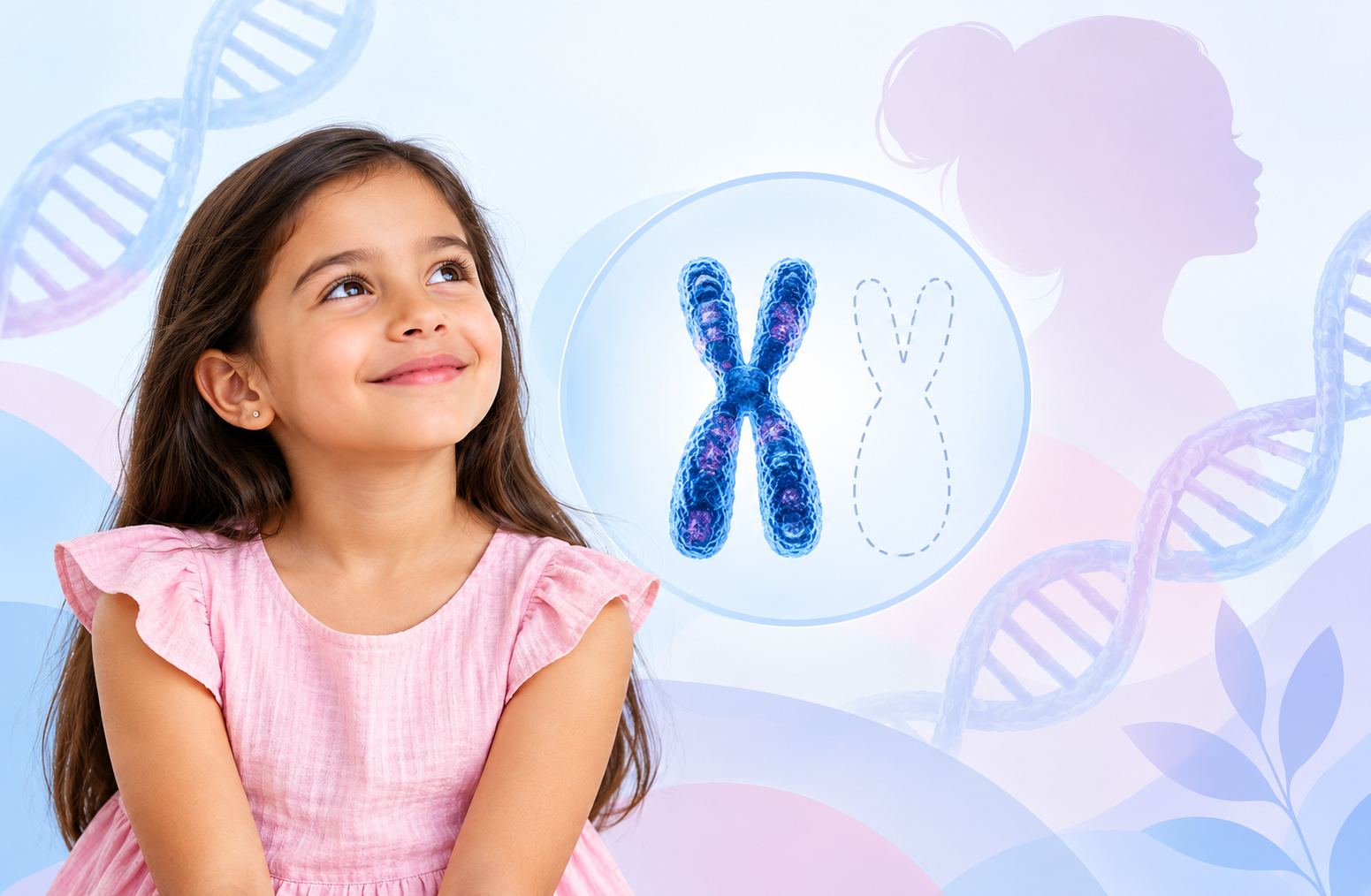
Overview
A diagnosis of Turner syndrome can bring many questions for females and their families, particularly about growth, development, fertility and long-term health. Turner syndrome is a genetic condition that affects females and occurs when one X chromosome is missing or altered.
Understanding how Turner syndrome can affect different stages of growth and development can help families know what to expect and when they may need medical support. With appropriate monitoring and individualised care, many associated health concerns can be managed effectively. This page explains the causes and symptoms of Turner syndrome, how it is diagnosed and the available approaches to treatment and long-term management.
What is Turner Syndrome?
Turner syndrome, also called monosomy X or Ullrich-Turner syndrome, is a genetic condition that affects girls and women. It happens when one of the two X chromosomes is fully or partly missing. Because the X chromosome guides growth and ovarian development, the two most common features are short stature and ovaries that do not work as they should.
It is one of the more common chromosomal conditions, affecting around 1 in 2,000 to 2,500 baby girls. It affects everyone differently: some girls have clear features from birth, while others are only diagnosed in later childhood or adulthood. Understanding what to expect is the first step to managing it well.
How Chromosomes Work and How Turner Syndrome Occurs
Most people have 46 chromosomes in each cell, arranged in 23 pairs. The last pair determines biological sex: girls usually have two X chromosomes, while boys have one X and one Y. These chromosomes carry the genetic instructions the body uses to grow and develop.
In Turner syndrome, a girl has only one complete X chromosome instead of two, so she has 45 chromosomes rather than the usual 46. This missing genetic material can affect height and ovarian development. It happens by chance when the egg or sperm forms, and importantly, nothing the parents did caused it.
Causes of Turner Syndrome
Turner syndrome develops when one X chromosome is completely or partially missing. This chromosome change can happen at conception or during early fetal development. It usually occurs randomly rather than because of something the parents did.
Girls typically have two X chromosomes. In Turner syndrome, one of these chromosomes is missing completely or has missing genetic material.
The exact cause is not always known. It may result from a change involving the egg or sperm at conception, or from a chromosome change that occurs as the baby develops in the womb.
What Are the Types of Turner Syndrome?
The type of Turner syndrome depends on how the X chromosome is affected.
- Monosomy X: One X chromosome is completely missing. As a result, the cells have only one X chromosome instead of two.
- Mosaic Turner syndrome: The chromosome change affects only some cells. Some cells may have the usual two X chromosomes, while others have one X chromosome or another X-chromosome change.
A karyotype blood test examines the chromosomes and helps confirm Turner syndrome and identify the chromosome pattern present.
Turner Syndrome Risk
Turner syndrome is not linked to the mother's age, lifestyle or anything that happened during pregnancy. It affects females only and arises from a random error when reproductive cells form. This is worth stressing, because parents often search for a reason to blame themselves, and there is none.
Because it is random rather than inherited, having one child with Turner syndrome does not meaningfully raise the chance of another. Genetic counselling can talk any family through this clearly and put those worries to rest.
Symptoms of Turner Syndrome: Signs and Features by Age
Turner syndrome symptoms vary widely, and no girl has all of them. Features often appear at different life stages, which is why the age of diagnosis varies so much. The common Turner syndrome features by age are below.
Before birth or in babies:
- Swelling of the hands and feet, or puffiness, often the earliest sign noticed in a newborn
- A wide or webbed neck and a low hairline at the back
- Sometimes a heart or kidney difference picked up on a scan
In childhood:
- Slower growth and a shorter height than other children the same age, the most consistent feature
- Frequent ear infections and some hearing difficulty, both common and manageable with regular ear checks
In the teenage years:
- Delayed puberty, with breasts and periods not starting on their own in many cases
- This is due to ovarian insufficiency and is treatable with hormone therapy
Many women with Turner syndrome have completely typical appearance and intelligence, and the features are subtle. If your daughter shows some of these signs, a simple blood test can confirm or rule out the diagnosis.
How is Turner Syndrome Diagnosed?
Diagnosis is straightforward once doctors suspect Turner syndrome. It can happen at very different stages, which many families find confusing, so here is when and how it is usually confirmed.
- Before birth: A prenatal screening test or an ultrasound finding may raise the possibility, confirmed later by a karyotype.
- In childhood: Slow growth or short height often prompts the blood test that confirms it.
- In the teenage years: Delayed puberty is a common reason the diagnosis is first made.
The confirming test is a karyotype, a blood test that examines the chromosomes. Once confirmed, a few baseline checks of the heart, kidneys, hearing and thyroid set up the right care plan.
Complications of Turner Syndrome
Turner syndrome can affect a few body systems, but regular monitoring helps catch and manage these early, so most never become serious. The main areas watched are:
- Heart: Some girls have differences in the heart or the main blood vessel, so a heart check is part of care and is followed over time.
- Kidneys: Minor differences in kidney shape are common and rarely cause problems, but are checked once at diagnosis.
- Hearing: Ear infections and gradual hearing loss are common and manageable with regular reviews.
- Thyroid, bones and blood sugar: Thyroid problems, weaker bones and diabetes are more common, and simple regular tests keep them in check.
None of these is inevitable, and all are manageable. Lifelong follow-up is not about expecting problems; it is about staying ahead of them.
Treatment and Management of Turner Syndrome
There is no cure for the genetic change itself, but nearly every effect of Turner syndrome can be treated or managed well. Care is shared across specialists and shaped around each girl's needs. The main Turner syndrome treatment options are below.
| Treatment | When it usually starts | What it does |
|---|---|---|
| Growth hormone therapy | Early childhood | Increases final adult height, often by several centimetres |
| Oestrogen (hormone replacement) | Around the usual age of puberty | Starts puberty, breast development and periods, and protects bone health |
| Ongoing hormone therapy | Through adulthood | Maintains bone and general health after puberty |
| Specialist monitoring | Lifelong | Heart, hearing, thyroid, kidney and bone checks to prevent complications |
Started at the right time, growth hormone and hormone replacement make a real difference to height, development and confidence. This is why an early diagnosis and a clear plan matter so much.
Fertility and Turner Syndrome
Fertility is often a parent’s and a young woman’s biggest worry, so it deserves an honest and hopeful answer. Most women with Turner syndrome are not able to conceive naturally, because the ovaries usually stop working early.
But this is not the end of the story. Around one in ten conceive naturally, more often with the mosaic type. Many others become mothers through IVF with donor eggs, and some girls diagnosed early can explore egg freezing or ovarian tissue freezing while ovarian function remains. Pregnancy needs careful heart monitoring, so it is always planned with a specialist team. Parenthood is very much possible.
What is the Prognosis for Turner Syndrome?
The outlook for Turner syndrome is good and has improved greatly with modern care. Girls and women with the condition attend regular school, build careers, form relationships, and live independently. Intelligence is usually completely typical, though some girls need extra support with maths or spatial tasks.
With regular monitoring of the heart and other systems, life expectancy is close to normal. The key is consistent follow-up, which turns a lifelong condition into a well-managed one.
What Questions Should You Ask Your Doctor?
The right questions depend on where you are on the journey. It helps to prepare them before an appointment. Below are grouped by stage.
At diagnosis:
- Which type of Turner syndrome does my daughter have, and what does that mean for her?
- Which baseline checks does she need now?
About treatment:
- When should growth hormones start, and what results can we expect?
- When will she need hormone therapy for puberty?
Looking ahead:
- What are her options for having children in the future?
- How often will she need heart and other health checks?
Ask your doctor to explain any term you do not understand. Clear answers help the whole family plan with confidence.
Living Well with Turner Syndrome: Support and Lifestyle
Beyond medical care, a few things help girls and women with Turner syndrome thrive. The focus here is on health, confidence and support, not on restriction or worry.
- Stay on top of health reviews: Regular heart and hearing checks are the backbone of care. They are quick and catch issues early, which keeps most problems minor.
- Protect bone strength: Because low oestrogen can weaken bones, a diet with enough calcium and vitamin D, plus weight-bearing activity like walking or dancing, keeps them strong.
- Get learning support early: If maths or spatial tasks are harder, a little extra help at school makes a real difference. This is a specific, recognised pattern, not a general learning difficulty.
- Find your community: Turner syndrome support groups connect families and young women who understand the day-to-day. Many parents say this helped them most.
- Look after emotional wellbeing: Growing up feeling different can be hard, and counselling or peer support helps a girl feel confident and understood. Emotional health matters as much as physical health.
With the right support, Turner syndrome becomes one part of a full life rather than a limit on it. Many women describe it as something they manage, not something that defines them.
Why Choose Birthright Fertility by Rainbow Hospitals for Turner Syndrome Care?
Turner syndrome affects growth, hormones, the heart, and emotional wellbeing, and most women with the condition have reduced ovarian function, so fertility planning needs to begin early. At Birthright Fertility by Rainbow Hospitals, fertility specialists, paediatric endocrinologists, geneticists, and cardiologists work together to guide each patient from puberty through to family-building. For Turner syndrome specifically, our care includes:
- Genetic diagnosis and counselling: Karyotyping and clear guidance for patients and families on what the diagnosis means for fertility.
- Fertility assessment: AMH and ovarian reserve evaluation, with counselling on fertility preservation where some ovarian function remains.
- Coordinated monitoring: Heart, hearing, thyroid and bone checks handled by one connected team.
- Care that grows with your child: A clear path from childhood into adult and fertility care.
- Family support: Counselling and guidance so parents feel informed at every stage.
You can consult the fertility specialists and genetic specialists at Birthright Fertility by Rainbow Hospitals for diagnosis, a care plan and ongoing support.
Disclaimer
This information is for educational purposes only and is not a substitute for professional medical advice. For diagnosis and care, please consult a qualified paediatrician, endocrinologist or genetic specialist.

Find a Doctor
Expertise you can trust, Meet our esteemed doctors who bring exceptional knowledge, compassion, and innovation to provide top-notch care for your health and well-being.

Dr. Ratna Durvasula
Consultant Fertility Specialist
English,Telugu Kondapur OP, Banjara Hills, Financial District, Kondapur IP

Dr. Sudharani Bairraju
Senior Consultant Obstetrician and Gynaecologist, Laparoscopic surgeon and Infertility (IVF) Specialist
English,Telugu Banjara Hills

Dr. Lakshmi Chirumamilla
Fertility Specialist and Reproductive Endocrinologist
25 Years English,Hindi,Telugu Banjara HillsLeading Hospitals for Fertility Care
Rainbow Children's Hospital stands as a testament to the hospital's continual pursuit of excellence and innovation, providing specialized care for women and children









chennai
Blogs
Discover our most recent health articles provided by our reliable experts.




What Are People Saying About Us
Embark on a journey of inspiration and hope with our patient success stories, complemented by informative videos from our dedicated doctors.



Media
 Dr. Preethi Reddy Article on Lifestyle Changes to Improve Fertility | BirthRight Fertility by Rainbow
 Dr. Ratna Duravasula Sr. Infertility Specialist
 Surrogacy, a Boon when Normal
 Surrogacy, a Boon when Normal Pregnancy is Medically Inadvisable
 Fertility... Modern Treatments
 A month after covid subsided....
 Can the baby's heartbeat be heard in an ectopic pregnancy?
 Doctors Exploit Loopholes in Bill
 Fertility counseling
 JCI Accreditation
 Menstrual cramps
 So Why are Men Turning into Women?
 Hysteroscopy- Procedure Of Choice For Intrauterine Problems
 Diet and Exercise in Pregnancy- Bust your Myths and Know your Facts
 Recurrent Pregnancy Loss
 Do Laptops, Excessive Heat and Tight Jeans Cause Infertility?
 In Vitro Fertilization
 Menstrual cup – are we really aware of it?
 No More Worries About Menopause
 Stretch marks in pregnancy: Embracing the scars
 Egg Freezing
 Fertility Preservation: Methods and Indications for Securing Reproductive Options
 Tips for planning a pregnancy
 Inferticity
 Here is all what you need to know about IVF, the popularly known fertility treatment
 Delayed marriage among factors for birth rate dip
 Fertility against Odds: IVF hope for women above 40 years of age
 Will Pregnancy Cure Endometriosis?
 Postpartum Depression: Expert Lists Essential Foods Prevent Depression in New Mothers
 Complications of Gestational Diabetes During Pregnancy by Dr. Triveni Arun Akkiraju
 Five Key Sexual Health Facts for Women
 Six Reasons That May Cause IVF Failure
 దంపతుల్లో ఈ మూడు లోపాలుంటే పిల్లలు పుట్టరు
 IVF and Genetic Testion - Essential Insights
 In vitro fertilization (IVF)
 About In Vitro Fertilization
 What is the IVF cost?
 What is the cost of IVF?
 Tick-Tock on Biological clock: Fertility concerns multiply in Telugu States
 Diminished Ovarian Reserve (DOR): Causes, Diagnosis, and Treatment Options by Dr. Shreeja Karan
 25 Years of Anniversary - Rainbow Children's Hospital & BirthRight
 Rising infertility: Addressing Challenges with Laparoscopy & Hysteroscopy
Dr. Preethi Reddy Article on Lifestyle Changes to Improve Fertility | BirthRight Fertility by Rainbow
Dr. Ratna Duravasula Sr. Infertility Specialist
Rising infertility: Addressing Challenges with Laparoscopy & Hysteroscopy
Dr. Preethi Reddy Article on Lifestyle Changes to Improve Fertility | BirthRight Fertility by Rainbow
Dr. Ratna Duravasula Sr. Infertility Specialist
 Surrogacy, a Boon when Normal
FAQs
How common is Turner syndrome?
What is monosomy X?
Does Turner syndrome affect intelligence?
What is the difference between classic and mosaic Turner syndrome?
When does growth hormone therapy start?
Can girls with Turner syndrome get pregnant?
Can Turner syndrome be cured?
Is Turner syndrome hereditary?
What is the life expectancy for Turner syndrome?
Quick Links
Free Calculators to Track and Predict your Pregnancy
Fertility Specialist in Other Locations
- Fertility Specialist in India
- Fertility Specialist in Hyderabad
- Fertility Specialist in Bangalore
- Fertility Specialist in Chennai
- Fertility Specialist in Delhi (NCR)
- Fertility Specialist in Vijayawada
- Fertility Specialist in Vishakhapatnam
- Fertility Specialist in Guwahati
- Fertility Specialist in Rajahmundry
- Fertility Specialist in Guntur