

Egg Freezing (Oocyte Cryopreservation): Process, Success Rates, Cost & Age Limits

Seamless support from diagnosis to post treatment care
Overview
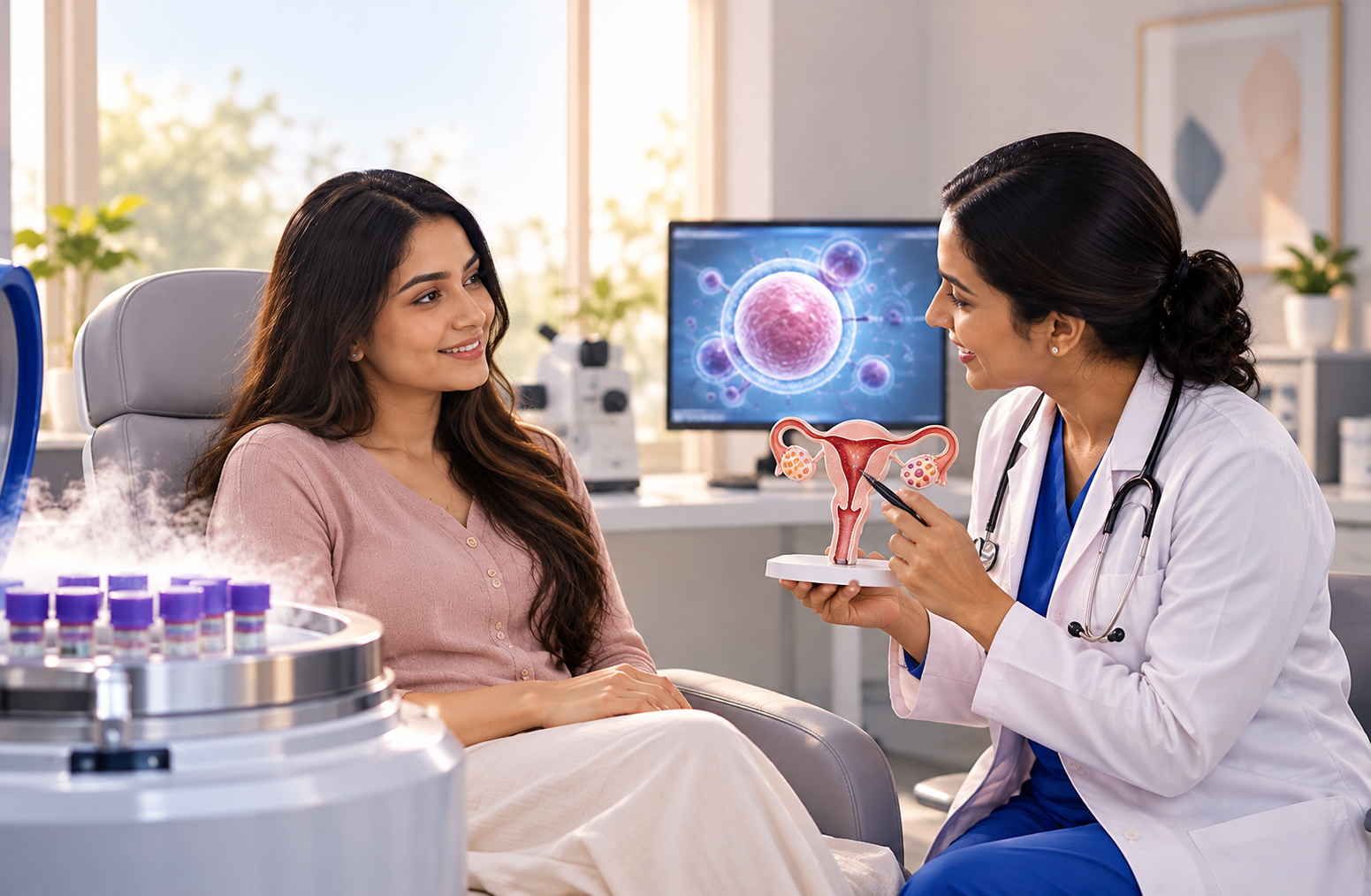
Egg freezing lets women preserve their eggs at an earlier age for possible future use. Also known medically as oocyte cryopreservation, it may be considered for personal, medical or fertility-related reasons when pregnancy is being planned for a later stage of life.
Understanding when egg freezing may be appropriate, how the procedure works and how age can influence outcomes can help you make a more informed decision. This page explains the egg-freezing process, who may consider it, age-related factors, success rates, costs and what to expect before taking the next step.
What is Egg Freezing (Oocyte Cryopreservation)?
Egg freezing is a fertility preservation method in which a woman's eggs are collected, frozen and stored for future use. When you are ready to try for a baby, the eggs are thawed, fertilised with sperm in the lab and transferred to the uterus as embryos through IVF.
Oocyte freezing, also called oocyte cryopreservation, uses a fast-freezing technique called vitrification, which protects the egg from ice damage and gives good survival rates on fusing. Freezing female eggs at a younger age effectively preserves their quality, so the chance of pregnancy later reflects your age at freezing, not your age at use.
Who Should Consider Egg Freezing?
Egg freezing may be considered by women who want to preserve their fertility for possible future use. The reasons can be personal or medical, such as planning pregnancy at a later age, undergoing treatment that may affect ovarian function, or having a condition that could reduce ovarian reserve over time.
Suitability can vary depending on age, ovarian reserve, overall health, and individual circumstances. A fertility specialist can assess these factors and help determine whether egg freezing is appropriate.
- Facing cancer treatment: Chemotherapy and radiation can harm the ovaries. Freezing eggs before treatment keeps a chance of a biological child afterwards, and it can usually be arranged quickly so it does not delay your cancer care.
- A family history of early menopause: If your mother or sister went through menopause young, or you carry a condition linked to it, freezing earlier protects your eggs before the reserve falls.
- Endometriosis or upcoming ovarian surgery: Both can reduce egg reserve over time. Freezing beforehand secures eggs while their quality is better.
- Wanting to delay motherhood: If the right time or the right partner has not arrived, freezing lets you step off the fertility clock without giving up on a biological child.
- Going through IVF: Some women store extra eggs during an IVF cycle to keep for future attempts.
Choosing to freeze eggs for fertility is not a decision to have a baby now. Many women freeze eggs for fertility reasons years before they plan to conceive. It simply keeps the door open, so the choice stays yours to make later.
What is the Right Age to Freeze Your Eggs?
Age is the factor that matters most in egg freezing, because both egg quality and quantity fall over time, especially after 35. There is no strict egg freezing age limit, but timing changes what you can realistically expect.
- Under 35: The ideal window is around the age of 30. Eggs are at their healthiest, so fewer are needed to give a good chance of a baby later.
- 35 to 37: Still a sensible time to freeze. You may need a few more eggs, and possibly a second cycle, but outcomes remain reasonable.
- 38 and over: Freezing is still worth discussing. Success is lower and honesty matters here, but frozen eggs at 40 give a better chance than unfrozen eggs at 45.
If you are past 35, that doesn't mean you have missed your chance. Freezing today preserves eggs that are younger than they will ever be again. Earlier is better, but now is far better than later.
Preparing for Egg Freezing: Tests Before Treatment
A short set of tests confirms you're a good candidate and helps plan the cycle. Preparation usually includes:
- Ovarian reserve testing (AMH): A blood test that estimates your egg reserve and predicts how the ovaries will respond.
- Hormone blood tests: To check ovarian and thyroid function.
- Pelvic ultrasound: To assess the ovaries and count the follicles available for stimulation.
- Infection screening: Routine tests required before storing eggs, in line with ART Act norms.
These results guide the medication dose and the number of eggs you can realistically expect to collect. Your specialist reviews them with you before the cycle begins.
Egg Freezing Process: Step by Step
The egg freezing procedure takes about two to three weeks from starting medication to retrieval. If you are wondering how egg freezing works, the four steps below explain the process from start to finish.
Step 1: Ovarian stimulation
You take daily hormone injections for about 10 to 14 days to help several eggs mature at once, rather than the single egg in a natural cycle. Scans and blood tests track progress and keep the cycle safe.
Step 2: Trigger injection
When the eggs are ready, a final trigger injection completes their maturation. Retrieval is timed for about 34 to 36 hours later.
Step 3: Egg retrieval
The eggs are collected in a short procedure under sedation, using a thin needle guided by ultrasound. It takes 15 to 30 minutes, and you can go home the same day.
Step 4: Freezing by vitrification
The mature eggs are flash-frozen by vitrification and stored in liquid nitrogen. Only mature eggs are suitable for freezing, so the number stored may be fewer than the number collected.
Once frozen, the eggs can be stored for years with no loss of quality, ready when you decide to use them.
Side Effects, Risks & Safety of Egg Freezing
Egg-freezing medicines are generally considered safe, but temporary side effects can occur while the ovaries are being stimulated. Most are mild and settle after the treatment cycle. Your fertility team will monitor your response throughout the process and adjust medicines when needed.
Common side effects may include:
- Mild bruising, soreness or redness at the injection site
- Nausea and, occasionally, vomiting
- Temporary itching or other mild injection-site reactions
- Breast tenderness and increased vaginal discharge
- Mood changes and fatigue
A less common but important complication is ovarian hyperstimulation syndrome (OHSS). It occurs when the ovaries respond excessively to fertility medicines and become enlarged and painful. Severe OHSS is uncommon, occurring in approximately 0.1% to 2% of treatment cycles.
Regular monitoring of hormone levels and ovarian response can help doctors identify women at higher risk and adjust treatment accordingly. In some cases, doctors may use medicines such as leuprolide instead of hCG for the trigger injection. Doctors may also consider cabergoline or additional intravenous fluids to reduce risk or manage fluid accumulation.
Contact your fertility specialist promptly if you develop significant pain, swelling or other concerning symptoms during or after ovarian stimulation.
Egg Freezing Success Rate by Age
Success depends mostly on your age when you freeze your eggs and how many mature eggs you store. The figures below are a guide to the chance of a live birth per treatment.
| Age at freezing | General outlook |
|---|---|
| Under 35 | Best success; fewer eggs needed |
| 35 to 37 | Good, with more eggs recommended |
| 38 to 40 | Lower; more eggs and possibly more than one cycle |
| Over 40 | Reduced; honest counselling advised |
Freezing more eggs raises the chance of a live birth later. Your specialist advises how many to aim for, and whether more than one cycle is worth considering, based on your age and egg reserve.
Estimated Cost of Freezing Eggs
Freezing eggs in India breaks down into three components, so it helps to read them as layers rather than a single figure. Costs are indicative, so confirm current pricing with the hospital.
| Component | Approximate cost (India) |
|---|---|
| One stimulation and retrieval cycle | ₹1 to 2.5 lakh |
| Stimulation medicines | ₹20,000 to ₹50,000 |
| Annual storage (after the first year) | ₹25,000 to ₹50,000 |
| Later thawing, fertilisation and transfer (IVF) | Charged separately when you use the eggs |
The medication bill varies most, since the dose is tailored to your age and reserve. Because success builds with the number of eggs, some women choose more than one cycle, which adds to the total.
After Egg Freezing: Storage and Future Use
A common question is whether eggs really keep for years, and what actually happens when you return them. The answer is reassuring on both counts.
- How they are kept: Your eggs sit in liquid nitrogen at a very low, stable temperature, where biological time effectively stops. Stored this way, they do not age or lose quality, whether it is two years or ten.
- When you are ready to use them: The eggs are thawed, fertilised with sperm in the lab, and the resulting embryo is placed in your uterus through IVF. Your chance of pregnancy reflects your age when you froze them, not your age now.
- If you decide not to use them: You are free to keep storing them, donate them, or have them discarded, within ART Act rules. There is no obligation to use them.
Freezing your eggs does not lock you into anything. It simply hands your future self more choices than you would otherwise have.
What Questions Should You Ask Your Fertility Specialist?
The right questions depend on where you are in the process. It helps to prepare them before your visit.
If you are deciding whether to freeze:
- Given my age and AMH, how many eggs could I realistically freeze?
- What is my likely chance of a baby later from this cycle?
If you are planning the cycle:
- Would you recommend more than one cycle in my case?
- What will the full cost be, including medicines and storage?
If you are thinking long term:
- How long can my eggs be stored, and what are the annual charges?
- What happens if I decide not to use them?
Ask your specialist to explain any term you do not understand. Clear answers help you decide with confidence.
Why Should you Choose BirthRight Fertility by Rainbow Hospitals for Egg Freezing?
Egg freezing is only as good as the lab that freezes and stores the eggs. BirthRight Fertility by Rainbow Hospitals brings modern embryology and clear, honest counselling to fertility preservation. For egg freezing specifically, our care includes:
- Modern freezing technology: Vitrification with good survival rates on thawing.
- Secure long-term storage: Monitored liquid-nitrogen storage under ART Act norms.
- Honest counselling: Realistic, age-based expectations rather than guarantees.
- Zero OHSS protocol: Stimulation designed to protect you from ovarian hyperstimulation.
- Full-cycle care: from freezing today to IVF when you are ready, under one team.
BirthRight Fertility by Rainbow Hospitals brings three decades of fertility expertise, with more than 100,000 parenthood journeys supported across 15 Level II fertility centres in India, including India’s first JCI-accredited fertility centre at Kondapur, Hyderabad, and NABH-accredited care across the network.
You can consult the fertility specialists at BirthRight Fertility by Rainbow Hospitals to begin with a fertility preservation consultation.
Disclaimer
This information is for educational purposes only and is not a substitute for professional medical advice. To understand whether egg freezing is right for you, please consult a qualified fertility specialist.

Find a Doctor
Expertise you can trust, Meet our esteemed doctors who bring exceptional knowledge, compassion, and innovation to provide top-notch care for your health and well-being.

Dr. Ratna Durvasula
Consultant Fertility Specialist
English,Telugu Kondapur OP, Banjara Hills, Financial District, Kondapur IP

Dr. Sudharani Bairraju
Senior Consultant Obstetrician and Gynaecologist, Laparoscopic surgeon and Infertility (IVF) Specialist
English,Telugu Banjara Hills

Dr. Lakshmi Chirumamilla
Fertility Specialist and Reproductive Endocrinologist
25 Years English,Hindi,Telugu Banjara HillsLeading Hospitals for Fertility Care
Rainbow Children's Hospital stands as a testament to the hospital's continual pursuit of excellence and innovation, providing specialized care for women and children















chennai
Blogs
Discover our most recent health articles provided by our reliable experts.




What Are People Saying About Us
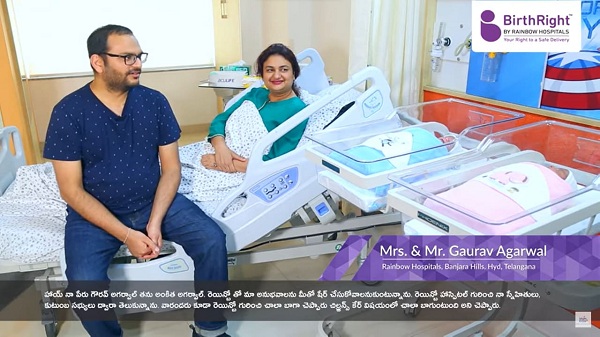
Embark on a journey of inspiration and hope with our patient success stories, complemented by informative videos from our dedicated doctors.




Media
 Dr. Preethi Reddy Article on Lifestyle Changes to Improve Fertility | BirthRight Fertility by Rainbow
 Dr. Ratna Duravasula Sr. Infertility Specialist
 Surrogacy, a Boon when Normal
 Surrogacy, a Boon when Normal Pregnancy is Medically Inadvisable
 Fertility... Modern Treatments
 A month after covid subsided....
 Can the baby's heartbeat be heard in an ectopic pregnancy?
 Doctors Exploit Loopholes in Bill
 Fertility counseling
 JCI Accreditation
 Menstrual cramps
 So Why are Men Turning into Women?
 Hysteroscopy- Procedure Of Choice For Intrauterine Problems
 Diet and Exercise in Pregnancy- Bust your Myths and Know your Facts
 Recurrent Pregnancy Loss
 Do Laptops, Excessive Heat and Tight Jeans Cause Infertility?
 In Vitro Fertilization
 Menstrual cup – are we really aware of it?
 No More Worries About Menopause
 Stretch marks in pregnancy: Embracing the scars
 Egg Freezing
 Fertility Preservation: Methods and Indications for Securing Reproductive Options
 Tips for planning a pregnancy
 Inferticity
 Here is all what you need to know about IVF, the popularly known fertility treatment
 Delayed marriage among factors for birth rate dip
 Fertility against Odds: IVF hope for women above 40 years of age
 Will Pregnancy Cure Endometriosis?
 Postpartum Depression: Expert Lists Essential Foods Prevent Depression in New Mothers
 Complications of Gestational Diabetes During Pregnancy by Dr. Triveni Arun Akkiraju
 Five Key Sexual Health Facts for Women
 Six Reasons That May Cause IVF Failure
 దంపతుల్లో ఈ మూడు లోపాలుంటే పిల్లలు పుట్టరు
 IVF and Genetic Testion - Essential Insights
 In vitro fertilization (IVF)
 About In Vitro Fertilization
 What is the IVF cost?
 What is the cost of IVF?
 Tick-Tock on Biological clock: Fertility concerns multiply in Telugu States
 Diminished Ovarian Reserve (DOR): Causes, Diagnosis, and Treatment Options by Dr. Shreeja Karan
 25 Years of Anniversary - Rainbow Children's Hospital & BirthRight
 Rising infertility: Addressing Challenges with Laparoscopy & Hysteroscopy
Dr. Preethi Reddy Article on Lifestyle Changes to Improve Fertility | BirthRight Fertility by Rainbow
Dr. Ratna Duravasula Sr. Infertility Specialist
Rising infertility: Addressing Challenges with Laparoscopy & Hysteroscopy
Dr. Preethi Reddy Article on Lifestyle Changes to Improve Fertility | BirthRight Fertility by Rainbow
Dr. Ratna Duravasula Sr. Infertility Specialist
 Surrogacy, a Boon when Normal
FAQs
What is the best age to freeze eggs?
Can I freeze eggs if I am over 40?
How long is the egg freezing process?
Will freezing damage my eggs?
Will egg freezing affect my natural fertility?
How long can frozen eggs be stored?
How much does egg freezing cost in India?
Do frozen eggs have lower success rates than fresh eggs?
Is egg freezing painful?
Can I freeze eggs for non-medical reasons?
What if I don't get enough eggs in one cycle?
Can I use frozen eggs with a different partner?
Quick Links
Free Calculators to Track and Predict your Pregnancy
Fertility Specialist in Other Locations
- Fertility Specialist in india
- Fertility Specialist in Hyderabad
- Fertility Specialist in Bangalore
- Fertility Specialist in Chennai
- Fertility Specialist in Delhi (NCR)
- Fertility Specialist in Vijayawada
- Fertility Specialist in Vizag
- Fertility Specialist in Guwahati
- Fertility Specialist in Rajahmundry
- Fertility Specialist in Guntur