



Fetal Anaemia
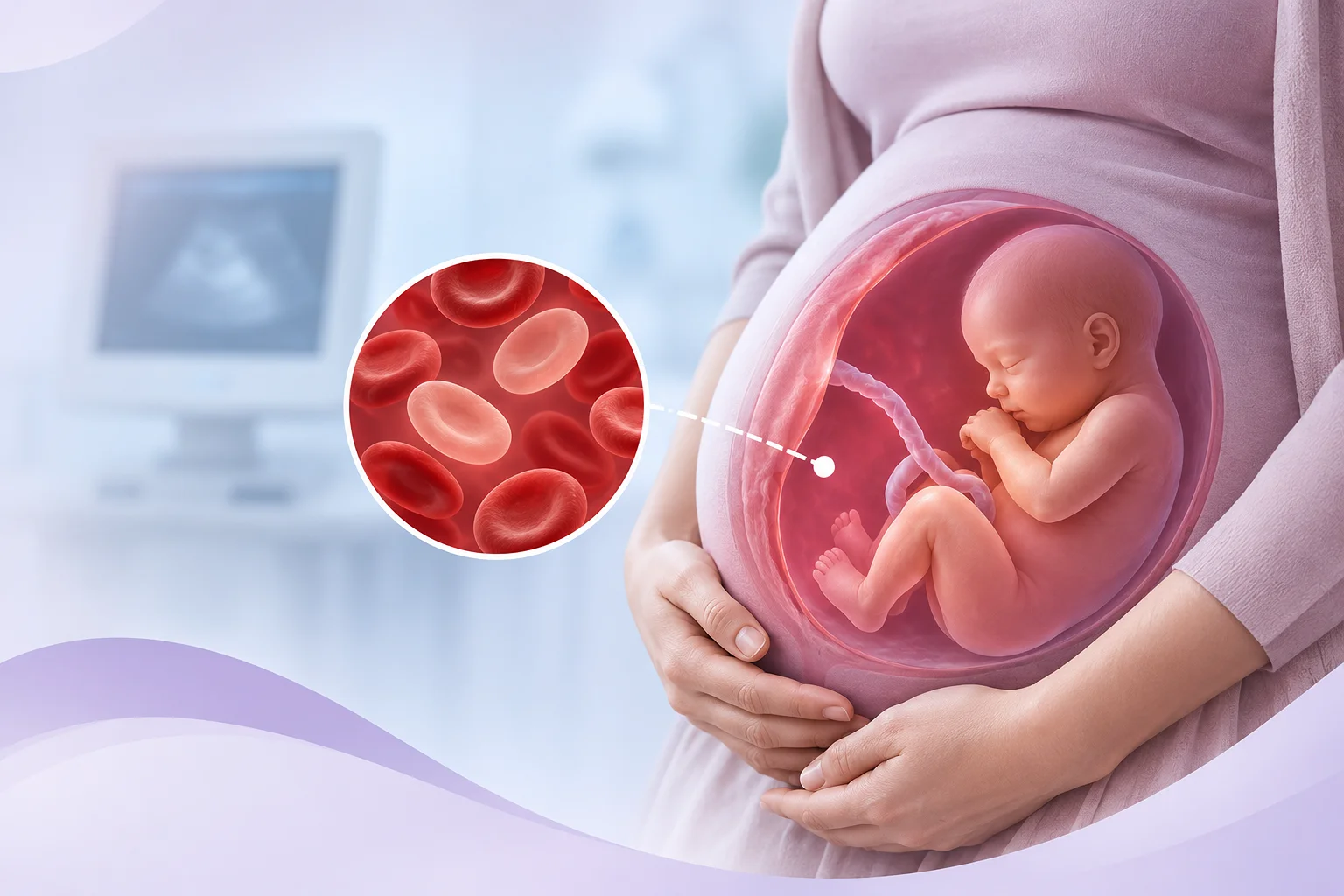
Foetal anaemia, also called fetal anemia, means your baby has fewer red blood cells or less haemoglobin than expected, so less oxygen reaches the body. It is usually found through blood tests and an MCA Doppler scan rather than anything you feel. Mild cases may only need monitoring, while significant anaemia can be treated before birth with an intrauterine transfusion.

Seamless support from diagnosis to post treatment care
Overview
If a scan suggests that your baby may have fetal anaemia, the next step is to understand its severity and possible cause. Fetal anaemia means that the baby has fewer red blood cells or less haemoglobin than expected, reducing the blood's ability to carry oxygen.
Further scans and blood tests help doctors assess the condition and decide whether monitoring or treatment is needed. This article explains the causes, symptoms, diagnostic tests and treatment options for fetal anaemia, including intrauterine blood transfusion.
What Is Fetal Anaemia?
Fetal anaemia means that a baby in the womb has too few healthy red blood cells, or too little haemoglobin, to carry enough oxygen around its body. Haemoglobin is the part of red blood cells that carries oxygen, and a developing baby needs a steady supply to grow well. When levels are low, the baby’s heart has to work harder to move oxygen, which is why the condition is watched closely.
Fetal anaemia ranges from mild to severe. Mild fetal anaemia may simply need careful monitoring, while more significant anaemia can be treated before birth with a blood transfusion given to the baby in the womb. Ultrasound and specialist scans usually detect it rather than anything the mother feels, which is why antenatal check-ups matter so much.
How Red Blood Cells Develop in a Foetus?
A developing baby makes its own red blood cells, first in early organs and later mainly in the bone marrow. These cells carry oxygen from the placenta to every part of the body. A healthy, steady supply of red blood cells is essential for the baby’s growth and for the heart to work normally.
Fetal anaemia develops when this balance is upset. This is either because the baby is not making enough red blood cells, or because they are broken down or lost faster than they can be replaced. The most common reason is that antibodies from the mother cross the placenta and attack the baby’s red cells. Understanding the cause guides how doctors monitor and treat the pregnancy.
Causes of Fetal Anaemia
Several causes of fetal anaemia exist, and your doctor will work to identify which applies, because it shapes the care plan. Most involve either the destruction of the baby’s red cells or a problem making them. The main causes are below.
1. Blood group incompatibility (Rh alloimmunisation)
This is the most common cause. It happens when the mother’s blood group is Rh-negative, and the baby’s is Rh-positive. The mother’s immune system then makes antibodies that cross the placenta and attack the baby’s red blood cells. This is a major cause in India, which is why blood group testing and preventive anti-D injections during pregnancy matter. It can affect a second or later pregnancy more than the first.
2. Infections during pregnancy
Certain infections can affect how a baby makes red blood cells. Parvovirus B19, the virus behind slapped-cheek disease, is the most familiar example, and cytomegalovirus (CMV) can also be involved. These infections can temporarily slow the baby’s red-cell production, leading to anaemia that often improves with treatment and time.
3. Inherited red-cell conditions
Some babies inherit conditions that affect red-cell structure or production, such as alpha-thalassaemia. These are more likely with a family history or when both parents are carriers. Genetic counselling can help families understand the risk.
4. Blood loss and other causes
Occasionally, a baby loses blood across the placenta to the mother, called fetomaternal haemorrhage, or, in twins sharing a placenta, blood can flow unevenly between them. These are less common causes. Sometimes, despite investigation, no clear cause is found.
These causes are identified through blood tests and specialist scans, and knowing the cause helps your team plan the safest care. Whatever the cause, it is not something you brought on yourself. The next sections explain how fetal anaemia is found and managed.
Risk Factors of Fetal Anaemia
Some pregnancies carry a higher chance of fetal anaemia, usually because of the mother’s blood group or a known exposure. Recognising these allows closer monitoring, which is where the benefit lies. The main risk factors are below.
- An Rh-negative mother: This is the main risk factor, particularly if she has been sensitised in a previous pregnancy.
- A previous baby affected by anaemia or jaundice: From blood group incompatibility.
- Infection in pregnancy: Such as exposure to parvovirus B19.
- A family history of inherited anaemia: Such as thalassaemia, or both parents being carriers.
- A twin pregnancy sharing a placenta: Where blood can flow unevenly between the babies.
A risk factor does not make anaemia certain, though it does mean your pregnancy will be watched more closely. If any apply to you, your doctor will arrange the right monitoring. Early awareness is the strongest tool for keeping your baby safe.
Signs & Symptoms of Fetal Anaemia
Fetal anaemia usually causes no symptoms that the mother can feel. It is generally detected through antenatal blood tests and specialised ultrasound scans. Signs that doctors may look for include:
- Reduced fetal movements: In some cases, particularly with severe anaemia, you may notice reduced or unusual baby movements. However, this is not a reliable early sign. Contact your maternity team promptly if you notice reduced movements.
- Signs of fluid build-up on ultrasound: Fluid around the baby’s organs or under the skin may indicate severe anaemia and a condition called hydrops fetalis.
- A known risk identified through blood tests: Certain maternal antibodies can increase the risk of fetal anaemia and prompt closer monitoring during pregnancy.
Because fetal anaemia often has no noticeable symptoms, regular antenatal check-ups and recommended scans are important for detecting it early.
How Is Fetal Anaemia Diagnosed?
Fetal anaemia is diagnosed using maternal blood tests and specialised ultrasound scans. The main tests include:
- Middle cerebral artery (MCA) Doppler: This ultrasound measures blood flow through an artery in the baby's brain. Faster-than-expected blood flow can indicate anaemia. A peak systolic velocity above 1.5 multiples of the median (MoM) suggests a risk of moderate-to-severe anaemia.
- Maternal antibody testing: Blood tests identify antibodies that may cross the placenta and destroy the baby's red blood cells. Antibody levels (titres) help assess the risk and guide further monitoring.
- Fetal blood sampling: If necessary, doctors collect a small blood sample from the baby's umbilical cord to measure haemoglobin and confirm the severity of anaemia. This invasive test may also allow an intrauterine blood transfusion during the same procedure.
Ultrasound may also identify signs of severe anaemia, including fluid accumulation associated with hydrops fetalis. Your fetal medicine specialist will recommend tests based on your pregnancy history and initial findings.
Complications of Fetal Anaemia
When fetal anaemia is significant and not treated in time, it can put strain on the baby, which is why it is monitored and treated so carefully. Understanding the possible complications explains the close attention, and treatment prevents most of them. The main ones are below.
- Strain on the baby’s heart: The heart works harder to move oxygen, which can tire it over time.
- Fluid build-up in the baby (hydrops): Severe anaemia can lead to a condition called hydrops, explained gently below.
- Early delivery: In some cases, the baby may need to be delivered early for safety.
What does Hydrops Mean?
You may see the word hydrops, or hydrops fetalis, in your reports, and it can sound alarming, so it helps to understand it plainly. Hydrops means an abnormal build-up of fluid in two or more areas of the baby’s body, such as under the skin or around the lungs or heart. It is a sign that severe anaemia is straining the baby’s heart. It is serious, but it is not hopeless. Treatment with a blood transfusion to the baby can reverse hydrops in many cases, and outcomes are better the earlier it is treated by an experienced fetal team.
The purpose of monitoring is to treat anaemia before it ever reaches this stage. Most babies who are watched closely never develop hydrops. Where it does occur, prompt treatment gives many babies a good outcome.
Treatment Options for Fetal Anaemia
The treatment for fetal anaemia depends on how severe it is and how far along the pregnancy is, and it is always guided by a specialist fetal team. For mild cases, careful monitoring may be all that is needed, while more significant anaemia can be treated before birth. The main approaches are below.
1. Close monitoring with ultrasound
For milder anaemia, or when a baby is at risk, the mainstay is careful monitoring with regular MCA Doppler scans. These track the baby’s blood flow and show if anaemia is developing or worsening. This monitoring means treatment can start at the right time, and many mild cases resolve with watchful care.
2. Intrauterine blood transfusion
When anaemia is significant, the baby can be given a blood transfusion while still in the womb, called an intrauterine transfusion. Using ultrasound to guide a fine needle, compatible donor blood is given to the baby, usually through the umbilical cord. Some babies need more than one transfusion during the pregnancy. It is a well-established treatment carried out by experienced fetal medicine specialists.
3. Delivery planning and care after birth
Your team will plan the safest timing and place of delivery, ideally where newborn intensive care is available. Some babies need treatment for anaemia or jaundice after birth too, such as light therapy or a further transfusion. This is planned in advance, so support is ready from the moment your baby arrives.
What Is The Prognosis (Outlook) for Fetal Anaemia?
This is where there is genuine reassurance. With timely diagnosis and treatment, the outlook for fetal anaemia is very good, and most babies go on to be healthy. Studies of babies treated with intrauterine transfusion report survival of around 90 percent overall, and over 95 percent where there are no hydrops.
Even when hydrops are present, many babies survive and do well with prompt, expert treatment, though the outlook is more guarded. Most children who are treated for fetal anaemia grow and develop normally afterwards. The single most important factor is early diagnosis and care by an experienced fetal team, which is why close monitoring matters so much.
What Questions Should You Ask Your Doctor?
Bringing questions to your appointments helps you understand what is happening and feel more in control. The prompts below are grouped by theme. Add any of your own.
Diagnosis and monitoring questions
- What is causing my baby’s anaemia, and how severe is it?
- How often will I need MCA Doppler scans or other checks?
- What signs would mean my baby needs treatment?
Treatment and delivery planning questions
- Will my baby need an intrauterine transfusion, and what does it involve?
- Where and when would you plan for me to deliver?
- Will my baby need treatment after birth, and what kind?
Do not hesitate to ask your team to explain any term you do not understand, including anything in your scan reports. Clear answers ease a lot of worry. Bringing your partner, or writing things down, can help you remember.
Prevention and Early Screening Tips for Fetal Anaemia
Not every cause of fetal anaemia can be prevented, but the most common cause can often be avoided, and early screening catches problems in good time. The steps below help protect your baby.
- Have your blood group checked early in pregnancy, as every mother should.
- If you are Rh-negative, have anti-D injections exactly as advised, which prevent sensitisation.
- Attend all antenatal scans and blood tests so any concern is found early.
- Avoid known infection risks in pregnancy, and seek advice after any exposure.
- Share any family history of anaemia or a previously affected baby with your doctor.
These steps, especially blood group testing and anti-D for Rh-negative mothers, prevent many cases of the commonest cause. Where anaemia cannot be prevented, early screening means it can be treated in time. Your antenatal team will guide you on what you need.
Why Choose Rainbow Children’s Hospitals for Fetal Anaemia Care?
Fetal anaemia needs coordinated care across the pregnancy and the newborn period, from expert fetal diagnosis to newborn intensive care. That is exactly what Rainbow Children’s Hospitals is built to provide. The sections below show what that means for you and your baby.
1. Maternal-fetal medicine and fetal care coordination
Our maternal-fetal medicine specialists work closely with obstetric and newborn teams, so your pregnancy is monitored and treated by people who do this together every day. This coordination means decisions about monitoring, treatment and delivery are made as one plan, around you and your baby.
2. Advanced prenatal diagnosis and treatment expertise
We offer advanced prenatal diagnosis, including MCA Doppler monitoring, and access to specialist treatment such as intrauterine transfusion where it is needed. With neonatal intensive care on hand, support is ready from the moment your baby is born.
Rainbow Children’s Hospitals brings three decades of expertise in children’s and women’s healthcare, with fetal care and neonatal intensive care under one roof. If your baby may have fetal anaemia, our specialists can guide you with skill and genuine care. A consultation is a good place to begin.
Disclaimer
This content is for general educational purposes and does not replace professional medical advice. Fetal anaemia varies between pregnancies, and figures given here are indicative. Consult a qualified obstetrician or fetal medicine specialist for diagnosis, monitoring and treatment suited to you and your baby.

Find a Doctor and Book Appointment Online
Meet our specialist doctors who bring together clinical expertise, compassion, and personalised care to support your health and well-being. Choose from 1,300+ specialists across our network and book an appointment with BirthRight and Rainbow Children Hospitals, offering 24*7 support to you and your family.

Dr. Dinesh Kumar Chirla
Director Intensive Care Services - Rainbow Children's Hospital
32 Years English,Hindi,Telugu Banjara Hills, Financial District

Dr. Prashant Bachina
Consultant - Gastroenterology
English,Hindi,Telugu Banjara Hills

Dr. Ramesh Konanki
Director of Neurosciences, Senior Pediatric Neurologist
English,Hindi,Telugu Secunderabad, Banjara Hills

Dr. Faisal B Nahdi
Pediatrician
English,Hindi Banjara Hills

Dr. Leenatha Jakkidi
Consultant - Pediatrician &Pediatric Endocrinologist
22 Years English,Hindi,Telugu Kondapur OP, Secunderabad, Banjara Hills, Financial District

Dr. Harish Jayaram
Consultant Pediatric Surgeon & Pediatric Urologist
English,Hindi,Kannada,Tamil,Telugu Banjara Hills

Dr. Satya Prasad Vvr
Consultant - Pediatric Nephrologist
English,Hindi,Telugu Banjara Hills, Health City

Dr. Srinivas Namineni
Consultant dentist
English,Hindi,Telugu Banjara Hills, Kondapur OP

Dr. P V L N Murthy
Pediatric ENT Surgeon
English,Hindi,Telugu Kondapur OP, Hydernagar, Banjara Hills

Dr. Venkata Lakshmi A
Consultant - Neonatologist & Pediatrician, Banjara Hills (Hyderabad)
English,Telugu Banjara Hills

Dr. Shaikh Farhan A Rashid
Consultant Pediatric Intensivist and Head of the Department of Pediatric Intensive Care.
English,Hindi Banjara Hills

Dr. Leena Priyambada
Senior Consultant – Pediatric Endocrinology
20 Years English,Hindi,Telugu Banjara Hills, Secunderabad, Health City, Himayatnagar

Dr. Mainak Deb
Consultant Pediatric surgeon, Pediatric Urologist and Pediatric Renal Transplant Surgeon
Bengali,English,Hindi,Kannada,Telugu Banjara Hills, Guwahati

Dr. Sandhya Vaddadi
Consultant Hematology & Oncology, BMT
8 Years English,Hindi,Kannada,Telugu Secunderabad, Banjara Hills, Currency Nagar, Health City

Dr. Nalinikanta Panigrahy
Neonatologist & Development Pediatrician
English,Hindi Banjara Hills

Dr. Vijayanand Jamalpuri
Consultant Neonatologist and Pediatrician
English,Hindi,Telugu Banjara Hills

Dr. Ujjwala Desai
Pediatrician
English,Telugu Banjara Hills

Dr. Nitasha Bagga
Consultant - Pediatrician and Neonatologist, Banjara Hills (Hyderabad)
English,Hindi,Telugu Banjara Hills

Dr. Anupama Y
Senior Consultant – Pediatric Intensivist and pediatrcian
11 Years English,Hindi,Telugu Banjara Hills

Dr. Kapil Bhagwatrao Sachane
Consultant Neonatologist and Pediatric Intensivist
English,Telugu Banjara Hills, Financial District

Dr. Abhishek Ravindra Jain
Consultant Pediatric Neurologist
English,Hindi,Telugu Banjara Hills, Himayatnagar

Dr. Prasanthi Aripirala
Consultant Pediatric Neurologist & Epileptologist
English,Hindi,Telugu Hydernagar, Banjara Hills

Dr. Venkat Ram Thyalapalli
Consultant - Pediatric Orthopedician & Ilizarov Specialist
17 Years English,Hindi,Telugu Hydernagar, Banjara Hills

Dr. Lavanya Kannaiyan
Consultant - Pediatric Surgeon and Pediatric Urologist
English,Hindi,Telugu Kondapur OP, Hydernagar, Banjara Hills

Dr. Mukta Subhash Waghmare
Consultant Pediatric Surgeon and Pediatric Urologists
14 Years English,Hindi,Telugu Banjara Hills, Financial District, Himayatnagar

Dr. Radha Rama Devi
Pediatrician - Genetics
English,Hindi,Telugu Banjara Hills

Dr. Syeda Nikhat Baquer
Dermotologist
English,Hindi,Telugu Banjara Hills

Dr. Sushma Reddy Katukuri
Consultant - Pediatric Ophthalmology
English,Telugu Banjara Hills, Financial District

Dr. Vidyasagar Chandankere
MBBS, MS Ortho Fellowship in Pediatric Orthopedics (Hong Kong)
English,Telugu Banjara Hills, Secunderabad

Dr. Nithya Narasimha Murthy
Consultant -Psychiatrist
English,Hindi,Telugu Kondapur OP, Banjara Hills, Child Development Centre - Banjarahills Rd No 10

Dr. Brundavani
Consultant - Nutritionist
English,Hindi,Telugu Kondapur OP, Hydernagar, Banjara Hills, Child Development Centre - Banjarahills Rd No 10

Dr. Manish Gupta
Consultant ENT
25 Years English,Telugu Banjara Hills, Financial District

Dr. Nabeel Alam Qadri
Consultant - Pediatric Surgery and Pediatric Urology
English,Telugu Banjara Hills

Dr. Annapoorna Tadavarthy
Consultant - Pediatrician
English,Hindi,Telugu Banjara Hills

Dr. Sandeep Reddy
Consultant - Pediatric Intensivist & General Pediatrician
English,Telugu Banjara Hills

Dr. Purna Chandra Badabagni
Consultant - Dermatologist & Cosmetic Surgeon
20 Years English,Hindi,Telugu Banjara Hills, Hydernagar

Dr. Jyoti Bothra
Senior Consultant - Pediatric Surgeon & Pediatric Urologist
English,Telugu Secunderabad, Himayatnagar, Banjara Hills

Dr. Mettu Srinivas Reddy
Group Director - Department of Liver Transplantation & HPB Surgery
23 Years English,Hindi,Tamil,Telugu Banjara Hills

Dr. Addu Kiranmayi
Chief Clinical Nutritionist and Lifestyle Medicine Consultant
15 Years English,Hindi,Telugu Himayatnagar, Banjara Hills

Dr. Sruthi Balla
Consultant - Pediatric Nephrologist
English Banjara Hills, Hydernagar, Secunderabad

Dr. M Naga Venkata Poushya Sai
Consultant Pediatric Gastroenterologist and Hepatologist
5+ Years English,Hindi,Telugu Banjara Hills, Hydernagar, Secunderabad, LB Nagar

Dr. E S Shravya Deepthi
Audiologist
8 Years English,Telugu Banjara Hills

Dr. Khurshid Shaik
Consultant - Physiotherapist
7+ Years English,Hindi,Telugu Child Development Centre - Banjarahills Rd No 10, Banjara Hills

Dr. Namrata Kamalakar Rao Kothapalli
Consultant dentist
English,Hindi,Marathi,Telugu Hydernagar, Kondapur OP, Banjara Hills

Dr. Sri Meghana
Consultant dentist
English,Hindi,Kannada,Tamil,Telugu Hydernagar, Kondapur OP, Banjara Hills

Dr. Suganya Reddy Mitta
Speech Therapist & Audiologist
11 Years English,Tamil,Telugu Financial District, Hydernagar, Kondapur OP, Banjara Hills

Dr. Ramya Bandi
Consultant - Pediatric Neurologist
English,Hindi,Kannada,Tamil,Telugu Banjara Hills

Dr. Battu Dinesh Chandra
Pediatric Orthopaedic Surgeon
5 Years English,Hindi,Telugu Banjara Hills, Himayatnagar, Financial District

Dr. Allu Chandana
Consultant Pediatric ENT surgeon
7 Years English,Hindi,Tamil,Telugu Banjara Hills, Himayatnagar

Dr. Manchukonda Santhosh Kumar
Consultant ENT
12 Years English,Hindi,Telugu Kondapur OP, Financial District, Banjara Hills, Attapur Clinic

Dr. Nilesh Ranjan
Consultant Neonatologist and Pediatrician
11 Years English,Hindi,Tamil,Telugu Banjara Hills, Attapur Clinic

Dr. Giridhar Kumar Velagapudi
Consultant Oral & Maxillofacial surgeon
25 Years English,Telugu Banjara Hills

Dr. Vidhi Navandher
Speech–Language & Feeding - Swallowing Therapist
English,Hindi,Telugu Banjara Hills

Dr. Nalla Anuraag Reddy
Consultant - Pediatric Hematologist, Oncologist, Blood & Marrow Transplant Physician
8 Years English,Hindi,Kannada,Tamil,Telugu Banjara Hills, Hydernagar, Financial District

Dr. Chandrika S Bhat
Consultant - Pediatric Rheumatology
13+ Years English,Kannada,Tulu Marathahalli, Hebbal, Bannerghatta, Currency Nagar, Banjara Hills

Dr. Akhila Vemaraju
Physiotherapist
English,Telugu Secunderabad, Banjara Hills

Dr. Japa Avinash
Consultant - Pediatric Emergency Medicine & General Pediatrician
8 Years English,Hindi,Telugu Banjara Hills

Dr. Rohit Sadanand
Consultant – Genetics & Inherited Metabolic Disorders
English,Telugu Banjara Hills

Dr. Shruti Mishra
Developmental Pediatrician
13 Years Bengali,English,Hindi,Marathi,Telugu Child Development Centre - Banjarahills Rd No 10, Hydernagar, Banjara Hills

Dr. Garlapati Swetha
Consultant Development Pediatrician
7 Years English,Hindi,Telugu Child Development Centre - Banjarahills Rd No 10, Banjara Hills

Dr. Shruti kotapalli
Consultant Pediatric Pulmonologist & Sleep Specialist
15 Years English,Hindi,Kannada,Telugu Hydernagar, Banjara Hills, Secunderabad

Dr. Alisha Babbar
Consultant - Pediatric Gastroenterology and Hepatology
3 Years English,Hindi Banjara Hills, Financial District, Himayatnagar

Dr. Settivari Mamatha
Sr. Clinical Psychologist
13+ Years English,Hindi,Telugu Banjara Hills, Child Development Centre - Banjarahills Rd No 10

Dr. Sripartha Krishna Yerramilli
Consultant Pediatric Neurosurgeon
6 Years English,Hindi,Kannada,Punjabi,Tamil,Telugu Banjara Hills, Secunderabad, Hydernagar, LB Nagar

Dr. Sneha Kulkarni
Consultant - Child, Adolescent & Adult Psychiatrist
10 Years English,Hindi,Kannada,Telugu Secunderabad, Banjara Hills, Child Development Centre - Banjarahills Rd No 10

Dr. Vishakha Basavraj Karpe
Consultant - Neurosurgery
15 Years Bengali,English,Hindi,Kannada,Marathi,Telugu Hydernagar, Banjara Hills

Dr. P. V. Chaitanya Varma
Consultant Developmental Pediatrician
18 Years English,Hindi,Kannada,Telugu Child Development Centre - Banjarahills Rd No 10, Secunderabad, LB Nagar, Banjara Hills

Dr. Swetha Ravindran
Consultant Behavior Therapist
10 Years English,Tamil,Telugu Child Development Centre - Banjarahills Rd No 10, Banjara Hills, Hydernagar

Dr. Pillarisetti Naveen Saradhi
Consultant
20 Years English,Hindi,Telugu Hydernagar, Banjara Hills, Financial District

Dr. Sirisha Rani
Sr. Consultant
20 Years English,Hindi,Kannada,Tamil,Telugu Currency Nagar, Banjara Hills

Dr. Kokkula Praneeth
Consultant – Pediatric Neurosurgeon, Epilepsy & Craniofacial Neurosurgery
10+ Years English,Hindi,Telugu Currency Nagar, Banjara Hills, Secunderabad

Dr. Sri Phani Bhargavi Dhulipudi
Consultant - Pediatric Cardiology
12 Years English,Hindi,Telugu Banjara Hills, Rajahmundry, Heart Institute, Banjara Rd 10

Dr. Prerana Modani
Consultant - Medical Genetics
8 Years English,Hindi Banjara Hills

N. Zainab Abbas
Board Certified Level 2 Genetic Counselor
8 Years English Banjara HillsLeading Hospitals for Child Care
Rainbow Children's Hospital stands as a testament to the hospital's continual pursuit of excellence and innovation, providing specialized care for women and children










Blogs
Discover our most recent health articles provided by our reliable experts.




What Are People Saying About Us
Embark on a journey of inspiration and hope with our patient success stories, complemented by informative videos from our dedicated doctors.

Media
 Rainbow Hospitals' Advanced Ambulances Save Neonates
 23 Years of Spreading Smiles | Rainbow Children's Hospital
 Children with Congenital Heart Disease
 Vaccine Tension
 Missed Vaccination Due to Pandemic? Time to Catch Up
 Autistic Children Need Better Care - Experts
 Bed Wetting in Children
 Autism Autism Spectrum Disorder (ASD) (mental retardation) is a Public Health Problem.
 Missing Vaccination? - Catch-Up Now
 Heart Diffects Since in Birth
 Parents of "Small Preterm Babies" Need not Lose Hope
 Home Healthcare the New Norm during Milder Covid Variant in T
 Parents Lose Appetite as Kids under Omicron Cloud Push Plate Away!
 Study Covid-hit Kids, Experts Urge Govt
 Season of "Sickness" Sees Rise in Number of Little Patients
 City Hopes See Rise in Kids Admission
 Milk vomiting below 6 months of the baby.. What is the solution?
 Cerebral palsy is the dangerious to childrens...
 Diat Therapy Reduces Epileptic Seizures in Children
 Early Diagnosis is key to Manage Hormone Disorders in Children
 What Killed Jain
 Cos Fathers Also Need to do their Bit to Help Nursing Mothers Breastfeed
 Are children snoring in their sleep?
 How to Improve Emotional Well-Being of your Children During the Pandemic
 A child heart is solid
Rainbow Hospitals' Advanced Ambulances Save Neonates
23 Years of Spreading Smiles | Rainbow Children's Hospital
Children with Congenital Heart Disease