


Categories
Headaches and Migraines in Children: When to Worry
Feb 23, 2026
1. Headache in Children
A headache is pain in the head region. The pain can include the scalp, forehead, face, or upper neck. Headaches in children fall into two groups. First group: primary headaches. Migraine and tension-type headache sit here. The headache itself is the condition. Second group: secondary headaches. Another condition drives the pain. Infection, dehydration, sinus congestion, head injury, and rare brain causes sit here.2. Migraine in Children
Migraine is a recurrent headache disorder. The episode brings head pain and body symptoms. Common migraine features include nausea, vomiting, light sensitivity, sound sensitivity, and relief after sleep. Children often show different migraine patterns than adults. Pain can be on both sides of the head. Episodes can be shorter.3. Definition of Tension-Type Headache in Children
Tension-type headache usually causes mild to moderate pain. Many children describe pressure or tightness. Many parents describe a “band-like” feeling. Routine activity usually does not worsen it. Nausea and vomiting usually do not appear. Tension-type headache links strongly with fatigue, stress, posture strain, and prolonged close work.4. Screen Time: What It Explains and What It Does Not Explain
Screen time often gets blamed first. It rarely acts as the only cause. It often acts as a trigger. Screens trigger headaches through eye strain. Eye strain causes dry eyes, blurry vision, and pain around the eyes or temples. Screens also push neck strain. Poor posture loads the neck and upper back. This load can drive tension-type headache. Screens also cut sleep. Sleep loss raises headache risk. Migraine risk rises too. Sleep timing matters more than screen “blue light” debates in many homes. So the screen rule stays simple. Reduce continuous screen blocks. Add breaks. Protect sleep timing.5. Eyesight: Useful Check, Not a Universal Answer
Vision problems can trigger headaches. The pattern looks specific. The headache often starts after reading or close work. The headache often rises later in the day. The child rubs eyes or squints. The child asks to stop reading. A vision check helps in this pattern. A vision check rarely explains classic migraine features like nausea, vomiting, light sensitivity, and sleep relief.6. Dehydration and Skipped Meals: The Common Missed Causes
Many children drink too little water during school hours. Many children also delay meals. The body responds fast. Low hydration can trigger headache. Low blood sugar can trigger headache too. Both triggers hit harder on active days. Parents often notice a repeat pattern. Afternoon headache appears. Evening irritability appears. The child eats fast. The child settles late. The fix is boring but powerful. Planned water. Planned snack. Fewer long gaps.7. Sleep Pattern: The Strongest Daily Lever
Sleep sets pain sensitivity. Sleep sets stress tolerance. Sleep sets appetite timing. Late nights increase headaches. Irregular sleep timing increases headaches too. Weekend sleep swings can trigger headaches in some children. Migraine often improves after sleep. This feature shows up in many children.8. Sinus and Fever: Treat the Illness, Not the Headache Alone
Colds and viral infections commonly produce headaches. Fever can add headache. Sinus congestion can add facial pressure and head heaviness. In this setting, headache usually improves as the illness improves. A new headache with fever plus neck stiffness needs urgent evaluation.9. Stress and School Load: A Real Trigger With Physical Output
Stress does not “make it fake.” Stress changes muscle tension. Stress changes sleep. Stress changes appetite. Stress also increases pain sensitivity. Many children do not name stress. They show it. Headache appears on school days. Headache drops on weekends or holidays. Tummy pain appears with the headache. Sleep becomes delayed. In this pattern, lifestyle changes matter as much as medicines.10. Warning Signs: When to Worry and Seek Medical Care
Seek medical attention fast if any of these features appear:- Sudden onset headache.
- Worst headache the child has ever had.
- Progressive worsening over weeks.
- Headache that wakes the child from sleep. Add nausea or vomiting and the concern rises.
- Headache worse on waking. Headache worse when lying down. Headache worse with coughing or straining.
- Fever with meningeal signs. Neck stiffness counts here.
- New neurological signs. Weakness, imbalance, cranial nerve signs, altered mental state, or papilledema count here.
- Recent head trauma with headache needs a separate level of caution.
11. Practical Home Plan for Common Headaches
Start with a stable base for two to three weeks.- Fix sleep timing first. Keep wake time stable.
- Add water structure. Pack a bottle. Set school reminders.
- Remove long meal gaps. Add a planned snack.
- Build posture breaks. Use a chair and desk setup that fits the child.
- Use screen breaks. Short breaks reduce eye strain load.
Conclusion
Headaches in children often come from sleep loss, dehydration, skipped meals, posture strain, and stress load. Screens contribute through eye strain and posture strain. They rarely act as the only cause. Migraine shows a distinct pattern. The episode limits activity. Nausea, vomiting, and light or sound sensitivity often appear. Sleep often helps. Warning signs change the entire decision. In that case, the right step is medical evaluation, not trial-and-error at home. If your child’s headaches are frequent, disruptive, or paired with any warning signs, a paediatric assessment at Rainbow Children Hospital can help you classify the headache type and plan the next steps with clarity.FAQs
1. How do I tell migraines in children apart from regular headaches?
Migraine usually brings head pain plus symptoms. Nausea, vomiting, light sensitivity, sound sensitivity, and sleep relief are common. Tension-type headache more often feels like pressure and usually lacks vomiting.2. Can screen time cause headaches in children?
Yes, screens can trigger headaches. Eye strain and reduced blinking cause dryness and pain around the eyes or temples. Poor posture adds neck strain. Screen time works best as a “trigger” explanation, not a full diagnosis.3. Do headaches always mean an eyesight problem?
No. Vision problems often cause headaches after close work. Migraine patterns often include nausea, light sensitivity, and sleep relief. An eye check helps in the close-work pattern, but it may not solve migraine.4. When should I worry about headaches in children?
Worry rises with sudden severe headache, progressive worsening, waking from sleep with nausea/vomiting, fever with neck stiffness, neurological signs, or headache after head injury.Related BlogView More
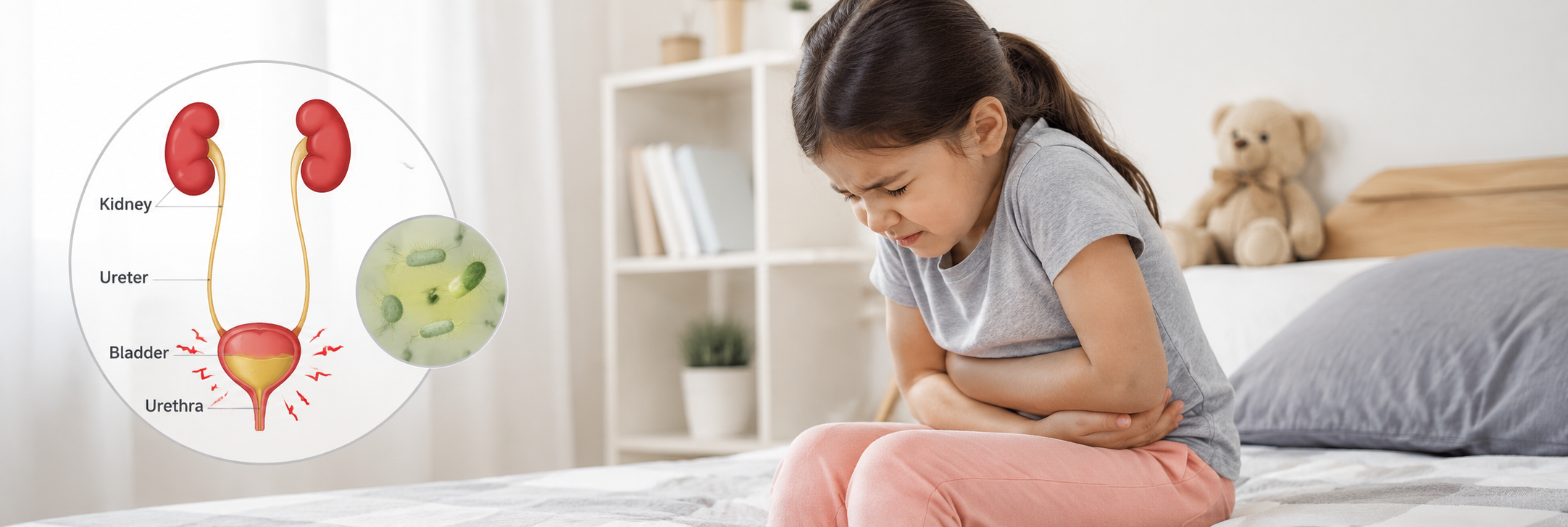
UTIs in Children: Symptoms, Causes, Treatment, and Prevention Guide
Urinary Tract Infections (UTIs) can be uncomfortable and distressing for children, especially when symptoms are difficult for them to explain. UTIs in children are relatively common and may affect the bladder, urethra, or kidneys. Early diagnosis and treatment are important
Otosclerosis in Kids: Causes, Symptoms and Treatment Explained
Otosclerosis is a condition that affects hearing due to abnormal bone growth in the middle ear. Although it is more commonly seen in adults, in rare cases it can also affect children, leading to gradual hearing difficulties. Early recognition of otosclerosis symptoms is important
Vitamin D Deficiency in Kids: Signs, Risks, and Solutions
Vitamin D deficiency in kids is becoming increasingly common due to reduced outdoor activity, limited sun exposure, and dietary gaps in growing children. This essential nutrient plays a key role in bone strength, muscle development, and immunity. When levels are low, children
Dehydration in Children: Symptoms, Stages, and Clinical Care
Dehydration in children can be worrying for parents, especially when symptoms appear suddenly during illness. It happens when a child loses more fluids than they take in, commonly due to fever, vomiting, or diarrhoea. Early signs may include thirst, dry mouth, reduced urine, and