



Categories
Ear infection in babies: Winter causes, symptoms, and treatment
Feb 22, 2026
What an ear infection in babies usually means
Parents use “ear infection” for different problems. Treatment depends on which one it is.Acute middle ear infection
This is the most common winter one. The infection is behind the eardrum.- often follows a cold
- may cause fever
- causes pain or pressure, worse at night
- baby may pull at the ear, but not always
Fluid behind the eardrum without infection
This can happen after a cold. It is fluid, not necessarily infection.- fever is usually absent
- pain is usually mild or absent
- hearing may be temporarily dull
- can take weeks to clear
Outer ear canal infection
This is on the outside, in the ear canal.- pain increases when you touch or pull the outer ear
- discharge may be present
- often linked to irritation or water exposure
Why winter increases ear infection risk
Winter increases ear infections because it increases the steps that lead to them.Step 1: Viral colds rise
Babies catch colds easily. Homes and day-care settings increase exposure.Step 2: The drainage route blocks
The middle ear drains into the back of the nose through the Eustachian tube. In babies, this tube is short and more horizontal. It blocks more easily.Step 3: Fluid builds behind the eardrum
Blocked drainage traps fluid. Pressure rises. Pain starts.Step 4: Germs multiply in trapped fluid
Bacteria can grow in trapped fluid. Fever may appear. The baby becomes more unsettled.Why indoor irritants matter
Smoke, incense, mosquito coils, and high pollution days irritate the nose and throat. Swelling increases. Drainage worsens. Ear pressure builds faster.Symptoms of ear infection in babies
Babies show ear discomfort through patterns, not through clear complaints.Common symptoms
- increased crying, especially when lying down
- disturbed sleep with frequent waking
- fever (not always present)
- decreased feeding or shorter feeds
- more irritability during sucking or swallowing
- rubbing or pulling the ear (may be absent)
- runny nose and cough from a recent cold
Symptoms that suggest pain is significant
- crying that spikes at night
- baby calms briefly when held upright, then worsens when laid down
- baby refuses feeds because sucking increases pressure
- baby is hard to settle even after usual comfort measures
Discharge from the ear
Ear discharge can happen if the eardrum develops a small tear due to pressure. Parents often panic. Many small perforations heal well, but discharge still needs medical evaluation. It can change treatment decisions.What an ear infection is not
These misunderstandings drive unnecessary worry.Ear pulling does not always mean ear infection
Babies pull ears when sleepy, teething, or irritated.Not every fever with a cold is an ear infection
Fever in viral colds is common. Ear infection is one possible complication, not the default.Antibiotics are not always needed on Day 1
Some ear infections, especially mild ones, can improve without antibiotics. Doctors decide based on age, severity, examination findings, and risk factors.Safe relief methods at home before you see a doctor
These steps reduce discomfort and support feeding. They do not replace medical evaluation when symptoms are significant.Keep the baby comfortable and hydrated
Offer smaller, more frequent feeds. Congestion and pain can reduce intake. Hydration helps overall recovery.Help nasal congestion
Nasal blockage worsens ear pressure.- saline drops as advised for infants
- gentle suction only when needed
- humidity if the room is very dry
Use only doctor-advised pain and fever medicines
Do not self-prescribe. Do not use adult medicines. Do not use home remedies in the ear.Avoid putting anything into the ear
No oils. No herbal drops. No cotton buds. If there is discharge, keep the outer ear clean and dry, then see a doctor.When to see a doctor for ear infection in babies
Consult a doctor promptly if:- baby is under 6 months and has suspected ear infection
- fever is high, or fever persists beyond 24–48 hours with worsening irritability
- baby has severe pain, inconsolable crying, or refuses feeds
- there is ear discharge
- breathing is fast or baby looks unusually sleepy
- symptoms follow a cold but are getting worse instead of better
- your baby has repeated episodes of ear infection
What to expect at the clinic
A doctor will usually:- look into the ear using an otoscope
- check if the eardrum is bulging, red, or immobile
- assess hydration, breathing, and overall illness severity
- decide whether this is infection, fluid without infection, or another cause of symptoms
- Tests are rarely needed for routine cases. The ear exam guides most decisions.
Treatment options a doctor may recommend
Treatment depends on age and severity.Observation with close follow-up
For mild cases in selected age groups, the doctor may suggest watchful waiting plus pain control and reassessment.Antibiotics
Used when bacterial infection is likely or the baby is very young, very symptomatic, or has certain risk factors.Pain control guidance
Pain relief is central. Pain is what drives feeding and sleep disruption.Follow-up for persistent fluid
If fluid stays behind the eardrum for weeks, doctors may monitor hearing and speech milestones, especially if episodes recur. Do not stop antibiotics early if they are prescribed. Do not reuse leftover antibiotics from a previous illness.How to reduce winter ear infections without living “sterile”
You cannot prevent every cold. You can reduce risk.- reduce smoke exposure completely
- avoid mosquito coils and heavy indoor fragrances
- keep hand hygiene strong in the family during cold season
- ensure timely vaccinations as advised
- manage nasal congestion early during colds
- keep day-care sick policies in mind where possible
Conclusion
An ear infection in babies is often a predictable complication of a winter cold. Nose congestion blocks ear drainage. Fluid builds. Pressure causes pain. Infection may follow. Your job is to spot the pattern early, protect feeding, and seek medical care when pain, fever, discharge, or poor intake appear. For a clear diagnosis and calm treatment plan, Rainbow Children Hospital can help you manage winter ear symptoms safely.FAQs
1) Can teething cause an ear infection?
Teething can cause fussiness and ear pulling. It does not cause middle ear infection. If fever and night pain appear after a cold, ear infection becomes more likely.2) My baby is pulling the ear but has no fever. Is it still an ear infection?
It could be, but ear pulling alone is not reliable. Watch for sleep disruption, feeding refusal, persistent crying when lying down, and recent cold symptoms. A doctor’s ear exam is the only way to confirm.3) Is ear discharge always dangerous?
Discharge needs medical evaluation. It may suggest a small eardrum perforation or outer ear infection. Many perforations heal, but treatment choices change when discharge is present.4) Can I put warm oil or drops in the ear for pain?
Avoid putting anything inside the ear unless prescribed. Oils and home drops can irritate the ear canal and can complicate infection, especially if the eardrum is not intact.Related BlogView More
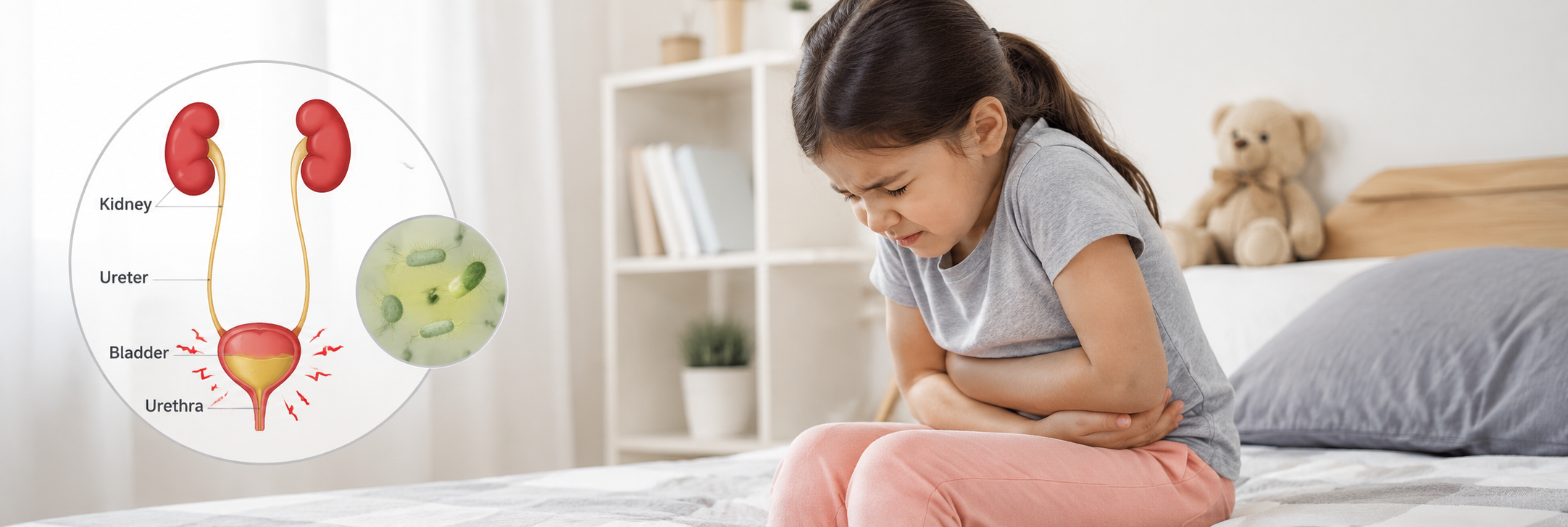
UTIs in Children: Symptoms, Causes, Treatment, and Prevention Guide
Urinary Tract Infections (UTIs) can be uncomfortable and distressing for children, especially when symptoms are difficult for them to explain. UTIs in children are relatively common and may affect the bladder, urethra, or kidneys. Early diagnosis and treatment are important

Otosclerosis in Kids: Causes, Symptoms and Treatment Explained
Otosclerosis is a condition that affects hearing due to abnormal bone growth in the middle ear. Although it is more commonly seen in adults, in rare cases it can also affect children, leading to gradual hearing difficulties. Early recognition of otosclerosis symptoms is important

Vitamin D Deficiency in Kids: Signs, Risks, and Solutions
Vitamin D deficiency in kids is becoming increasingly common due to reduced outdoor activity, limited sun exposure, and dietary gaps in growing children. This essential nutrient plays a key role in bone strength, muscle development, and immunity. When levels are low, children
Dehydration in Children: Symptoms, Stages, and Clinical Care
Dehydration in children can be worrying for parents, especially when symptoms appear suddenly during illness. It happens when a child loses more fluids than they take in, commonly due to fever, vomiting, or diarrhoea. Early signs may include thirst, dry mouth, reduced urine, and