


Categories
Constipation in Children: Causes & Home Remedies
Feb 22, 2026
1. Meaning of Constipation in Children
Constipation is not only “less frequent stools.” Constipation is a pattern. Look for these signs: stools fewer than three times a week, stools that look hard or pellet-like, pain or straining during stools, very large stools, blood streaks after a hard stool, tummy pain that eases after passing stool. In children over one year, soiling can appear. Parents think it is diarrhoea. It is often leakage of loose stool around a hard stool stuck inside.2. The Constipation Loop
A child passes a hard stool. The stool causes pain. The child starts avoiding the next stool. The stool stays inside longer. The colon absorbs more water from it. The stool becomes harder. The next stool hurts more. This loop is common. Many children get stuck here after one painful episode. This also explains a confusing detail. Some constipated children pass small amounts often. The main stool still sits inside.3. Common Causes of Constipation in Children
Most constipation in children is functional. It has no serious underlying disease. It relates to behaviour, routine, diet, and stool withholding. Common triggers include low fibre intake, low fluid intake, toilet training stress, interruptions during toilet time, and anxiety around school or life changes. In India, one trigger deserves special attention. School toilet avoidance. Many children hold stools for hours. The holding becomes a habit. The habit becomes constipation.4. A Simple Way to “See” What Is Happening
Picture the bowel as a timeline, not a label. Food residue reaches the colon. The colon reclaims water. The stool gets firmer as time passes. When a child holds stool, time increases. Water absorption increases. Stool hardness increases. Pain increases. Holding increases again. This is why constipation often continues even after you add one fruit for a day. The loop needs time and routine to reset.5. Home Remedies for Child Constipation
Home care works best when it targets three levers. Soften the stool. Build a toilet routine. Reduce holding.5.1 Fluids Across the Day
Offer water in a predictable pattern. Morning. Mid-morning. After school. During play. After play. Many children miss water during school hours. If you increase fibre, increase fluids too. Fibre without fluids can worsen stool hardness. For babies who are not on solids yet, do not start random water or remedies. Ask your paediatrician. Guidance differs by age and feeding type.5.2 Fibre That a Child Can Actually Eat
Fibre needs to be practical. It needs to fit tiffin and routine. Add fruit and vegetables daily. Add whole grains where possible. Add dal, chana, rajma as regular items. Increase fibre slowly. Make one change at a time. Sudden jumps can cause gas and refusal.5.3 Specific Foods That Often Help
Some foods soften stools more reliably in many children. Offer them as food, not as medicine. Prunes and pears help many children. Papaya helps many. Soaked raisins can help some. Choose one option. Use it daily for a few days. Track response.5.4 Toilet Routine After Meals
The bowel has a natural push after meals. Use it. Seat your child on the toilet for 5–10 minutes after breakfast or after dinner. Do it daily. Praise sitting, not “producing.” Boys often forget stooling once they start standing to urinate. A sitting routine helps.5.5 Toilet Posture
Posture changes effort. Ensure feet support. Use a small stool. Knees should sit higher than hips. This position makes stooling easier.5.6 Movement Every Day
Movement supports bowel motility. Many children sit for long blocks. School plus tuition plus screen time can reduce daily movement. Encourage outdoor play or any daily activity.6. What Usually Makes Constipation Worse
One painful stool often starts the loop. After that, repeated “pressure” makes it worse. Scolding increases holding. Forced toilet sitting increases resistance. Soiling is not done “on purpose.” It is overflow. Repeated home purges also create fear. The child starts treating stooling as an event to avoid.7. When to See a Doctor
Good care starts with a full assessment. Clinicians rule out red flags before they call it idiopathic or functional constipation. Seek medical care if you notice any red-flag pattern. Examples include poor weight gain, severe abdominal swelling, repeated vomiting, blood in stools not explained by a fissure, fever with constipation, constipation starting very early in life, or neurological concerns. (Alarm features are detailed in paediatric constipation guidelines.) Also seek care when constipation persists or keeps returning despite a proper routine. A doctor may treat stool impaction first, then use maintenance therapy to prevent relapse. Polyethylene glycol (macrogol/PEG) is commonly recommended as first-line laxative therapy in guidelines.8. Prevention After Things Improve
Constipation often returns when parents stop support too early. Many children need weeks to months of consistency to reset bowel habits. Keep the routine even after stools normalise. Keep water predictable. Keep fibre steady. Keep toilet timing stable. Ask about school toilet access. Many relapses start there.Conclusion
Constipation in children usually starts with a small disruption. A painful stool. Holding in school. Low water on busy days. Then the loop builds itself. Home remedies work when they target the loop. Soften the stool. Build a calm routine. Fix posture. Reduce holding. Keep it steady for long enough. If constipation keeps returning, or red-flag signs appear, a paediatric review helps you avoid repeated cycles and unnecessary strain. Clinicians at Rainbow Children Hospital can guide evaluation and a practical plan that fits your child’s age, school routine, and comfort.FAQs
1. Does constipation mean my child must pass stool every day?
No. Some children pass stool every other day and stay fine. Constipation is more about hard stools, pain, straining, very large stools, or soiling, not only frequency.2. My child has soiling. Is it diarrhoea?
It can be overflow soiling. Loose stool leaks around a hard stool stuck inside. It often improves only when constipation is treated properly.3. What is the best home routine for constipation in children?
Use toilet sitting after meals, daily. Keep feet supported on a step stool. Keep sessions short and calm. Praise the routine, not the result.4. When are home remedies not enough?
When constipation persists for weeks, keeps recurring, or includes red-flag symptoms. Guidelines emphasise assessment to rule out underlying causes before treating as functional constipation.Related BlogView More
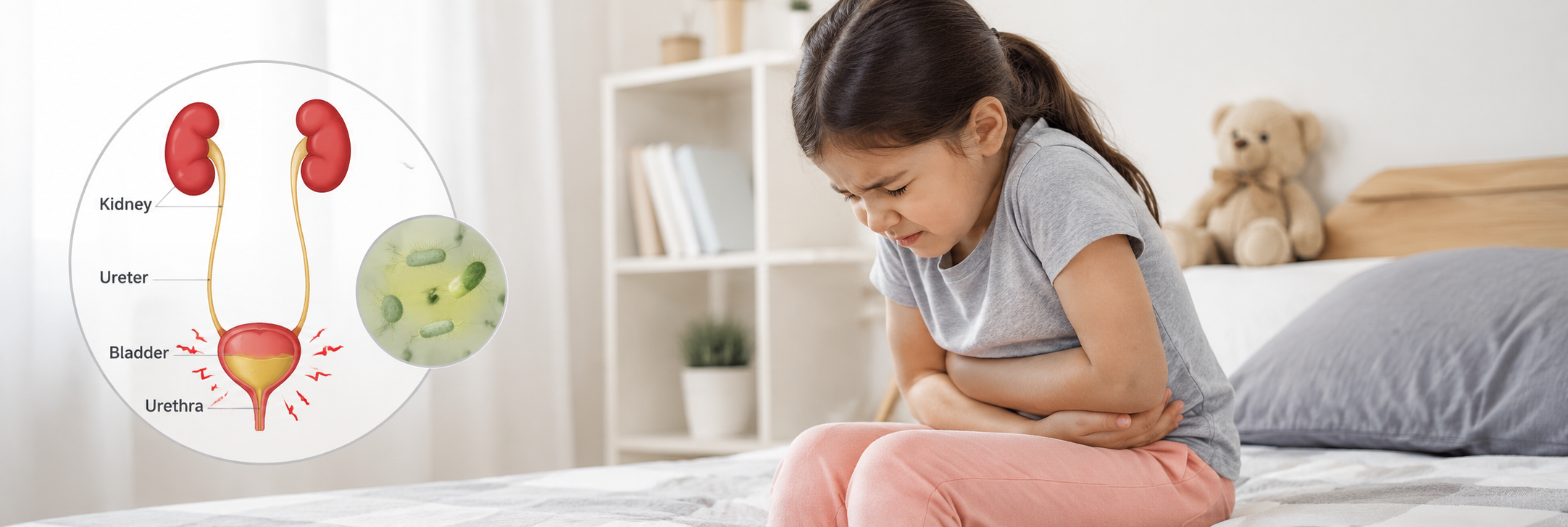
UTIs in Children: Symptoms, Causes, Treatment, and Prevention Guide
Urinary Tract Infections (UTIs) can be uncomfortable and distressing for children, especially when symptoms are difficult for them to explain. UTIs in children are relatively common and may affect the bladder, urethra, or kidneys. Early diagnosis and treatment are important

Otosclerosis in Kids: Causes, Symptoms and Treatment Explained
Otosclerosis is a condition that affects hearing due to abnormal bone growth in the middle ear. Although it is more commonly seen in adults, in rare cases it can also affect children, leading to gradual hearing difficulties. Early recognition of otosclerosis symptoms is important
Vitamin D Deficiency in Kids: Signs, Risks, and Solutions
Vitamin D deficiency in kids is becoming increasingly common due to reduced outdoor activity, limited sun exposure, and dietary gaps in growing children. This essential nutrient plays a key role in bone strength, muscle development, and immunity. When levels are low, children
Dehydration in Children: Symptoms, Stages, and Clinical Care
Dehydration in children can be worrying for parents, especially when symptoms appear suddenly during illness. It happens when a child loses more fluids than they take in, commonly due to fever, vomiting, or diarrhoea. Early signs may include thirst, dry mouth, reduced urine, and