



Categories
Pediatric Neurodevelopmental Disorders Explained
Feb 23, 2026
1. Meaning of Neurodevelopmental Disorders
Neurodevelopmental disorders begin early in life. They affect brain-based skills. These skills include attention, learning, language, movement, behaviour control, social communication, and sensory processing. The word “disorder” does not mean “something is wrong with the child.” It means one or more skill tracks stay off-pace for long enough. Daily functioning starts to suffer.2. Why Early Identification Matters
Development works like a sequence. Early skills support later skills. Hearing supports speech. Speech supports reading. Motor coordination supports handwriting. Attention supports learning. When one track stays weak, the strain spreads to other tracks. Early identification reduces avoidable delay. It also prevents secondary problems. Low confidence, school avoidance, family conflict, repeated punishment for skills the child cannot yet perform.3. Most Common Neurodevelopmental Disorders in Children Seen in India
This is a practical list. These conditions show up often in clinics, schools, and therapy settings across India. Some are also under-recognised. Recognition matters.3.1 Attention-Deficit/Hyperactivity Disorder (ADHD)
Core difficulty: attention control and impulse control. A child with ADHD struggles with task persistence. The child starts tasks quickly. The child leaves tasks unfinished. Mistakes rise in long work. Forgetfulness rises in routine steps. Some children show visible restlessness. Some children look “lost” and dreamy. Both patterns can be ADHD. ADHD needs assessment across settings. Home alone does not give the full picture. School alone does not give the full picture.3.2 Autism Spectrum Disorder (ASD)
Core difficulty: social communication plus repetitive or restricted patterns. ASD often appears as reduced back-and-forth interaction. The child may not respond to name consistently. The child may not share interest through pointing or showing. Play may stay repetitive. Changes in routine may trigger strong distress. Sensory sensitivity is common. Sound, touch, textures, crowds, lights can all matter. ASD is not a “parenting issue.” It is a neurodevelopmental pattern. Early communication support helps most.3.3 Specific Learning Disorder (SLD)
Core difficulty: reading, writing, spelling, or maths skills. SLD often hides behind effort. The child studies. The marks stay low in one skill area. Reading stays slow. Spelling stays weak. Copying takes too long. Maths steps get skipped. The child may look “careless.” The mistake pattern stays consistent. Tuition alone rarely fixes SLD. Remedial education targets the exact weak skill. Accommodations reduce load in exams and classwork.3.4 Developmental Language Disorder and Speech Sound Disorder
Core difficulty: understanding language, using language, producing clear speech. Parents notice late first words. Vocabulary grows slowly. Sentence length stays short. The child struggles with instructions. Speech sounds stay unclear beyond expected age. Teachers report “does not follow” or “does not answer.” A hearing check comes early here. Hearing loss can look like language delay. Speech therapy works best with home practice. Daily repetition matters more than occasional sessions.3.5 Intellectual Disability and Global Developmental Delay
Core difficulty: overall learning plus adaptive skills. In younger children, clinicians often use “global developmental delay.” Multiple domains lag together. Speech lags. Motor skills lag. Self-care lags. Learning new routines takes longer than expected. In older children, the term “intellectual disability” may apply when intellectual functioning and daily adaptive skills stay significantly limited. Support focuses on function. Communication, self-care, safety, school goals, behaviour support.3.6 Cerebral Palsy and Other Motor Disorders
Core difficulty: movement and posture control. Cerebral palsy often shows early stiffness, asymmetry, toe-walking, delayed sitting, delayed walking, or early hand preference. Some children show poor balance and frequent falls. Some show tight muscles and scissoring legs. Therapy helps most when it starts early. Physiotherapy builds movement patterns. Occupational therapy builds daily skills. Assistive devices support independence.3.7 Developmental Coordination Disorder (DCD)
Core difficulty: coordination and motor planning. DCD is common and often missed. The child struggles with handwriting. The child struggles with scissors. The child struggles with catching a ball. The child avoids sports. The child appears “clumsy.” Intelligence can be normal. Effort can be high. This condition needs recognition because repeated failure damages confidence. Occupational therapy helps through skill practice and classroom adjustments.3.8 Epilepsy With Developmental Impact
Core difficulty: seizures, sometimes subtle. Many people imagine seizures as convulsions. Many childhood seizures look different. Staring spells can occur. Brief jerks can occur. Sudden falls can occur. Confusion can occur after an episode. Teachers may report “blank spells” or sudden drop in performance. Diagnosis depends on history and testing. Treatment depends on seizure type. Sleep consistency supports seizure control.3.9 Hearing Impairment
Core difficulty: reduced access to speech sounds. Hearing loss affects speech and language development. It also affects classroom learning. Parents notice poor response to name, high TV volume, unclear speech, frequent “what?”, or inattentive behaviour in noisy places. Early audiology assessment matters. Hearing aids or other interventions can change the developmental trajectory.3.10 Vision Impairment
Core difficulty: reduced visual input for learning. Vision problems affect reading and copying. They also affect attention. Children may squint, rub eyes, complain of headache after reading, sit too close to the board, avoid books, lose place while reading. Eye testing plus simple classroom changes often help fast. Seating position matters. Print size matters.4. When to Seek an Evaluation
Seek evaluation when you see a stable pattern, not a single bad week. Common triggers for evaluation:- Skill delay across months
- Skill loss at any age
- Teacher concerns that repeat across terms
- School struggle despite effort
- Behaviour issues across settings
- Speech that stays unclear beyond expected age
- Frequent falls or persistent motor awkwardness
- “Staring spells” or episodes that look unusual
Conclusion
Neurodevelopmental disorders in children are common in India. The useful approach starts with classification. What skill track is off-pace? What settings show it? What impact appears at school and at home? Once the profile becomes clear, support becomes simpler. Therapy becomes targeted. Expectations become realistic. Progress becomes visible. For families who want a structured assessment and a coordinated plan across development, learning, behaviour, and motor skills, Rainbow Children Hospital can support the process through paediatric and developmental care.FAQs
1. Can a child have more than one neurodevelopmental disorder?
Yes. Co-occurrence is common. ADHD can sit with learning disorder. Autism can sit with language disorder. Motor coordination issues can sit with ADHD. The plan should match the full profile.2. What is the difference between “late development” and a disorder?
A delay means slower timing. Some children catch up. A disorder means a stable pattern with functional impact. The difference becomes clearer with assessment and follow-up.3. Does speech delay always mean autism?
No. Speech delay has many causes. Hearing issues can cause it. Language disorder can cause it. Autism includes social communication differences plus restricted or repetitive patterns. Speech delay alone does not confirm autism.4. Is ADHD only a “naughty child” problem?
No. ADHD is a regulation difficulty. It affects attention, planning, impulse control, and task completion. Many children with ADHD want to do well. They struggle with consistency.5. What should parents do first when they suspect a problem?
Start with observation and documentation. Note the exact concerns. Note settings. Home and school both matter. Then seek a paediatric evaluation. Assessment clarifies the next step. It reduces random trial-and-error.Related BlogView More

Genetic Risk of Cancer in Kids: How Family History Affects Cancer Risk
When cancer has affected a close family member, it is natural for parents to wonder what it could mean for their child’s future health. While most childhood cancers develop without a hereditary cause, some are linked to inherited genetic changes that can increase the like
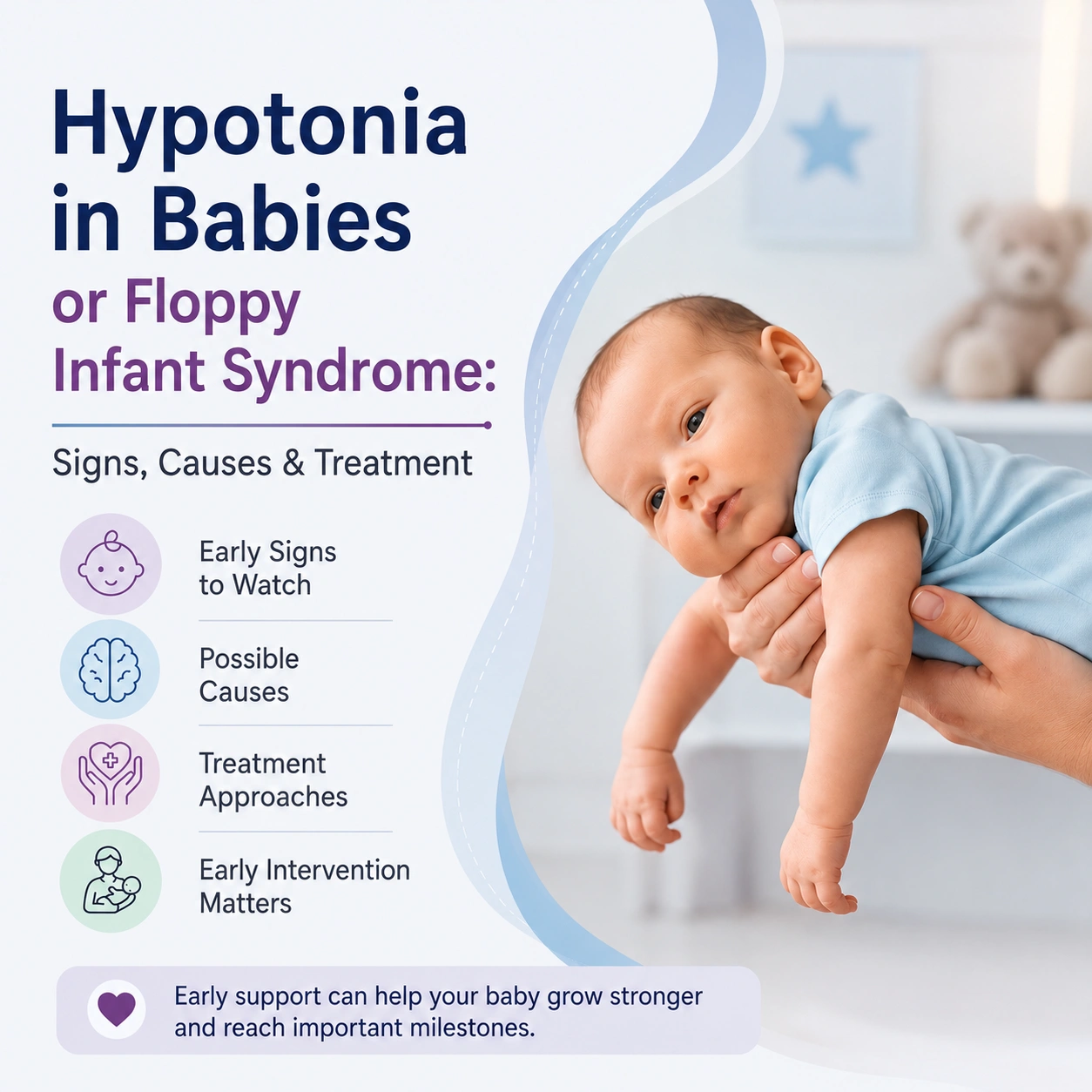
Hypotonia in Babies or Floppy Infant Syndrome: Signs, Causes & Treatment
Every baby develops at their own pace, and it is natural for parents to notice differences in how their child moves, feeds, or responds to their surroundings. Some babies may feel unusually relaxed or floppy when held, which may be linked to hypotonia

Paediatric ENT Care: Why Kids Need Specialised ENT Treatment
Ear, nose, and throat concerns are common in childhood. Whether it's recurring ear infections, constant nasal congestion, loud snoring, or hearing difficulties, these issues can affect a child's comfort, sleep, communication, and everyday activities. Sin

How Dengue Impacts Infants and Young Children Differently
Dengue is a common viral infection that affects thousands of families every year, particularly during the monsoon and post-monsoon months. While it can occur at any age, infants and young children often experience dengue differently from older children and adults. Since chi