



Categories
Fertility Supplements: A Complete Guide to Boosting Reproductive Health
Aug 12, 2026
However, one common misconception is that supplements alone can cure infertility. The reality is quite different. Fertility supplements are not miracle pills. Instead, they provide essential nutrients that support reproductive health, improve the body's nutritional status, and create a healthier environment for conception. When recommended by fertility specialists, the right supplements can complement fertility treatments and may improve reproductive outcomes.
Optimising your nutrition with the right fertility supplements, healthy lifestyle, balanced diet, managing stress, and regular exercise can ensure your body has all the essential building blocks for a healthy conception and early pregnancy.
Let's walk through exactly how, and why so many fertility centres across India now treat nutrition as an integral part of fertility treatment. This guide explains how fertility supplements work, who may benefit from them, and why they should always be used under medical supervision.
Why Nutrition Matters for Fertility?
Your reproductive health depends on a steady supply of essential nutrients to function well. Healthy egg and sperm development, hormone production, and a receptive uterine lining all require adequate vitamins, minerals, antioxidants, and healthy fats.Poor nutrition, chronic stress, obesity, certain medical conditions, and increasing age can reduce fertility by affecting ovulation, egg quality, hormonal balance, sperm production, embryo development, implantation and pregnancy health.
Even people who eat a reasonably balanced diet can have hidden nutritional gaps that affect fertility. This is exactly where fertility supplements can play a supportive, evidence-informed role.
What Are Fertility Supplements?
Fertility supplements are targeted combinations of vitamins (such as folate, folic acid, vitamin D3, and vitamin E), minerals (such as selenium, zinc, and iron), antioxidants (such as Co Enzyme Q 10), amino acids, formulated specifically to support reproductive health in both women and men.They are designed to support healthy egg development, improve ovarian function, enhance sperm production and quality, encourage hormonal balance, reduce oxidative stress, correct nutritional deficiencies, and help prepare the body for conception and pregnancy. Doctors commonly recommend them before natural conception attempts as well as before assisted treatments such as ovulation induction, timed intercourse, IUI, IVF, or ICSI.
Who Can Benefit from Fertility Supplements?
It's a common misconception that fertility supplements are only for people undergoing IVF. In practice, they may help individuals at very different stages of the fertility journey, when recommended by a specialist. You may benefit from fertility supplements if you:- Are planning a pregnancy within next 3–6 months
- Are trying to conceive naturally
- Are preparing for IVF, IUI, or ICSI treatment
- Have PCOS or irregular ovulation
- Have diminished ovarian reserve
- Are above the age of 35 years
- Have experienced recurrent pregnancy loss
- Have a known nutritional deficiency, such as low vitamin D or iron
- Are dealing with male-factor infertility, including low sperm count or poor motility
How Fertility Supplements Enhance Fertility Treatments
Fertility treatments tend to work best when the body is already in a healthy, well-nourished state. Supplements help build that supportive foundation in several specific ways.- Supporting Egg Health and Ovulation
- Improving Sperm Health
- Regulating Hormones
- Filling Nutritional Gaps
- Preparing the Body for Pregnancy
- Supporting Fertility Treatment Protocols
Supplements to Boost Fertility
Not every supplement is relevant to every person — the right combination depends on your diagnosis, age, and treatment plan. Here are the ones most frequently recommended by fertility specialists:- Folic Acid/Methyl folate: One of the most important preconception nutrients, reduces the risk of neural tube defects, supports early embryo development
- Vitamin D3 and Calcium: Adequate vitamin D is associated with healthier reproductive function, though evidence on pregnancy rates specifically remains mixed; low levels have been linked to reduced fertility and preeclampsia risk in some women.
- Coenzyme Q10 (CoQ10): Supports cellular energy production in eggs and sperm, often used for age-related fertility decline (particularly benefit women with reduced ovarian reserve).
- DHEA: A naturally occurring hormone sometimes recommended for select women with diminished ovarian reserve, but only under specialist supervision, since evidence is mixed and it should never be self-prescribed.
- Iron: Iron deficiency can affect ovulation and increase pregnancy risks. Women with anemia should receive appropriate treatment before conception, as Iron supports healthy ovulation, especially in women with heavier menstrual cycles.
- Myo-Inositol: Frequently recommended for women with PCOS. It may help to improve insulin sensitivity, restore ovulation and improve menstrual regularity.
- Zinc and Selenium: Important for both sperm quality and hormonal balance.
Best Fertility Supplements for Men
Fertility isn't only a woman's responsibility, nearly 40–50% of infertility cases involve a male factor. Sperm health responds well to targeted nutrition because sperm regenerate roughly every 74 days, giving supplements a real window to make a measurable difference.Key Supplements for Male Fertility
Male fertility depends on healthy sperm production, which takes approximately three months. Although individual recommendations vary, commonly prescribed fertility nutrients include:- L-carnitine: Supports sperm motility and energy production
- Zinc: Supports testosterone production, sperm formation and sperm motility
- Selenium: Acts as an antioxidant that supports sperm health.
- Coenzyme Q10 (CoQ10): May improve sperm motility and energy production.
- Vitamin C: Protects sperm DNA from oxidative damage.
- Vitamin E: Works alongside Vitamin C to reduce oxidative stress.
- Folic acid: Supports healthy sperm morphology
Best Fertility Supplements for Women
Women may require different supplement combinations depending on age, medical history, ovarian reserve, PCOS, thyroid disorders, or previous pregnancy losses.Commonly recommended nutrients include:
- Prenatal multivitamin with folate: Foundational for anyone trying to conceive
- Vitamin D3: Supports ovulatory function and implantation
- Omega-3s: Anti-inflammatory support for the reproductive system
- Myo-inositol: Particularly helpful for irregular cycles and PCOS
- Coenzyme Q10 (CoQ10): Supports egg quality, especially relevant after age 35
Supporting Hormonal Balance Naturally
Many women see added benefit when supplements are combined with stable blood sugar, consistent sleep, and moderate exercise — since both insulin resistance and elevated cortisol directly affect reproductive hormones.Fertility Supplements for Women Over 40
Egg quantity and quality naturally decline with age, but this doesn't mean supplementation is pointless — quite the opposite. In the 35+ and 40+ age groups, mitochondrial support becomes especially important.What Changes After 40
- Higher CoQ10 doses are often recommended (under medical supervision) to support egg mitochondrial function.
- DHEA is sometimes prescribed by fertility specialists for diminished ovarian reserve — but only under strict medical guidance, as it carries risks if self-administered.
- Antioxidant support (vitamin E, vitamin C, melatonin) is emphasized to counter age-related oxidative stress on eggs.
Best Fertility Vitamins for Women & Men
| Nutrient | Primary Benefit | Recommended For |
|---|---|---|
| Folic Acid | Neural tube protection, embryo development | Women (pre-conception) |
| CoQ10 | Egg & sperm mitochondrial support | Both Men & Women, especially 35+ |
| Vitamin D3 | Hormone regulation, implantation | Both |
| Omega-3 | Anti-inflammatory, hormone balance | Both |
| Myo-Inositol | Ovulation regulation | Women with PCOS |
| Zinc | Sperm production, hormone synthesis | Men |
| L-Carnitine | Sperm motility | Men |
| Iron | Healthy ovulation | Women |
Fertility Supplements Before Conception
Specialists generally recommend beginning fertility supplements at least three months before attempting conception — this "golden window" is when the body is actively building the eggs and sperm that will eventually form your embryo.This allows sufficient time for:
- Egg maturation
- Sperm development
- Correction of nutritional deficiencies
- Improved reproductive health
Fertility Supplements After Miscarriage
Miscarriage is emotionally devastating, and it's natural to want to know what can be done differently for the next attempt. While every case is medically unique, doctors often recommend a nutritional reset during the recovery period.Common Recommendations After Pregnancy Loss
- Continuing folic acid, Iron and prenatal vitamins, even during the recovery phase.
- Vitamin D and thyroid-supportive nutrients, since thyroid imbalance is a known contributor to early pregnancy loss.
- CoQ10 and antioxidants to support egg quality in the next cycle.
- A follow-up consultation to rule out treatable causes (clotting factors, thyroid, uterine structure) before restarting supplementation and trying again.
When Should You Start Taking Fertility Supplements?
Most fertility specialists recommend starting supplements:- Three months before trying to conceive naturally
- Two to Three months before an IVF cycle
- Before IUI treatment
- Before egg freezing or fertility preservation
- While planning pregnancy after miscarriage
- As soon as a nutritional deficiency is identified during fertility evaluation
- If you are over 35: consider starting CoQ10 and antioxidant support earlier, as egg quality benefits from a longer lead time.
Lifestyle Habits That Improve Fertility Along with Supplements
Supplements are more effective when paired with healthy lifestyle choices, such as:- Eating a balanced diet rich in fruits and vegetables.
- Maintaining a healthy weight.
- Regular physical activity.
- Adequate sleep.
- Stress management.
- Avoiding smoking and tobacco.
- Limiting alcohol intake.
- Keeping medical conditions such as diabetes and thyroid disorders well controlled under medical supervision.
Can Fertility Supplements Replace Fertility Treatments?
No. Fertility supplements are supportive—not curative. Certain Conditions require medical treatment including blocked fallopian tubes, severe male infertility, endometriosis, premature ovarian insufficiency, genetic disorders, advanced maternal age, etc.Your fertility specialist will recommend the most appropriate combination of lifestyle modifications, supplements, medications, or assisted reproductive techniques based on your diagnosis.
When to Seek Support from a Fertility Specialist?
Seek medical advice if:- You are below 35 years of age and have not conceived after 12 months of trying.
- You are over 35 and have not conceived, even after trying for 6 months to 1 year.
- Your menstrual cycles are irregular or absent.
- You have PCOS or endometriosis.
- You have experienced recurrent miscarriages.
- You have known male fertility concerns.
- You have undergone previous unsuccessful fertility treatments.
Why Choose BirthRight Fertility by Rainbow Hospitals?
BirthRight Fertility by Rainbow Hospitals is a trusted name in women's healthcare in India, offering comprehensive fertility services. Every woman who walks in for her journey toward motherhood is cared for by an experienced, multidisciplinary team — from fertility treatment through childbirth and newborn care, all under one roof.We don’t just treat fertility—we care for you.
- Holistic Multidisciplinary Care – Comprehensive fertility care under one roof.
- Complete Spectrum of Fertility Services – From fertility evaluation to advanced reproductive treatments.
- Continuum of Care – Seamless support from conception through pregnancy and newborn care.
- Experienced Fertility Specialists & Embryologists – Expertise backed by advanced clinical excellence.
- Personalized Treatment Plans – Tailored solutions based on your unique fertility needs.
- Nutrition Plans Tailored to Your Fertility Journey – Supporting fertility with nutrition and lifestyle guidance.
- Advanced Fertility Technology – State-of-the-art infrastructure and the latest reproductive technologies.
- High Success Rates – Evidence-based treatments focused on achieving the best possible outcomes.
- Ethical & Transparent Care – Honest guidance and informed decision-making at every step.
- Compassionate, Patient-Centred Support – Dedicated care with empathy, privacy, and emotional support throughout your journey.
Conclusion
Fertility supplements can play a genuinely valuable supporting role in your fertility journey — improving nutritional status, supporting hormonal balance, protecting reproductive cells from oxidative stress, and preparing the body for conception. Chosen thoughtfully, timed correctly, and taken consistently under the guidance of a fertility specialist, they can help optimize egg and sperm health and meaningfully complement treatments such as IUI and IVF. What they cannot do is substitute for medical evaluation or treatment, especially when an underlying fertility condition needs specialized care.Every fertility journey is unique, and there is no one-size-fits-all approach. The best outcomes usually come from a personalized plan that combines expert fertility care, healthy lifestyle changes, and evidence-based nutritional support tailored to you.
If you're planning a pregnancy or facing fertility challenges, talk to a fertility specialist about which supplements and treatments are right for your individual needs.
At BirthRight Fertility, we're dedicated to supporting couples with compassionate care, personalized fertility plans, and advanced reproductive treatments — walking with you every step of the way toward parenthood.
Take the first step toward your new beginning. For expert fertility consultation, connect with BirthRight Fertility today at 1800 2122.
Disclaimer: This article is for informational purposes only and is not a substitute for professional medical advice. Please consult a qualified fertility specialist before starting any new supplement regimen.
Frequently asked questions
Do fertility supplements really improve fertility?
Can fertility supplements alone help me get pregnant without treatment?
Which fertility supplements are best for women?
What are the best fertility supplements for men?
How long before IVF should I start taking fertility supplements?
Can fertility supplements improve IVF success?
Can supplements increase egg count?
Should I take fertility supplements after a miscarriage?
Are fertility supplements safe?
How do I know which fertility supplement is right for me?
Can I take fertility supplements if I have PCOS?
Can lifestyle changes improve fertility along with supplements?
What are the best fertility supplements for women over 40?
Can I take fertility supplements without consulting a doctor?
Related BlogView More

Egg Freezing in India: What Career-Focused Women Really Need to Know
In this episode of Birth Vibes by BirthRight Rainbow, Dr. Ratna Durvasula, Fertility specialist from BirthRight Fertility by Rainbow Hospitals, sits down with Ms. Aparna Reddy, an HR leader at a leading MNC and a doctorate holder in Business Administ

Fertile Window & Ovulation: How to Calculate Your Most Fertile Days
If you're trying to conceive, spacing your pregnancies, or simply trying to understand your body better, two terms come up again and again: fertile window and ovulation. They're related, but they're not the same thing — and mixing them up is one of the most common reasons

Can a Varicocele Impact Your Fertility? Signs, Symptoms & Causes
For a man in his early 30s, a fertility workup may unexpectedly reveal a varicocele, even when he has never noticed pain or swelling. The immediate question is often, can varicocele cause infertility? Varicoceles are common findings during male fer
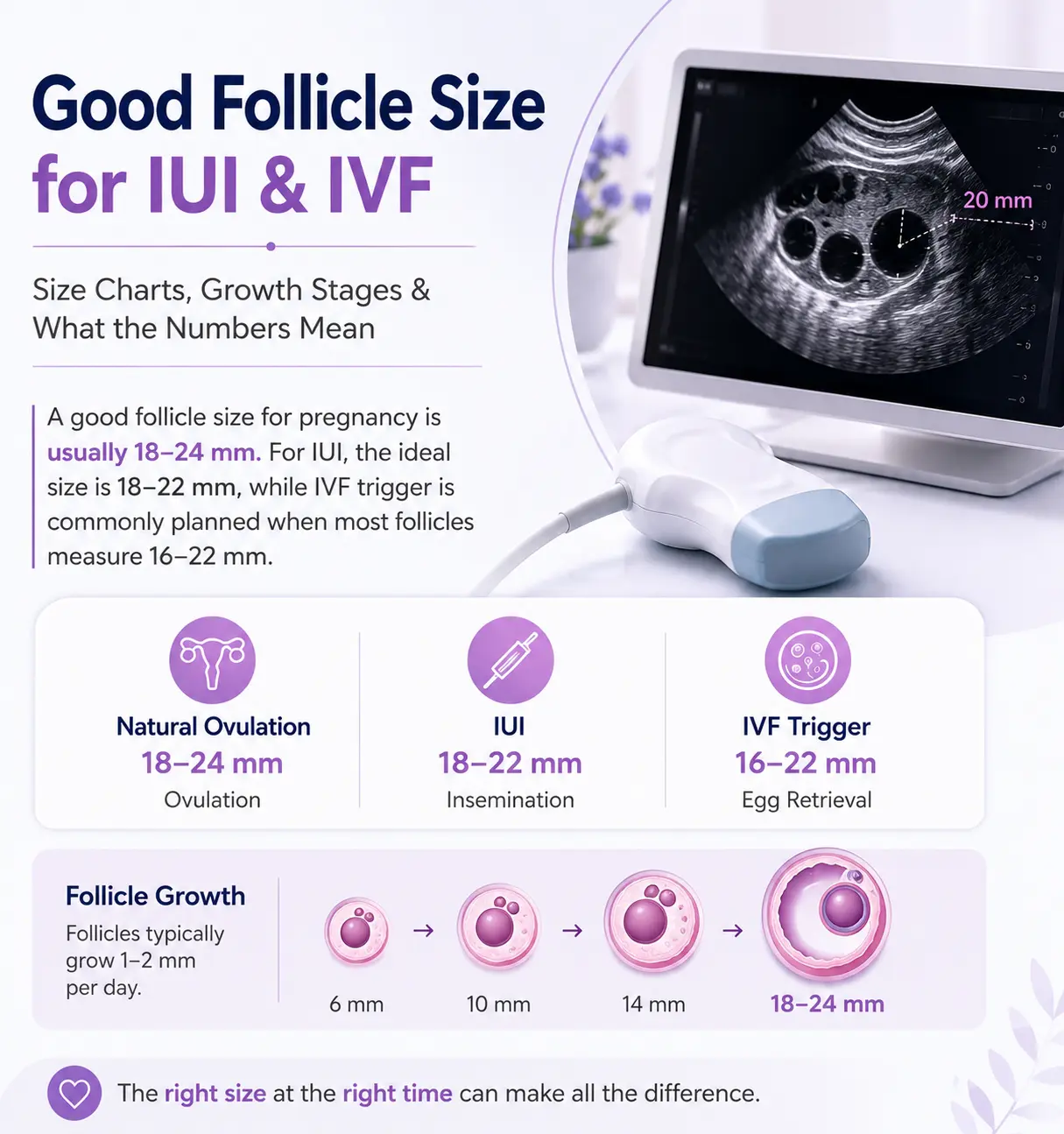
Good Follicle Size for IUI & IVF: Size Charts, Growth Stages & What the Numbers Mean
If you're trying to conceive naturally or undergoing IUI or IVF, you've likely wondered whether your follicle size is ideal. Follicle size isn't just a number on an ultrasound or on your report—it is one of the most trusted indicators fertility specialists use to as