

Categories
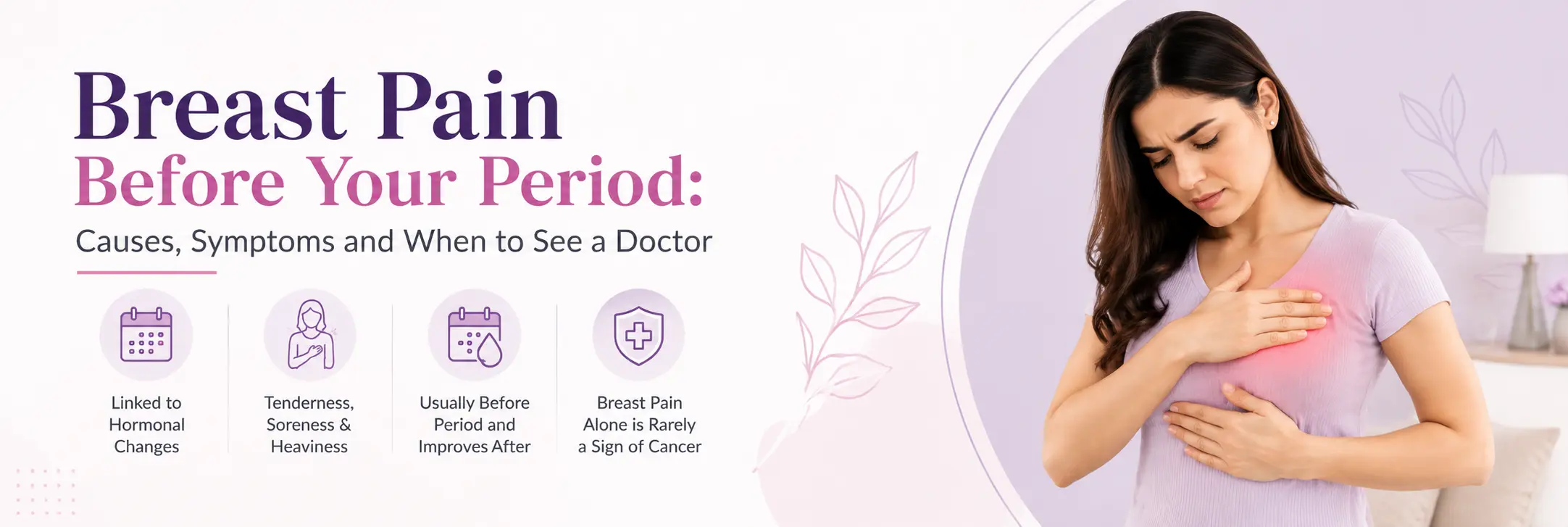
Breast Pain Before Your Period: Causes, Symptoms and When to See a Doctor
Sep 01, 2026
For many women, breast pain before a period is part of the normal menstrual cycle. This is called cyclic breast pain or cyclic mastalgia. It usually develops in the days or weeks before menstruation and improves once the period begins. The timing and pattern often provide more useful clues than the intensity of the pain alone.
Key Takeaways
- Cyclic breast pain is common and is linked to hormonal changes during the menstrual cycle.
- Pain may begin a few days or up to two weeks before a period.
- It commonly affects both breasts, but one breast may sometimes hurt more.
- Soreness can extend towards the armpits and usually improves after menstruation begins.
- Breast pain alone is rarely a sign of breast cancer.
- New lumps, nipple changes, skin changes or persistent focal pain should be medically assessed.
- Is Breast Pain Before Your Period Normal?
- Could Breast Tenderness Be Pregnancy Rather Than Period?
- Common Symptoms of Sore Breasts Before Period: What to Expect
- What Causes Breast Pain Before Period?
- Breast Pain vs. Other Breast Conditions
- How You Can Manage Breast Soreness Before Period
- When Should You See a Doctor?
- Conclusion
- FAQs
Is Breast Pain Before Your Period Normal?
Mild to moderate breast tenderness before menstruation is usually normal. Hormonal fluctuations during the menstrual cycle can make breast tissue feel swollen, sensitive, or painful. This pattern is known as cyclic breast pain or cyclic mastalgia.The discomfort generally develops before the period and eases after menstrual bleeding begins. Although one breast may hurt more than the other, cycle-related pain commonly affects both breasts. Breast pain alone is rarely a sign of breast cancer.
Could Breast Tenderness Be Pregnancy Rather Than Period?
It can be difficult to tell from breast tenderness alone.Early pregnancy and the days before a period can both cause swollen or sore breasts. Pregnancy-related tenderness may continue after the date when your period was expected, but symptoms vary considerably between women.
A missed period is generally a more useful early sign of pregnancy than breast pain.
If pregnancy is possible and your period is late, take a pregnancy test at the appropriate time rather than trying to distinguish pregnancy from PMS based on breast soreness.
Common Symptoms of Sore Breasts Before Period: What to Expect
Women experiencing sore breasts before period may notice:- Heaviness or fullness in both breasts
- Tenderness, swelling or lumpiness
- A dull, aching or throbbing sensation
- Increased sensitivity when touched
- Pain extending towards the armpits
- Symptoms beginning several days or up to two weeks before menstruation
- Discomfort improving once the period begins or ends
What Causes Breast Pain Before Period?
Common factors associated with period-related breast discomfort include:- Hormonal changes during the menstrual cycle
- Temporary fluid retention and swelling
- Increased sensitivity of breast tissue
- Hormonal birth control or hormone therapy
- Stress and anxiety, which may heighten pain awareness
- High caffeine or salt intake in some women
Breast Pain vs. Other Breast Conditions
Cyclic pain usually follows a predictable monthly pattern, affects both breasts and improves when menstruation starts. Non-cyclic pain may remain constant, affect one breast or occur in one specific location.Breast cysts, fibrocystic changes, mastitis, injury, medication effects, and pain from the chest wall can also cause discomfort. A new lump, nipple discharge, breast redness, skin dimpling, or persistent one-sided pain that differs from the usual cyclical pattern should be evaluated.
How You Can Manage Breast Soreness Before Period
The following measures may help manage mild cyclical discomfort:- Wear a properly fitted, supportive bra during daily activities and exercise.
- Apply a warm or cold compress, depending on which feels more comfortable.
- Track pain across two or three menstrual cycles to identify a pattern.
- Try reducing caffeine and highly salty foods if they appear to worsen symptoms, although evidence is limited.
- Include light physical activity and relaxation techniques.
- Consider paracetamol or ibuprofen after checking that it is medically suitable for you.
- Evening primrose oil is used anecdotally, but research has not consistently shown that it relieves breast pain.
When Should You See a Doctor?
Consult a gynaecologist if the pain is persistent, one-sided, unrelated to periods, or continues after menstruation. Medical advice is also important for a new lump, bloody nipple discharge, redness, warmth, fever, nipple changes, breast shape changes, or dimpled skin.At BirthRight by Rainbow Hospitals, a Breast Care Clinic can support further evaluation of unusual or persistent symptoms. Depending on the findings, care may involve a gynaecologist, breast specialist, breast surgeon, radiologist, sonographer, oncologist or specialist nurse. Clinical examination and imaging can help identify whether pain is hormonal or related to another breast condition.
Conclusion
Period-related breast tenderness is common and can often be managed with supportive care. However, pain that changes, persists, or appears with other breast symptoms should be assessed at BirthRight by Rainbow Hospitals for an accurate diagnosis and appropriate guidance.Medical Disclaimer
This article is for general education only and does not replace personalised diagnosis or treatment from a qualified healthcare professional.Frequently asked questions
Is breast pain before my period normal?
Why do my breasts hurt more some months than others?
How early before my period do my breasts hurt?
What type of breast pain is normal?
How can I get relief from sore breasts before my period?
When should I be concerned about breast pain before my period?
What causes sore breasts before a period?
Can stress make breast pain worse before a period?
How do I know if breast pain is due to pregnancy or my period?
Related BlogView More
Breast Leaking During Pregnancy: Colostrum & When to Seek Help
Noticing a few drops of fluid from your breasts during pregnancy can be unexpected, especially if it happens before you have started thinking about breastfeeding. In many cases, this is simply colostrum, the nutrient-rich first milk your breasts begin preparing before your bab
Coconut Water During Pregnancy: Benefits, Myths & Facts
Coconut water is a popular choice during pregnancy because it is light, refreshing, and naturally contains fluids and electrolytes. For most pregnant women, it can be enjoyed safely as part of a balanced diet, especially as an alternative to sugary drinks. At the same time
10 Safe Tips & Best Foods to Increase Breast Milk Supply Naturally
Wondering whether your baby is getting enough breast milk is common, especially in the first few weeks after birth when feeding patterns are still settling. Milk supply can naturally vary, and in many cases, small changes in feeding technique, frequency, rest, hydration and nutri
8 Ways Your Breasts Change During Pregnancy: Signs, Stages & What to Expect
Breast changes are often among the earliest signs that your body is preparing for pregnancy and breastfeeding. You may notice tenderness, fullness, darker nipples, more visible veins, or even a small amount of colostrum as the months progress. These changes don't happen