


Categories
Vaccination for Preterm Neonates: A Complete Guide for Parents
Aug 22, 2023
What Counts as a Preterm Birth?
A baby is considered preterm if born before 37 completed weeks of gestation. Within that group, paediatricians use three categories that influence vaccination decisions:- Extremely preterm: less than 28 weeks of gestation
- Very preterm: 28 to less than 32 weeks
- Moderate to late preterm: 32 to less than 37 weeks
Why Vaccination Matters More for Preterm Babies
A baby's immune system develops rapidly during the final weeks of pregnancy. When birth happens early, that window is cut short, which leaves preterm babies with:- Lower levels of maternal antibodies passed across the placenta
- Fewer mature immune cells to respond to infection
- A weaker initial response to many vaccines
- Longer vulnerability to common childhood infections
Adjusted Age vs Chronological Age: The Key Concept
This is the single most important idea for parents of preterm babies to grasp.- Chronological age is how long it has been since your baby was born.
- Adjusted age (also called corrected age) is the age your baby would be if born on their due date. To calculate it, subtract the number of weeks born early from the chronological age. For example, a baby born 8 weeks early who is now 4 months old chronologically has an adjusted age of approximately 2 months.
Is the Vaccination Schedule Different for Preterm Babies?
In most cases, the vaccination schedule for preterm babies follows the same chronological timing as for full-term babies, with a few important modifications. The Indian Academy of Pediatrics (IAP) and the Government of India's Universal Immunisation Programme recommend that preterm infants begin their routine vaccines at 6 weeks of postnatal age, irrespective of gestational age (IAP, 2023). The main adjustments are around birth-dose vaccines, extra doses for very small babies, and the timing of live vaccines.Preterm Baby Vaccination Schedule: Quick Reference
| Vaccine | Recommended Timing | Notes for Preterm Babies |
| Hepatitis B (Birth dose) | Within 24 hours of birth | Give regardless of weight; may need 4 doses if less than 2 kg or less than 32 weeks |
| BCG | At birth or before discharge | Often deferred until clinically stable or greater than 2 kg |
| OPV-0 (Oral Polio, birth) | At birth | Withheld in NICU; given at discharge if appropriate |
| DPT / Pentavalent (1, 2, 3) | 6, 10, 14 weeks chronological | Same chronological timing as term babies |
| Pneumococcal Conjugate (PCV) | 6, 10, 14 weeks + booster | Extra dose at 4–5 years considered for extremely preterm |
| Rotavirus | 6, 10, 14 weeks | Not given in NICU; first dose by 15 weeks |
| Inactivated Polio (IPV) | 6, 14 weeks | Safe in NICU |
| Influenza | From 6 months chronological | Annual; use cocoon strategy until eligible |
| MMR | 9–12 months chronological | Live vaccine; after NICU discharge |
| Varicella | 12–15 months | Live vaccine; after NICU discharge |
| Hepatitis A | 12 months | Two doses, 6 months apart |
Vaccines Given in the NICU
If your baby is still in hospital at the time vaccines are due, the neonatology team will administer inactivated vaccines on schedule. These include the pentavalent vaccine (DPT, Hib, Hepatitis B), inactivated polio, and pneumococcal conjugate vaccine. Oral polio and rotavirus vaccines are typically deferred until discharge to avoid the small theoretical risk of vaccine virus shedding in a unit caring for fragile infants. BCG is often delayed in extremely preterm babies until they reach a safer weight and clinical stability.Catch-Up Vaccination After Discharge
If any vaccines were missed during NICU care or due to illness, a catch-up schedule will be arranged at discharge. Missed doses do not need to be restarted — they simply continue from where they were paused, with the appropriate minimum intervals between doses. Your paediatrician will provide a personalised written schedule so nothing is overlooked in the first two years.Priority Vaccines for Preterm Infants
Hepatitis B: The Birth Dose Matters
The Hepatitis B vaccine is recommended for every newborn within 24 hours of birth, including preterm babies. For babies born weighing less than 2 kg or before 32 weeks of gestation, the birth dose may not produce a strong enough response on its own, so an additional dose is added — making it a four-dose schedule (birth, 6 weeks, 10 weeks, 14 weeks, with the 6-month dose included in the pentavalent vaccine). Antibody testing may be considered after the series is complete for the smallest babies.BCG: Protection Against Tuberculosis
BCG is given to protect against tuberculosis, which can be severe and disseminated in preterm infants. The standard recommendation is administration at or near birth, but it is often deferred in babies who are unwell, on mechanical ventilation, or weighing under 2 kg. Once your baby is clinically stable and approaching discharge, BCG will be given. Delaying beyond what is necessary is avoided because tuberculosis exposure in the community remains a real risk in India.Pneumococcal Conjugate Vaccine (PCV)
Invasive pneumococcal disease — including meningitis and bloodstream infection — is a leading cause of severe illness in preterm babies. PCV is given at 6, 10, and 14 weeks of chronological age, with a booster between 12 and 15 months. For babies born extremely preterm (under 28 weeks), some Indian neonatologists recommend an additional booster around 4–5 years of age, in line with international practice (Goldblatt et al., 2018).Rotavirus Vaccine
Rotavirus causes severe gastroenteritis that can lead to dehydration and hospitalisation. It is given as an oral live vaccine starting at 6 weeks chronological age, but the first dose must be given by 15 weeks of age, after which the vaccine is not recommended. If your baby is discharged after this cut-off, rotavirus vaccination cannot be caught up. For babies still in the NICU, the team will plan the first dose around discharge timing.RSV Prevention: Palivizumab and Nirsevimab
Respiratory syncytial virus (RSV) is a major cause of bronchiolitis and pneumonia in preterm infants. Prevention is not by a traditional vaccine but by monoclonal antibodies — laboratory-produced proteins that provide passive immunity.- Palivizumab has been used for over two decades. It is given as monthly intramuscular injections during the RSV season (broadly October to March in most Indian states), typically to babies born before 29 weeks or those with chronic lung disease of prematurity.
- Nirsevimab is a newer single-dose monoclonal antibody approved internationally in 2023 that provides protection for an entire RSV season. Its availability in India is evolving — please discuss current access with your paediatrician (Halasa et al., 2021).
When Vaccination May Be Delayed
Most preterm babies should be vaccinated on schedule, but a short delay is appropriate in specific clinical situations:- Acute, serious illness (such as severe sepsis or necrotising enterocolitis) — vaccinate once the baby is stable and improving
- Significant bleeding or very low platelet counts — intramuscular vaccines are deferred until counts recover
- Recent administration of intravenous immunoglobulin or blood products — live vaccines (MMR, varicella) are delayed by 3–6 months
- High-dose steroid therapy — live vaccines are postponed until therapy ends
Beyond Vaccination: Building Immunity in Preterm Babies
Vaccination is one pillar of protection — but not the only one. Two practices add meaningful protection during the most vulnerable months.Mother's Own Milk (MoM)
Breast milk, particularly early colostrum and exclusive mother's milk feeding, transfers passive immunity that no formula can replicate. It contains secretory immunoglobulin A (sIgA), lactoferrin, lysozyme, living immune cells, and prebiotics that nurture a healthy gut microbiome. For preterm babies, exclusive mother's milk feeding is associated with lower rates of late-onset sepsis, necrotising enterocolitis, and respiratory infections (Marchant et al., 2020). Where direct breastfeeding is not yet possible, expressed milk delivers the same immunological benefits.The Cocoon Strategy
Because preterm babies cannot receive certain vaccines in the early months — for example, the influenza vaccine before 6 months of age — the people around them need to be vaccinated instead. This is the cocoon strategy: surrounding the baby with vaccinated family members and caregivers so that infectious diseases cannot easily reach the baby. The most important cocoon vaccines for parents, siblings, grandparents, and household help are:- Pertussis (Tdap): ideally during pregnancy between 27 and 36 weeks for the mother; immediately postpartum if missed; for fathers and other close contacts at least two weeks before meeting the baby
- Influenza: annually, especially before flu season
- COVID-19: as per current national guidance
- MMR and varicella: for any close contact who is not immune
- Hepatitis B: for unvaccinated adults in the household
What To Expect Before, During, and After Vaccination
Before the Appointment
Bring your baby's vaccination card to every visit. Tell your paediatrician about any recent illnesses, hospital admissions, medications, or transfusions. If your baby was born very preterm or had a long NICU stay, confirm the schedule in writing so nothing is missed.During Vaccination
Preterm babies — especially those born before 28 weeks — may experience brief episodes of apnoea (pauses in breathing) or bradycardia (slow heart rate) after vaccination in the first months. For this reason, the first few vaccinations of very premature or medically fragile babies are often given under medical observation, either in the NICU before discharge or as a short monitored visit at the hospital. Some babies may also have transient feeding intolerance for a day after vaccination.After Vaccination
Most reactions are mild and short-lived:- Soreness, redness, or a small lump at the injection site
- Low-grade fever in pediatric specialists 24–48 hours after vaccination
- Increased fussiness or sleepiness
- A brief drop in feeding
Conclusion
Navigating clinical preventive steps for your newborn requires careful timing, structural tracking, and reliable expertise. Ensuring timely delivery of vaccination for preterm neonates mitigates acute developmental healthcare vulnerabilities, establishing a strong protective layer from the NICU through their transition home. To maintain chronological scheduling accuracy and receive customized neonatal consultation, the specialized clinical units at Rainbow Children's Hospital provide complete pediatric health supervision.Frequently Asked Questions
Q1. Is the vaccination schedule for preterm babies in India different from full-term babies?
Mostly the same. Vaccines are given at the same chronological age as for term babies, with a few adjustments — an extra Hepatitis B dose for very small babies, possible delay of BCG and oral live vaccines, and added RSV protection for the most vulnerable.Q2. Should I use my baby's actual birth date or due date for vaccinations?
For routine vaccines, use the actual birth date (chronological age). Adjusted age is used mainly for tracking growth and development, and for specific interventions like RSV prophylaxis.Q3. Will premature baby injections cause more side effects than in term babies?
The types of side effects are similar, but very preterm babies (particularly those under 28 weeks) may have brief apnoea or bradycardia after early vaccines, which is why the first few doses are often given under medical observation.Q4. Can my baby be vaccinated while still in the NICU?
Yes — inactivated vaccines like the pentavalent vaccine, inactivated polio, and pneumococcal vaccine are given on schedule in the NICU. Live vaccines (oral polio, rotavirus) are usually delayed until discharge.Q5. My baby missed vaccines while in NICU. What happens now?
Your paediatrician will create a catch-up schedule. Missed doses are not restarted — they continue from where they paused, with the right intervals between doses.Q6. Is the rotavirus vaccine safe for preterm babies?
Yes, it is safe and recommended once your baby is feeding orally and out of the NICU. The first dose must be given by 15 weeks of chronological age, so timing around discharge matters.Q7. Why does my very preterm baby need four doses of Hepatitis B instead of three?
Babies born under 32 weeks or weighing less than 2 kg often do not respond strongly to the birth dose, so an additional dose is added to ensure long-lasting protection.Q8. What is the cocoon strategy and why is it important?
It means making sure everyone in regular contact with your baby — parents, siblings, grandparents, helpers — is up to date with their vaccinations. This is especially important for whooping cough, flu, and COVID-19, which preterm babies cannot yet be vaccinated against.Q9. Should I get the Tdap (whooping cough) vaccine during pregnancy?
Yes. Tdap given between 27 and 36 weeks of pregnancy transfers protective antibodies across the placenta and is the single most effective way to protect newborns from severe pertussis.Q10. Are there any vaccines my preterm baby should not receive?
Very few. Live vaccines are postponed during NICU stays or active illness, but most preterm babies can safely receive every routine vaccine on the Indian schedule.Q11. Can I breastfeed before or after my baby's vaccination?
Yes. Breastfeeding can comfort your baby during and after vaccination and may even reduce pain perception. Continue feeding as normal.Q12. Do preterm babies need a flu vaccine?
Yes — from 6 months of chronological age. Before that, parents and household members should be vaccinated annually to protect the baby.Q13. What is Palivizumab and does my baby need it?
Palivizumab is a monthly injection that protects against RSV infection. It is recommended for babies born under 29 weeks of gestation or those with chronic lung disease, during RSV season. Your paediatrician will advise whether it is appropriate.Q14. Where can I get my preterm baby vaccinated in India?
Vaccinations can be given at the same hospital where your baby was born or at any paediatric clinic. For babies who needed NICU care, returning to the paediatric immunisation clinic at a children's hospital like Rainbow Children's Hospital is often recommended so that the team familiar with your baby's history can continue care.Q15. How do I keep track of my preterm baby's vaccinations?
Keep the vaccination card given at your baby's first visit, take photos of it after each update, and bring it to every appointment. Many hospitals also maintain digital records you can access.When to Speak to Your Paediatrician
Get in touch with your paediatrician if:- You are unsure whether a vaccine is due or has been missed
- Your baby has been unwell recently and you don't know if it is safe to vaccinate
- Your baby has had an unusual reaction to a previous vaccine
- You have questions about RSV protection, the cocoon strategy, or maternal vaccination
- You would like a written, personalised schedule for the first two years
References
- Australian Government Department of Health and Aged Care. (2024). Vaccination for preterm infants. Australian Immunisation Handbook. https://immunisationhandbook.health.gov.au/contents/vaccination-for-special-risk-groups/vaccination-for-preterm-infants
- Children's Hospital of Philadelphia. (2024). Vaccine considerations for preterm infants. Vaccine Education Center. https://www.chop.edu/vaccine-education-center/vaccine-schedule/vaccine-considerations-specific-groups/preterm-infants
- Gkentzi, D., Kortsalioudaki, C., Cailes, B. C., Zaoutis, T., Kopsidas, J., Tsolia, M., Spyridis, N., Siahanidou, S., Sarafidis, K., & Heath, P. T. (2019). Vaccination practices in special risk paediatric populations. Frontiers in Pediatrics, 7, 154. https://doi.org/10.3389/fped.2019.00154
- Goldblatt, D., Southern, J., Andrews, N. J., Burbidge, P., Partington, J., Roalfe, L., Valente Pinto, M., Thalasselis, V., Plested, E., Richardson, H., Snape, M. D., & Miller, E. (2018). Pneumococcal conjugate vaccine 13 delivered as one primary and one booster dose (1 + 1) compared with two primary doses and a booster (2 + 1) in UK infants: A multicentre, parallel group randomised controlled trial. The Lancet Infectious Diseases, 18(2), 171–179. https://doi.org/10.1016/S1473-3099(17)30654-0
- Halasa, N. B., Olson, S. M., Staat, M. A., Newhams, M. M., Price, A. M., Boom, J. A., Sahni, L. C., Cameron, M. A., Pannaraj, P. S., Bline, K. E., Bhumbra, S. S., Bradford, T. T., Chiotos, K., Coates, B. M., Cullimore, M. L., Cvijanovich, N. Z., Flori, H. R., Gertz, S. J., Heidemann, S. M., … Randolph, A. G. (2022). Maternal vaccination and risk of hospitalization for COVID-19 among infants. New England Journal of Medicine, 387(2), 109–119. https://doi.org/10.1056/NEJMoa2204399
- Indian Academy of Pediatrics. (2023). IAP advisory committee on vaccines and immunization practices (ACVIP) recommended immunization schedule for children aged 0 through 18 years – India, 2023. https://www.iapindia.org
- Marchant, A., Sadarangani, M., Garand, M., Dauby, N., Verhasselt, V., Pereira, L., Bjornson, G., Jones, C. E., Halperin, S. A., Edwards, K. M., Heath, P., Openshaw, P. J., Scheifele, D. W., & Kollmann, T. R. (2020). Maternal immunisation: Collaborating with mother nature. The Lancet Infectious Diseases, 17(7), e197–e208. https://doi.org/10.1016/S1473-3099(17)30229-3
- Nesin, M., & Granoff, D. M. (2019). Immunisation of preterm and low birth weight infants. Vaccine, 37(35), 4841–4847. https://doi.org/10.1016/j.vaccine.2019.07.015
- World Health Organization. (2023). Born too soon: Decade of action on preterm birth. https://www.who.int/publications/i/item/9789240073890
Disclaimer:
This article is for general informational purposes and is not a substitute for personalised medical advice. Vaccination decisions for preterm babies should always be made in consultation with your paediatrician or neonatologist, who can tailor the schedule to your child's gestational age, birth weight, and clinical history. Reviewed by: Dr. Nalinikanta Panigrahy Neonatologist & Developmental Paediatrician, Rainbow Children's Hospital, Banjara Hills.Related BlogView More

Hip Pain in Children: Causes, Symptoms & Treatment
Hip Pain in Children: Causes, Symptoms & When to See a Specialist When most people think of hip problems, they picture an elderly relative or acquaintance recovering from a hip replacement. Few realize that most hip problems in children start de
Fever in a Newborn: Infection Risks in the First Month
A parent of a two-week-old baby notices that the baby feels warmer than usual and is feeding less than normal. A temperature check shows 38°C (100.4°F). At this age, it is reasonable to wonder whether the baby is simply too warm or whethe
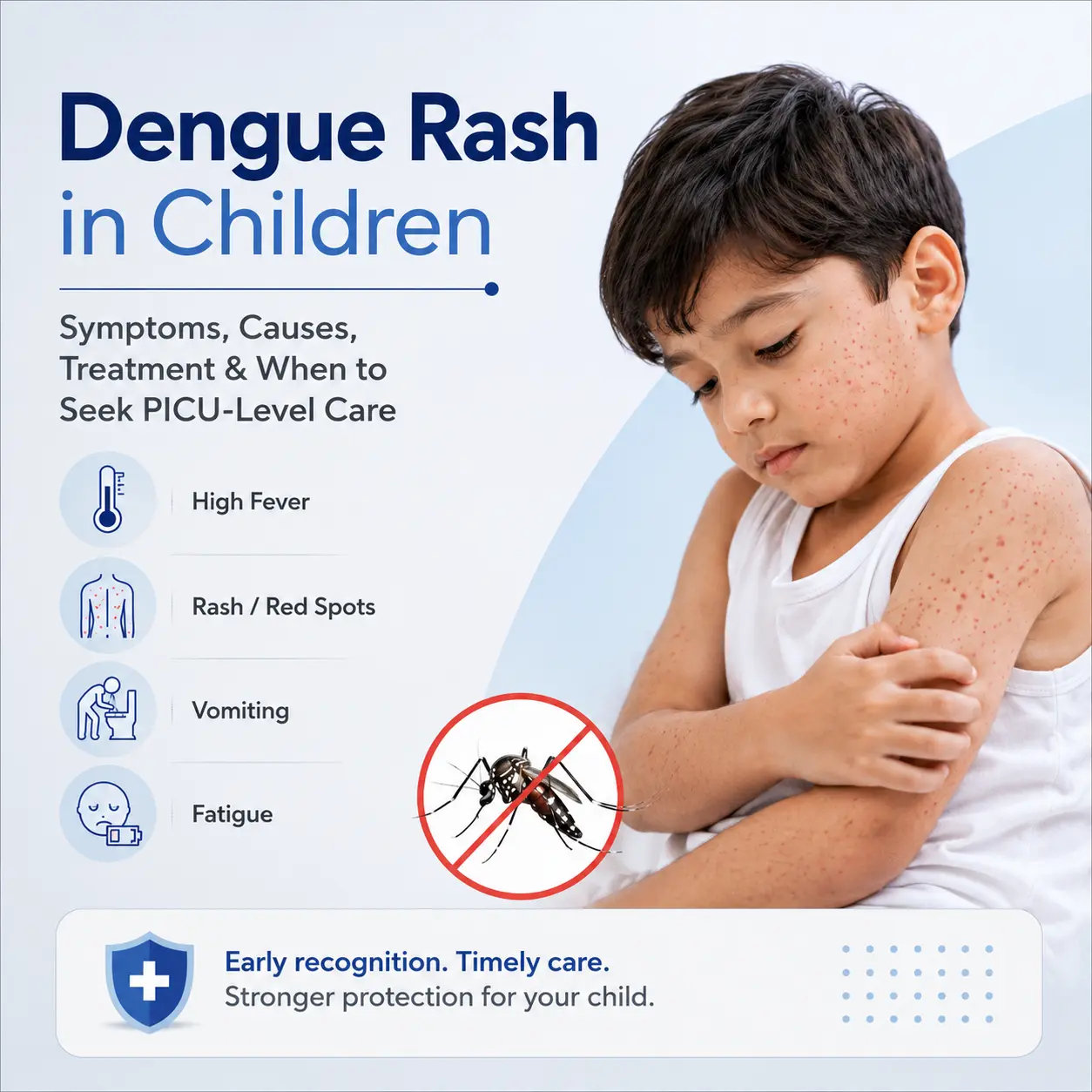
When is a Dengue Rash Serious in Children? Critical Warning Signs Every Parent Should Know
If your child develops a high fever followed by red spots or a skin rash, it's natural to be concerned about dengue. During the monsoon and post-monsoon season in India, dengue is one of the most common mosquito-borne viral infections affecting children. Thi

Unexplained Child Weight Loss: Warning Signs for Parents
Key Takeaways A consistent downward trend on the growth chart matters more than a single low reading. Sudden weight loss in children, persistent appetite changes or digestive symptoms need medical assessment. A child may lose weight despite eating well because of poor abs