



Categories
Recognizing Pediatric Emergencies: A Guide for Parents
Jan 18, 2025
Common Pediatric
Emergencies:
Children may experience various emergencies, including:
- Breathing difficulties or respiratory problems: These can arise from infections, asthma, or foreign objects
obstructing the airway
- Abnormal movements or fits: Sudden,
uncontrollable shaking or stiffness that may indicate a serious underlying
condition
- Trauma: Injuries resulting from accidents or falls
- Dehydration: Often due to vomiting, diarrhea, or refusal
to eat or drink
- Severe infections
Key Danger Signs to
Watch for:
Recognizing the early signs of a medical emergency can save your child’s
life. Seek immediate medical care if you observe any of the following:
- Breathing problems
- Difficulty breathing
- Fast breathing
- Noisy breathing
- Changes in behavior
· Extreme
drowsiness or unresponsiveness
· Persistent
irritability or inconsolable crying
- Feeding and hydration issues
- Refusal to feed or drink for more than 8 to 12 hours
- Not passing urine for more than 8 to 12 hours
- Cold or Discolored skin
- Cold hands and feet
- Pale or bluish skin, lips, or tongue
What to do in an
Emergency?
If you notice any of these danger signs, do not delay. Take your child
to the emergency department of a children’s hospital immediately. Early
intervention is critical in managing life-threatening conditions effectively.
Our 24/7 Consultant Led Advanced Pediatric Emergency Services are always prepared to handle any health emergency your child may face!
Related BlogView More

Hip Pain in Children: Causes, Symptoms & Treatment
Hip Pain in Children: Causes, Symptoms & When to See a Specialist When most people think of hip problems, they picture an elderly relative or acquaintance recovering from a hip replacement. Few realize that most hip problems in children start de
Fever in a Newborn: Infection Risks in the First Month
A parent of a two-week-old baby notices that the baby feels warmer than usual and is feeding less than normal. A temperature check shows 38°C (100.4°F). At this age, it is reasonable to wonder whether the baby is simply too warm or whethe
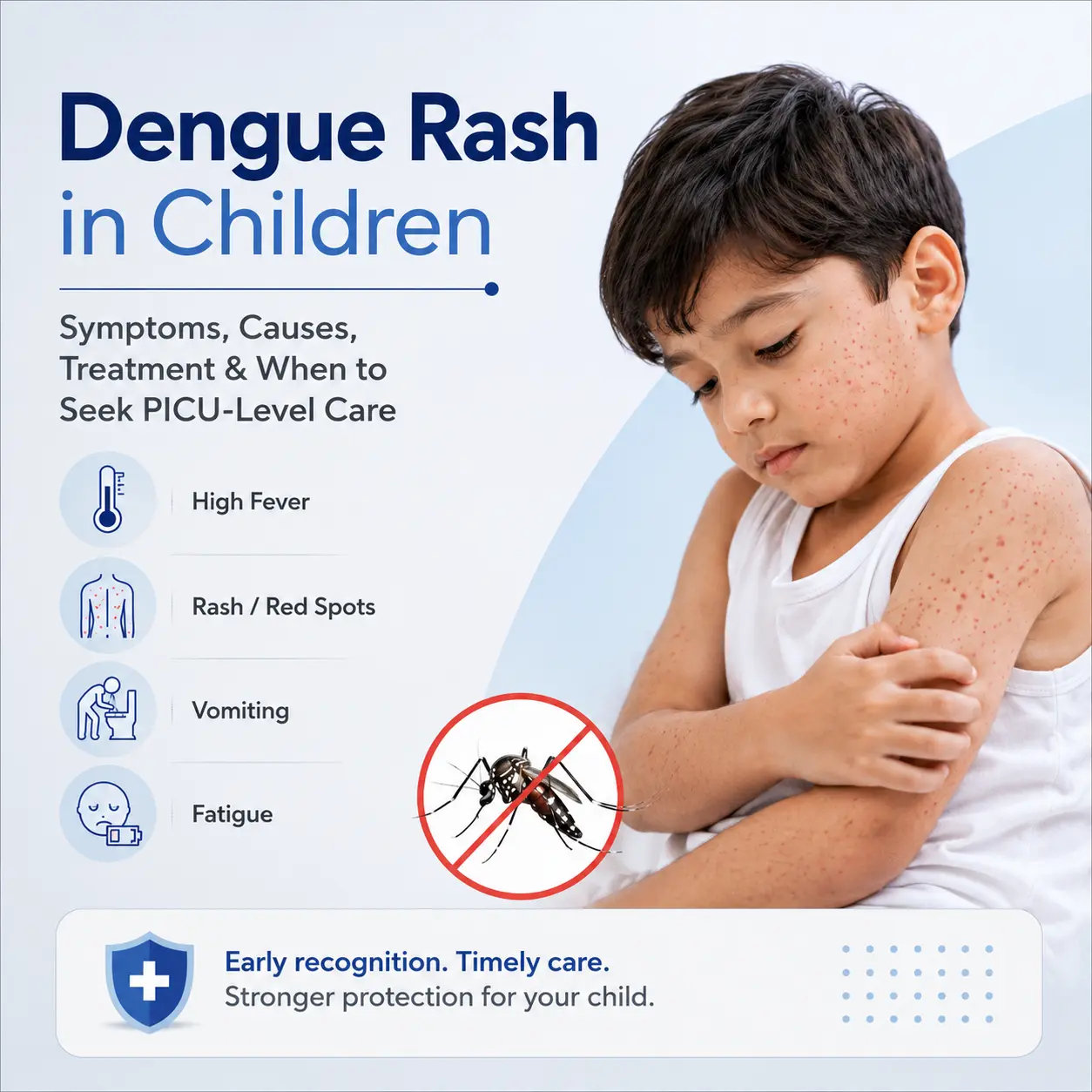
When is a Dengue Rash Serious in Children? Critical Warning Signs Every Parent Should Know
If your child develops a high fever followed by red spots or a skin rash, it's natural to be concerned about dengue. During the monsoon and post-monsoon season in India, dengue is one of the most common mosquito-borne viral infections affecting children. Thi
Newborn Sneezing: Is it a Cold or Just Normal Reflex? | Rainbow Hospitals
Key Takeaways Frequent sneezing is usually a normal reflex that helps a newborn clear milk droplets, mucus and dust from a narrow nose. Sneezing with comfortable breathing, normal feeds, clear mucus and no fever is generally reassuring. Saline drops, a short wait and gentle